When transporting Category 4 fireworks in the UK, strict regulations must be followed. You are required to hold a commercial driver’s licence with a hazardous materials endorsement. Your vehicle must prominently display “EXPLOSIVES 1.4” placards. Additionally, all packaging must comply with UN standards, ensuring safety and appropriate labelling.
It’s crucial to be well-versed in both national and local laws regarding the transportation of fireworks. Implementing risk management strategies and having an emergency response plan in place is essential for safety.
For instance, if you’re transporting fireworks to a local display, ensure your vehicle is correctly marked and that all items are securely packaged. Understanding these requirements will help streamline your transportation processes and ensure compliance.
Key Takeaways
- To transport Category 4 fireworks, you need a commercial driving licence with a hazardous materials endorsement.
- If you’re transporting more than 454 kg of fireworks, your vehicle must display “EXPLOSIVES 1.4” placards.
- Ensure your packaging meets UN standards, with proper cushioning and clear labels that show the shipping name and UN number.
- A robust security plan is crucial, which includes background checks and restricted access for anyone handling the fireworks.
- Always follow local regulations and safety measures to avoid hefty fines.
Classification of Category 4 Fireworks

Classifying Category 4 fireworks, commonly known as F4, is crucial for safety. These fireworks are intended solely for professional use due to their high hazard levels. Unlike consumer fireworks, which are classified as 1.4G, F4 fireworks present significant risks and should only be handled by trained professionals. They aren’t available to the general public, highlighting the need for strict safety measures. Professionals use specialised equipment and have the necessary training to set up these fireworks, which often don’t include delay fuses for electrical firing. It’s essential to understand the licensing requirements and accessibility of F4 fireworks, as failing to comply with safety standards can result in legal issues. Always prioritise safety when dealing with these powerful pyrotechnics, as they are classified under Hazard Type 3 (HT3) due to their potential danger. Additionally, compliance with local regulations is critical to ensure the safe handling and transportation of these fireworks.
Regulatory Framework for Transportation

When transporting Category 4 fireworks, it’s essential to understand the regulations governing their shipment. This includes compliance with UK laws, proper classification using UN numbers, and any specific transport regulations that may apply in your region. Following these guidelines ensures the safe and legal handling of these hazardous materials. For example, if you’re using a courier service, make sure they’re licensed to transport fireworks. Additionally, ensure that your shipment adheres to UN Performance Packaging requirements to minimize risk during transit.
Classification and UN Numbers
Understanding the classification of Category 4 fireworks within the UN Dangerous Goods Framework is crucial for safe and compliant transport. These fireworks fall under Class 1 explosives and are assigned UN numbers UN0333, UN0334, or UN0335, depending on their hazards. For instance, UN0333 indicates a risk of mass explosion, UN0334 points to projection hazards, and UN0335 refers to fire hazards with a minor blast risk. In contrast, consumer fireworks are typically classified as UN0336. Due to their higher risks, Category 4 fireworks require careful handling and proper documentation. Individual states may impose stricter regulations on the transport of these fireworks, ensuring correct classification is key to meeting transportation regulations, which helps ensure safety and reduces potential hazards linked to these pyrotechnic materials.
DOT and PHMSA Regulations
The safe transport of Category 4 fireworks is strictly regulated by the Department for Transport (DfT) and is subject to the Dangerous Goods Regulations.
Fireworks are classified as explosives, and there are clear guidelines in place regarding their transport. Vehicles carrying these items must display “EXPLOSIVES 1.4” placards, and drivers must possess a valid Commercial Driver’s Licence (CDL) with a hazardous materials endorsement for certain quantities.
Both shippers and carriers are required to have security measures in place to reduce the risks associated with transporting explosive materials.
Failing to comply with these regulations can result in serious consequences, including hefty fines and imprisonment.
Adhering to these rules is essential for the safe and legal transport of fireworks.
State-Specific Transport Laws
Transporting Category 4 fireworks requires careful attention to local laws, which can differ significantly across the UK.
For instance, in England, you’ll need to obtain the proper licenses for both storage and transportation. The Health and Safety Executive (HSE) oversees these regulations, and it’s important to ensure that fireworks are classified correctly before transport. Additionally, ensure that all staff receive mandatory training on handling and storage of fireworks to comply with safety regulations.
If you’re transporting fireworks across borders within the UK, be aware that some local authorities may have stricter rules in place.
Always check your local regulations before setting out to avoid any legal complications. By adhering to these guidelines, you can ensure safe and responsible transport of fireworks.
Driver Requirements for Transporting Fireworks

When transporting Division 1.4G fireworks weighing 454 kg (1,001 lbs) or more, you’ll need a commercial driving licence (CDL) with a hazardous materials endorsement.
This endorsement involves passing a security threat assessment and must be renewed with your driving licence.
Moreover, it’s essential to have a solid security plan in place to ensure safe transport and compliance with regulations.
Licensing and Endorsements
To legally transport Category 4 fireworks in the UK, you must adhere to a series of licensing and regulatory requirements to ensure safety and compliance.
First, you’ll need a valid driving licence and specific Dangerous Goods (DG) training, which involves associated costs and background checks. This certification allows you to transport fireworks in significant quantities.
Depending on your location, you may also need additional permits. Having the right insurance is essential to meet legal standards when dealing with hazardous materials.
Lastly, specialised training in handling fireworks will make you a safer driver in this high-risk sector.
Security Protocols Required
Transporting Category 4 fireworks requires more than just the right licenses; it demands strict security protocols to ensure safety throughout the journey.
You’ll need a valid Commercial Driver’s Licence with a hazmat endorsement, proving you’ve passed the necessary tests and have a clean compliance record.
Before transport, you must undergo driver training that covers security assessments and emergency response procedures.
Adhere to the security plans provided by shippers and carriers, which focus on personnel safety and preventing unauthorised access.
Ensure your vehicle has locked compartments and appropriate placarding.
Carry comprehensive documentation of the fireworks being transported, and check that your communication devices are operational for promptly reporting any emergencies or security incidents.
Vehicle Specifications and Placarding

When transporting Category 4 fireworks in the UK, it’s crucial to follow vehicle specifications and placarding regulations for safety and compliance. Ensure your vehicle meets the weight requirement of 450 kg (1,001 lbs) or more, and that you possess a valid HGV licence with a hazardous materials endorsement. Regular vehicle maintenance is essential for safe transport, and you must have appropriate insurance for hazardous goods.
| Requirement | Details |
|---|---|
| Weight Limit | 450 kg or more |
| Driver Licence | HGV licence with hazmat endorsement |
| Placard Placement | “EXPLOSIVES 1.4” on all sides |
| Placard Size | Must meet visibility standards |
| Safety Equipment | Fire extinguishers required |
Regularly check placards for any damage and ensure compliance with all relevant regulations.
Packaging Standards for Fireworks

Packaging standards for Category 4 fireworks are crucial for safe transport.
Ensure your packaging meets UN standards, typically requiring at least Packing Group II for outer containers like cardboard boxes or drums. Use inner packaging, such as cardboard receptacles and bags, to prevent fireworks from shifting or being damaged.
To enhance safety, incorporate cushioning materials to avoid contact with the outer packaging. For shipping cartons over 20 kg, make sure they’ve at least seven layers of cardboard for added strength.
All packaging must also comply with performance testing regulations to prevent any leakage or spillage of hazardous materials. Following these guidelines not only ensures compliance but also protects your fireworks during transport, especially considering that legal implications can arise from improper packaging.
Labeling Requirements for Hazardous Materials
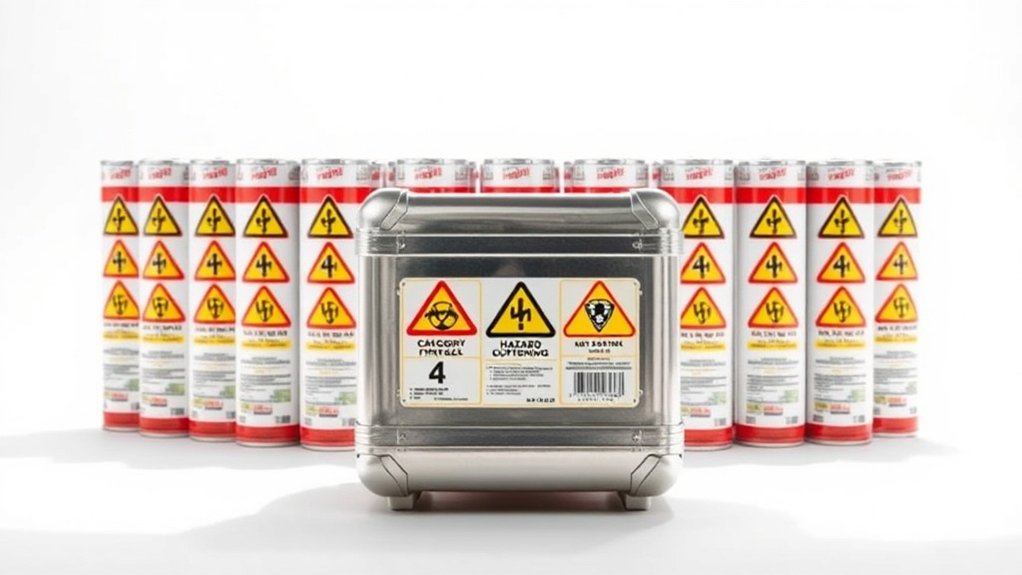
Labeling requirements for Category 4 fireworks are crucial for safe transport and regulatory compliance. You’ll encounter various challenges, such as adhering to the Health and Safety Executive (HSE) guidelines and the Dangerous Goods Regulations.
It’s essential to display the correct shipping name, UN number, and hazard class on all packages. Ensure that hazard labels are clear and visible, following the specifications outlined in UK regulations.
For effective compliance, keep your labels next to the shipping name and ensure they aren’t obscured. Remember, vehicles transporting these goods must also display the appropriate placards.
Security Measures During Transport

To ensure the safe transport of Category 4 fireworks, it’s essential to implement strong security measures.
Start by creating a security plan that identifies potential transport risks and outlines how to mitigate them. This includes conducting background checks on personnel and restricting access to authorised individuals only.
Vehicles carrying over 454 kg (1,001 lbs) of fireworks must display “EXPLOSIVES 1.4” placards, and drivers need a valid HGV licence with a hazardous materials endorsement.
Continuous monitoring, like GPS tracking, improves security during transit. Proper packaging and handling procedures are vital to prevent unauthorised access.
Compliance With Federal Regulations

When transporting Category 4 fireworks in the UK, you must comply with regulations governing hazardous materials.
This includes specific packaging and labelling standards to ensure safety during transport.
For instance, using appropriate containers and clear hazard labels helps prevent accidents and ensures legal compliance.
Understanding these requirements is essential to avoid legal issues and ensure the safe delivery of your fireworks.
DOT Regulations Overview
Understanding DOT regulations is crucial for anyone involved in transporting Category 4 fireworks, as adhering to federal laws ensures safety and legal operation. Fireworks are deemed hazardous materials, which means compliance with the Hazardous Materials Regulations (HMR) in 49 CFR is necessary. Key regulations include correct vehicle placarding, specific driver qualifications, and mandatory hazmat registration. Failing to comply can result in heavy penalties, highlighting the importance of safe transportation practices.
| Classification | UN Number |
|---|---|
| 1.1G | UN0333 |
| 1.2G | UN0334 |
| 1.3G | UN0335 |
| 1.4G | UN0336 |
| Consumer Fireworks | 1.4G |
Packaging and Labeling Standards
Proper packaging and labeling of Category 4 fireworks is crucial for meeting UK regulations.
Ensuring sturdy packaging and clear labels helps reduce risks during transport. Here are the key points to consider:
- Use Performance Grade II (PGII) materials for outer packaging.
- Ensure cautionary labels are clear and easy to read, in line with UK standards.
- Check that all outer packaging displays the correct UN identification number, such as UN 0336.
- Regularly update the General Certificate of Conformity (GCC) to maintain compliance.
State and Local Transport Regulations

When transporting Category 4 fireworks in the UK, it’s crucial to understand the relevant state and local regulations. Typically, you’ll need specific permits to ensure compliance with safety standards.
Be prepared for inspections by local authorities to confirm that you’re following the rules. Local councils may have their own regulations, which could include transport restrictions or minimum distance requirements from public buildings.
For instance, some areas might prohibit transport during certain times or require you to stay a specific distance from schools or hospitals.
It’s also important to note that local fire services often carry out inspections to enforce these regulations. Familiarising yourself with both state and local laws is essential to avoid penalties and ensure the safe transport of Category 4 fireworks.
Always double-check the regulations that apply to your area before you set off.
Risk Management Strategies

When planning to transport Category 4 fireworks, it’s crucial to implement effective risk management strategies that address the specific hazards associated with these high-risk materials.
Start with a thorough risk assessment to identify potential dangers, such as explosive potential and environmental factors.
- Identify physical hazards, such as power lines and flammable materials nearby.
- Evaluate wind direction and weather conditions that could impact the fireworks.
- Assess potential ignition sources to reduce the risk of accidental firing.
- Regularly review and update risk assessments to reflect current site conditions.
These steps will help ensure safe transport and minimise risks associated with Category 4 fireworks.
Emergency Response Planning

Effective emergency response planning is crucial for safely managing Category 4 fireworks displays, ensuring a prompt reaction to any incidents. Start by informing the fire and emergency medical services about your event to facilitate coordination.
Develop a comprehensive plan that includes evacuation procedures and emergency drills for staff and responders. Clearly designate safety zones and ensure unobstructed access for emergency vehicles.
Appoint a specific individual to manage emergency calls and maintain communication with all involved parties.
Be prepared for unforeseen incidents by including contingency plans for adverse weather or fireworks malfunctions. Regularly review and test your emergency equipment to ensure it’s ready for use, and make sure all personnel are trained to respond swiftly and effectively during an emergency.
Penalties for Non-Compliance

Non-compliance with transport regulations for Category 4 fireworks can lead to significant civil and criminal penalties for individuals and companies alike.
It’s crucial to understand these penalties to avoid severe financial repercussions.
- Civil fines can reach up to £110,000 for each violation, potentially increasing to £175,000 under certain circumstances.
- Criminal penalties may involve fines up to £500,000 and imprisonment for up to 10 years.
- Specific infractions, such as improper packaging or not holding a Commercial Driver’s Licence, can trigger these penalties.
- Local authorities may also impose additional fines ranging from £100 to £500 for various violations.
Staying compliant is essential to safeguard against these hefty fines and legal consequences.
Frequently Asked Questions
Can I Transport Fireworks in Personal Vehicles?
In many areas, it’s illegal to transport fireworks in personal vehicles. It’s important to familiarise yourself with firework safety guidelines and vehicle regulations. Breaking these laws can lead to hefty fines, so always check your local regulations before attempting to transport fireworks.
Are There Weight Limits for Transporting Fireworks?
Yes, there are weight regulations for transporting fireworks in the UK. It’s important to follow safety guidelines and keep your load within the specified limits. For example, if you’re transporting a large quantity for a display, ensure it doesn’t exceed the legal weight, which helps minimise risks and ensures safe transport. Always check the latest regulations to stay compliant.
What Documentation Is Required for Transporting Fireworks?
Did you know that around 80% of fireworks-related injuries happen during transport? To ensure the safe and legal movement of these explosive materials, you’ll need proper documentation, such as fireworks permits, and must comply with transportation regulations. For instance, if you’re transporting fireworks to a local display, make sure you have the necessary permits and are following safety guidelines to prevent accidents.
Can Fireworks Be Transported Internationally?
Yes, you can transport fireworks internationally, but you must follow international regulations and obtain customs clearance. It’s crucial to have the right documentation and meet safety standards to ensure your shipment is legal. For example, if you’re sending fireworks to a country that has strict rules, you may need to provide proof of compliance with their regulations.
Are There Specific Storage Requirements During Transport?
During transport, roughly 70% of fireworks incidents are caused by improper storage. It’s essential to adhere to strict storage guidelines and safety measures, such as using secure packaging and keeping away from ignition sources. This ensures safe transit and reduces risks effectively.
Conclusion
When transporting Category 4 fireworks, it’s crucial to follow specific regulations to ensure safety for everyone involved. Think of the stunning fireworks displays that light up the sky, but remember that with this excitement comes responsibility. Adhering to the rules regarding packaging and emergency plans is essential to prevent any mishaps.
For instance, make sure fireworks are securely packed to avoid damage during transport. Having a clear emergency plan in place can also help manage any unexpected situations. By staying informed and compliant with these guidelines, you contribute to a safe and enjoyable celebration. Your attention to detail is key to making sure the festivities go off without a hitch.