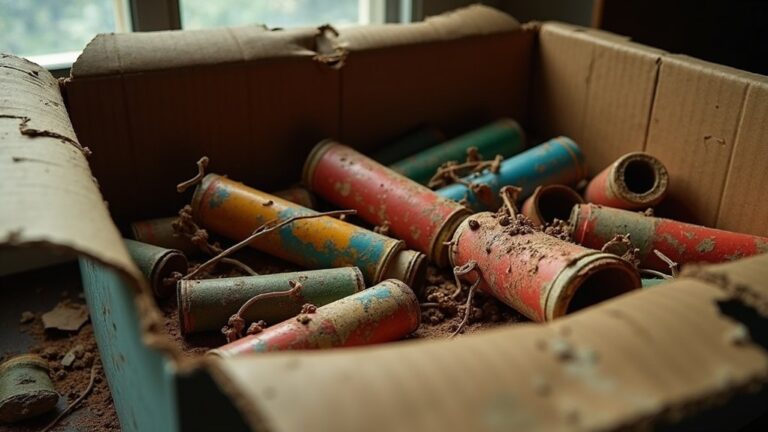
Avoid storing fireworks in your living rooms, bedrooms, basements, or lofts. These areas often contain flammable materials and have poor ventilation, which increases fire risks. Stay clear of spots near heat sources, as they could ignite the fireworks accidentally. Damp places also pose safety issues, affecting their effectiveness. Moreover, don’t leave them in unsecured areas where children or pets can easily reach them. For further safety tips, look into recommended storage options that effectively reduce risks.
Key Takeaways
Where Not to Store Fireworks in Your Home
- Avoid keeping fireworks in living rooms or bedrooms, as these areas contain flammable materials and potential ignition sources.
- Don’t store fireworks in basements or lofts, as high humidity can lead to misfires and spoilage.
- Steer clear of heat sources like radiators or cookers, which could accidentally ignite fireworks.
- Never use garages or open cupboards for storing fireworks; these spaces are often insecure and accessible to children.
- Self-storage units usually prohibit fireworks; keeping them there might breach regulations and nullify your insurance.
Living Rooms and Bedrooms

Living rooms have flammable items like curtains and carpets, which can catch fire if fireworks ignite. The presence of electrical devices and heating sources further increases the chance of accidental ignition. Additionally, improper storage poses risks such as fire hazards, making these areas particularly dangerous for storing fireworks. It’s important to remember that common injury types include burns (42%), emphasizing the need for careful handling and storage.
Likewise, bedrooms are filled with soft furnishings that easily catch fire, especially with improper storage of fireworks. Plus, these areas are accessible to children and pets, raising the risk of accidents. For safety, opt for alternative storage solutions that are cool, dry, and secure, away from everyday spaces.
Keeping fireworks out of living areas significantly reduces risks and ensures a safer environment for everyone in your home.
Basements and Attics

Storing fireworks in basements and attics is risky due to moisture, accessibility, and fire hazards. High humidity and fluctuating temperatures can damage fireworks, increasing the risk of accidental ignition. Moreover, these areas often lack secure storage, making it easier for children or pets to reach dangerous materials. It’s best to keep fireworks in a safe, dry place that’s out of reach to prevent accidents. Additionally, keeping fireworks dry is crucial to ensure their safety and functionality over time. Proper storage in waterproof containers can significantly reduce the risk of degradation and enhance overall safety.
Moisture Risks
Humidity and moisture are major risks when storing fireworks in basements and attics.
Basements often have high humidity due to damp soil and poor air circulation, which can cause fireworks to soften and their chemicals to degrade. Storing fireworks is against policy at most self storage facilities and can lead to increased risks.
In attics, temperature changes lead to condensation, damaging packaging and jeopardising ignition reliability.
Both of these storage environments can result in unpredictable explosions and an increased chance of misfires.
Once fireworks absorb moisture, the damage is irreversible—discard them immediately.
To ensure safety, opt for dry, cool, and well-ventilated storage areas.
Avoid basements and attics to protect your fireworks from the hazards of dampness, keeping both your property and personal safety intact.
Accessibility Concerns
Moisture isn’t the only concern when storing fireworks in basements and attics; accessibility issues also create significant risks. Limited entry points can complicate emergency responses, while narrow access may hinder safety inspections. These confined spaces can trap smoke and fumes, increasing hazards during any incidents.
| Accessibility Concern | Impact on Firework Safety |
|---|---|
| Limited exit routes | Complicates emergency evacuation |
| Difficulty in routine inspections | Increases risk of unnoticed hazards |
| Presence of ignition sources | Raises fire risk |
| Barriers for disabled individuals | Hinders safe retrieval and storage |
Instead of relying on these areas, consider safer storage alternatives that prioritise accessibility, ensuring compliance with fire safety regulations and enhancing overall fireworks safety.
Fire Hazard Potential
Storing fireworks in basements and attics poses serious fire hazards that shouldn’t be ignored. Fireworks are highly combustible and can easily ignite from sparks or heat sources commonly found in these areas.
Basements often have electrical wiring, which increases the risk of fire, while poor ventilation can cause flammable vapours to build up. Attics, with their high temperatures and flammable insulation, present similar dangers.
Both locations can also trap occupants during a fire, making escape difficult.
Firework regulations require proper storage to reduce risks, including using locked containers and ensuring adequate separation from other materials.
Neglecting these safety measures can lead to devastating fires; statistics show that thousands of structure fires each year are caused by improper storage.
To safeguard your home and family, avoid storing fireworks in basements and attics.
Areas Near Heat Sources

When storing fireworks, keep them well away from heat sources such as water heaters, boilers, and kitchen appliances.
Open flames and direct sunlight can significantly heighten the risk of ignition, so steer clear of these areas.
Proper storage away from any equipment that generates heat is crucial for safety.
Heat Generating Appliances
Storing fireworks near heat-generating appliances poses a serious fire risk. The heat from devices such as water heaters, boilers, and space heaters can ignite pyrotechnic materials.
Even a slight rise in temperature can lead to dangerous situations. It’s essential to keep fireworks well away from any HVAC equipment and kitchen appliances, where consistent heat can increase risks.
High temperatures can also accelerate chemical degradation, making fireworks more volatile. Always store fireworks in cool, well-ventilated areas, away from heat sources.
Regularly check storage areas to ensure they’re free from heat and electrical hazards that could cause a fire.
Open Flame Hazards
Heat sources aren’t the only hazards when it comes to storing fireworks; open flames also pose a significant risk.
Keeping fireworks near candles, fireplaces, or gas heaters can lead to accidental ignition, as these areas are filled with potential ignition sources. Unattended candles or forgotten incense can quickly become fire hazards.
Similarly, gas appliances with pilot lights create a constant flame, increasing the risk. Outdoor barbecues and fire pits can also be dangerous, as residual heat and embers can ignite improperly stored fireworks.
For optimal firework safety, always store them well away from any open flame or heat source in a cool, ventilated area to reduce these risks.
Direct Sunlight Exposure
Avoiding direct sunlight exposure is crucial for safely storing fireworks, as prolonged heat can lead to premature ignition.
Sunlight reflection can amplify heat, raising the risk of accidents. Furthermore, UV degradation can weaken both the chemical composition and packaging of fireworks, making them unstable.
Here are some key precautions to consider:
- Store fireworks in cool, dry places with good air circulation.
- Steer clear of attics or upper floors where heat tends to build up.
- Use protective coverings to shield fireworks from direct sunlight.
- Regularly inspect packaging for any signs of heat damage.
Damp or Humid Locations

When storing fireworks, it’s important to avoid damp or humid areas.
Moisture can reduce their safety and effectiveness, as it can destabilise gunpowder, leading to misfires or dangerous ignition issues.
Common places like basements, attics, and under-sink cupboards can trap humidity, making them unsuitable for storage.
Instead, look for cool, dry spaces with good ventilation.
If you have to keep them in a damp area, wrap them tightly in sealed plastic bags and include desiccants like silica gel to absorb moisture.
Regularly check your fireworks for any signs of damage.
Spaces With Flammable Materials

Storing fireworks in areas with flammable materials significantly heightens the risk of accidental ignition and fire.
To ensure safety, steer clear of these common hazards:
- Keep fireworks away from flammable liquids, such as petrol, oil, and volatile chemicals.
- Store fireworks in non-combustible containers, ideally metal, to reduce ignition risks.
- Maintain a tidy environment, avoiding flammable furnishings and clutter that can easily ignite.
- Ensure outdoor storage areas are away from heat sources like boilers, and prohibit smoking or sparks nearby.
Additionally, always comply with health and safety standards to further minimize the risk of dangerous incidents.
By using appropriate storage methods and following these guidelines, you can greatly minimise the risk of dangerous incidents.
Always prioritise safety when handling fireworks.
Unsecured and Accessible Areas

Fireworks must never be stored in unsecured or easily accessible areas, as this significantly increases the risk of accidents. Keeping them in places like open cupboards or shared living spaces allows easy access, particularly for children. This poses a serious threat to their safety and raises the chances of accidental ignition or mishandling.
| Unsafe Storage Locations | Risks Involved |
|---|---|
| Open cupboards | Child access, accidents |
| Garages | Unauthorized misuse |
| Cluttered areas | Impaired visibility |
Always store fireworks out of reach of children and pets, ensuring they are kept securely in locked and designated areas. Remember, safety begins with proper storage practices.
Self-Storage Units

Storing fireworks in self-storage units might seem convenient, but it carries significant safety risks and legal complications.
Most storage facilities in the UK strictly prohibit fireworks due to their explosive nature, which can endanger you and others. Here are some key points to consider:
- Legal regulations often ban the storage of fireworks in residential and commercial locations.
- Disregarding facility rules can lead to eviction and loss of your stored items.
- Your insurance could be affected; keeping fireworks might void your coverage.
- If any damage or injury occurs from stored fireworks, you could be held liable.
To ensure safety, always follow local laws and look for appropriate legal storage options for fireworks.
Indoor Common Areas

When deciding where to store your fireworks, it’s crucial to avoid indoor common areas due to significant safety risks.
These spaces often have various ignition sources, such as heaters and cookers, which could accidentally ignite fireworks. The presence of flammable materials like curtains and soft furnishings only adds to the danger. Limited ventilation can also lead to a build-up of flammable fumes, further increasing the risk.
Moreover, common areas are easily accessible to children, which raises the potential for misuse. Fire safety guidelines clearly advise against keeping fireworks in living spaces for these reasons.
Without proper control of temperature and moisture, fireworks can become unstable as well. For your safety, always store fireworks in a secure, dry location away from communal areas to reduce these risks.
Frequently Asked Questions
Can I Store Fireworks in My Garage?
You shouldn’t store fireworks in your garage. The risk of fire increases due to combustible materials and poor fire safety measures commonly found in garages. It’s best to opt for dedicated, fire-resistant storage to ensure safety and comply with regulations.
Is It Safe to Store Fireworks in a Shed?
Storing fireworks in a shed can be safe if you follow a few key guidelines. First, adhere to firework storage regulations. Ensure your shed is secure and well-ventilated. Keep the fireworks away from heat sources and living areas, and make sure the shed is locked. Always follow fire safety protocols to minimise risk.
How Long Can I Keep Fireworks Before They Expire?
Fireworks generally have a shelf life of 1 to 2 years if stored correctly. Keep them in a cool, dry place, away from moisture, to ensure they work properly and safely. Regularly check for any signs of damage or deterioration.
What Should I Do if Fireworks Get Wet?
Did you know that wet fireworks can self-ignite once they dry? Rather than trying to dry them out, it’s best to submerge them in water until they disintegrate. Always handle fireworks with care and keep them away from flammable materials until you can dispose of them safely.
Can I Transport Fireworks in My Car?
Yes, you can transport fireworks in your car, but it’s essential to prioritise safety. Make sure to secure them properly, avoid areas where they may pose a risk, and keep your vehicle well-ventilated to prevent accidental ignition during your journey.
Conclusion
When storing fireworks, treat them like a loaded firearm—it’s simply not safe. Avoid keeping them in living rooms, bedrooms, basements, or near heat sources. Steer clear of damp areas and spots with flammable materials. Always store them out of reach and avoid common indoor spaces. By following these guidelines, you’ll minimise the risk of accidents and create a safer environment for you and your family.