
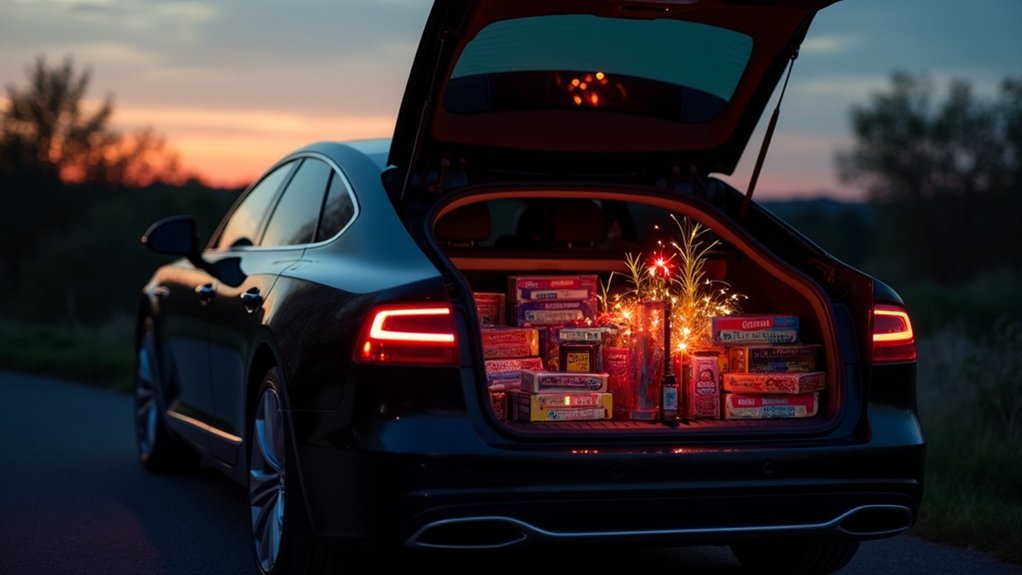
You can transport fireworks in a car boot, but it’s crucial to follow UK regulations. Ensure the fireworks are stored in spark-proof containers and that your vehicle is well-ventilated. Keep them well away from flammable items and stick to local laws regarding permits and quantity limits. Ignoring these rules could result in hefty fines and safety hazards. For more information, check out the guidelines on safe transport practices and legal requirements.
Key Takeaways
Yes, you can transport fireworks in your car boot, but make sure they’re stored safely. Use spark-proof containers and don’t mix them with other items to reduce risks. Ensure your vehicle is well-ventilated and free from flammable materials during the journey. Familiarise yourself with local laws about transporting fireworks to avoid any fines. Keep them in their original packaging and label containers with appropriate safety warnings.
Understanding Fireworks Regulations

Transporting fireworks may seem simple, but it’s crucial to understand the regulations involved. Different classifications of fireworks determine what you can legally carry.
For instance, some areas, like parts of Scotland, have strict controls or outright bans, while others may permit possession but limit where and when you can use them. Always check local laws, especially around events like Bonfire Night or New Year’s Eve when enforcement is heightened. Failing to follow these regulations could result in fines ranging from £100 to over £1,000, or even serious charges for significant infringements. To avoid legal issues when transporting fireworks, ensure you’re fully aware of both the laws and the specific categories of fireworks involved, as federal law prohibits transporting fireworks into states where they are banned. Additionally, understanding local council guidelines can help you navigate any specific restrictions that may apply in your area.
Federal Laws Governing Fireworks Transport

Understanding the laws around transporting fireworks is crucial for anyone looking to move these explosive materials. In the UK, fireworks fall under specific regulations due to their classification as hazardous substances. Here’s a simplified breakdown:
| Fireworks Type | Classification | Requirements |
|---|---|---|
| Consumer | Category F2 | No special licence; warning labels needed |
| Display | Category F1-F3 | Special licence required |
| Vehicle Weight | Over 1,001 kg | Must show “EXPLOSIVES” sign |
| Security Plans | Required | Must include measures for personnel and transport security |
It’s important to grasp these regulations to avoid fines and legal troubles. Proper shipping name and UN number documentation are also essential for compliance when dealing with fireworks. Additionally, transporting fireworks that lack CE/UKCA marking is considered illegal and can lead to severe penalties. Always stay informed and compliant when dealing with fireworks.
State-Specific Fireworks Transport Rules

When transporting fireworks in the UK, it’s essential to be aware of specific regulations that can differ across regions. For example, in England, you must ensure your fireworks are compliant with safety standards and bear the appropriate CE marking. If you plan to transport them outside designated routes, you may need special permits from local authorities, especially if you’re carrying display fireworks. Be mindful of areas that have restrictions or outright bans on fireworks; breaking these rules can result in hefty fines or even imprisonment. Always adhere to packaging regulations to avoid accidents. Additionally, local councils may have their own rules, so it’s wise to check for any specific ordinances before you set off with your fireworks. Furthermore, ensure that items classified as “dangerous fireworks” are transported according to state regulations to maintain safety compliance. Understanding the legal framework surrounding fireworks can help you avoid unintentional violations.
Licensing and Permits for Transporting Fireworks

Before transporting fireworks in the UK, it’s essential to understand the licensing requirements in your area.
The application process for permits can be complex, and non-compliance can result in significant legal issues. Familiarise yourself with these regulations to ensure a safe and lawful transport of fireworks.
For example, you may need to apply for a storage licence if you’re keeping large quantities. Always check your local council’s guidelines.
State Requirements Overview
While UK regulations provide guidelines for transporting fireworks, local laws can differ significantly, so it’s crucial to adhere to them. Many regions have strict rules regarding fireworks, which can affect their legality for transport. For instance, in Scotland and Northern Ireland, there are stringent restrictions, while in England, you can possess them but may face limitations on transport during certain periods. Breaching these laws could result in substantial fines or even criminal charges.
| Region | Transport Legality | Key Restrictions |
|---|---|---|
| Scotland | Illegal | Strict bans on many fireworks |
| Northern Ireland | Illegal | Very limited types permitted |
| Wales | Legal (with limits) | Specific times for use |
| England | Legal (with limits) | Restrictions on certain types |
Always verify your local regulations before transporting fireworks to steer clear of penalties.
Permit Application Process
To transport fireworks legally in the UK, you’ll need to follow a specific permit application process that varies by location.
Begin by gathering essential documents, such as your business licence, descriptions of the fireworks, and proof of insurance.
Check that you meet the permit requirements, which may include submitting applications online or providing details of your transport routes.
Be ready to pay non-refundable fees, which can range from £20 to £400, depending on the permit type.
Some areas may also require site inspections or credentials from licensed pyrotechnicians.
Always review local regulations to ensure compliance with both UK and EU laws, as these can significantly affect your ability to transport fireworks safely and legally.
Compliance and Enforcement Risks
Failing to comply with licensing and permit requirements when transporting fireworks can have serious legal consequences.
It’s crucial to understand the transportation restrictions in place. For large quantities, you’ll need a commercial driver’s licence with a hazmat endorsement. Ensure your vehicle displays the required “EXPLOSIVES 1.4” placards, and that you have the necessary hazmat registration certificates.
Regulatory compliance is vital; violations can lead to hefty fines, potential imprisonment, and confiscation of your fireworks.
Proper packaging, labelling, and documentation must accompany your shipment. Without these, you risk enforcement actions that could delay transport or result in significant legal issues.
Always check local laws, as they can vary and may impose additional requirements.
Safety Measures for Transporting Fireworks

When transporting fireworks, it’s crucial to prioritise safety to minimise risks. Here are key safety measures to ensure secure transport:
| Safety Measure | Description | Importance |
|---|---|---|
| Keep Fireworks in the Boot | Always transport fireworks in the boot of the car. | Reduces risk to passengers. |
| Avoid Flammable Materials | Remove items like petrol or aerosol cans from the car. | Prevents fire hazards. |
| Secure Fireworks Properly | Use spark-proof containers and load them low. | Prevents sliding and damage. |
Ensure the vehicle is well-ventilated and out of direct sunlight or heat. Avoid smoking near the fireworks, and keep children or unauthorised individuals away. Following these guidelines will enhance safety during transport.
Packaging Requirements for Fireworks

Packaging requirements for transporting fireworks in the UK are strict and must be adhered to closely for safety.
Use PGII UN packaging, such as 4G boxes or wooden crates, as your outer packaging. For the inner packaging, opt for fibreboard receptacles or bags to securely hold the fireworks.
Ensure your packaging meets hazardous materials regulations under the relevant UK legislation. Each package must display clear markings, including the UN identification number and hazard class, along with the “EXPLOSIVES 1.4” label for consumer fireworks.
It’s crucial to adhere to weight limits and accurately declare the total explosive mass. Proper packaging not only protects the fireworks but also aids identification for handlers and emergency responders during transport.
Risks of Transporting Fireworks Across State Lines
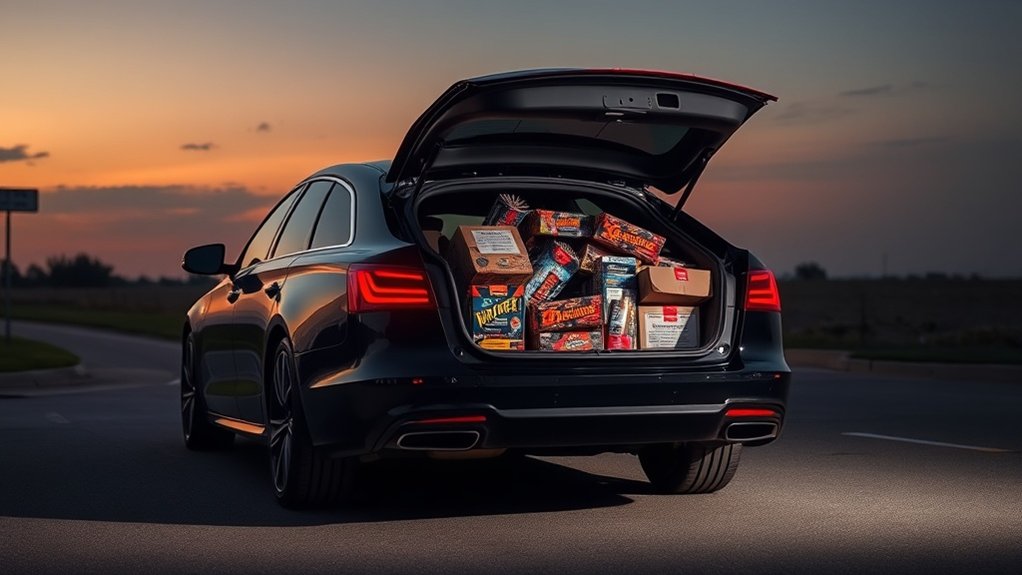
Transporting fireworks across borders in the UK carries significant legal and safety risks.
It’s crucial to be aware of the legal implications and potential hazards to avoid serious consequences. Here are the key points to consider:
- Some regions in the UK prohibit the transport of certain consumer fireworks altogether.
- Penalties for illegal transport can include hefty fines and confiscation of fireworks.
- Storing fireworks improperly can lead to accidental ignition, posing safety risks.
Before crossing borders with fireworks, it’s essential to understand the laws specific to each area.
Non-compliance can result in substantial fines or even criminal charges.
Always prioritise safety and legality to protect yourself and others.
Ignorance of the law won’t spare you from penalties, so ensure you do your homework and proceed with caution.
Enforcement Practices and Checkpoints

While you may not consider it, enforcement practices for transporting fireworks can greatly affect your journey.
Checkpoints, particularly at county borders and on major roads, are common sites for inspections. During these checks, police may conduct searches if they’ve good reason, such as visible signs of illegal fireworks. Officers might ask to inspect your boot to ensure compliance with local regulations.
Illegal fireworks can be confiscated, and fines may be issued. Additionally, local authorities may establish temporary checkpoints during fireworks seasons to increase enforcement.
It’s crucial to be aware of the laws in your area to avoid any issues at these checkpoints.
Consequences of Non-Compliance

Transporting fireworks without the right permits can lead to serious legal consequences, including substantial fines and potential imprisonment.
Authorities are strict about enforcing these laws, and there’s a high chance your fireworks could be confiscated.
Moreover, local regulations can add further complications, making your situation even more precarious.
It’s simply not worth the risk.
Legal Penalties Overview
Understanding the legal penalties for transporting fireworks is crucial, as violations can result in serious consequences. The implications of non-compliance can include substantial fines and potential imprisonment, which differ across the UK.
Here are some key points to consider:
- Civil penalties can amount to £100,000 per violation under relevant safety regulations.
- Criminal penalties can involve fines reaching £500,000 and possible prison sentences for severe breaches.
- Local laws may define violations as misdemeanours, leading to additional fines and jail time.
Prioritising fireworks safety and following regulations can help you avoid these serious repercussions. Always stay informed about the laws in your area to steer clear of legal issues.
Risk of Confiscation
Transporting fireworks without following legal requirements significantly raises the risk of confiscation by authorities.
If you have fireworks without a valid licence or exceed permitted quantities, you may face serious consequences. Law enforcement, including fire officers, can seize fireworks from your vehicle during routine checks.
This could lead to hefty fines, and repeated offences might result in criminal charges, which could involve jail time. Moreover, having confiscation records can affect your future job prospects and licensing.
To avoid these issues, always ensure you comply with local and national regulations regarding the transport of fireworks.
Enforcement Scrutiny Factors
Transporting fireworks may seem simple, but non-compliance can lead to serious consequences for both individuals and businesses. Authorities focus heavily on safety, and neglecting regulations can be costly.
Here are some potential repercussions you may face:
- Fines of up to £10,000 and possible imprisonment for illegal transport.
- Liability for injuries or damages caused by improperly stored fireworks.
- Seizure or immobilisation of your vehicle for transport violations.
It’s important to note that enforcement agencies conduct regular inspections, particularly during high-risk periods like Bonfire Night or New Year’s Eve.
Ignoring these laws could result in criminal charges, civil lawsuits, or even losing your vehicle. Always prioritise safety and legality when transporting fireworks.
Best Practices for Personal Transport of Fireworks

When transporting fireworks, safety and adherence to regulations are paramount.
Ensure your vehicle’s boot is clear of flammable items and use a dry, well-ventilated area to avoid moisture damage. Pack the fireworks in their original packaging within a sturdy, spark-proof container, using padding to prevent movement. Clearly label the container with safety warnings, and keep it separate from other belongings.
During transport, don’t smoke near the fireworks and avoid handling them if you’re under the influence.
It’s also wise to have fire suppression measures ready at your destination. By following these straightforward guidelines, you can significantly reduce risks and ensure a safer experience with fireworks.
Legal Exceptions to Fireworks Transport Regulations
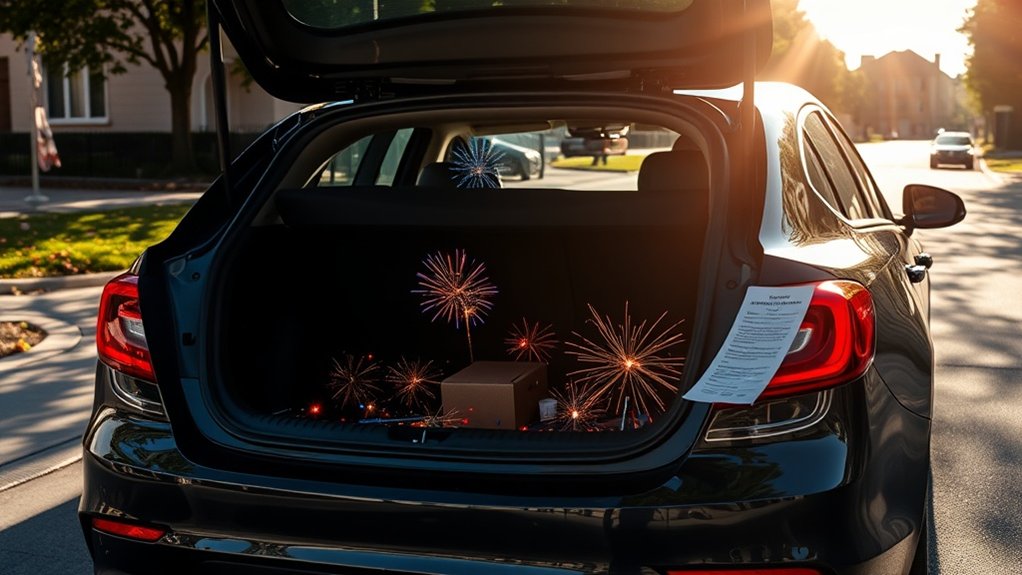
When transporting fireworks, it’s important to know about specific legal exceptions, especially for category 2 and 3 fireworks, as well as emergency signalling devices.
These exceptions can make it easier to comply with regulations, but you must ensure your fireworks are correctly packaged and labelled.
Always check local laws, as they may impose additional restrictions beyond national regulations.
Safe and Sane Fireworks
Safe and sane fireworks are a specific type designed to reduce risks associated with standard fireworks. These fireworks are generally ground-based and don’t include hazardous types like rockets or aerial missiles.
To ensure safe transportation, keep these key points in mind:
- Only transport intact, unopened fireworks in your vehicle.
- Store them securely in the boot, away from any heat sources.
- Adhere to local regulations regarding quantities and permitted transport hours.
When handling safe and sane fireworks, always check for the relevant labelling and comply with local laws.
Emergency Signaling Devices
Emergency signaling devices, such as flares, are often mistaken for fireworks, but they’re governed by different legal rules that make them easier to transport.
In the UK, you can carry emergency flares in your car boot without needing the permits required for traditional fireworks, as long as they meet certain safety standards.
However, ensure these devices are properly packaged to avoid accidental ignition. While a transport permit isn’t usually necessary, be mindful that some areas may limit the number you can carry.
Remember, these devices should only be used for safety signalling, like in road emergencies, and you must comply with local regulations.
Always handle flares with care and keep them out of children’s reach to minimise risks.
Preparing for a Safe Transport Experience

Ensuring a safe transport experience for fireworks begins with understanding and following UK regulations.
Adhering to these guidelines is essential for safety and to avoid fines. Here are some important steps to prepare:
- Ensure your vehicle meets hazardous materials regulations, including the correct display of warning signs.
- Keep fireworks in their original packaging and store them securely in a designated compartment, away from passengers.
- Make sure you have transport insurance in place to cover any potential incidents.
Frequently Asked Questions
Are There Age Restrictions for Transporting Fireworks in a Car?
Yes, there are age restrictions for transporting fireworks in a vehicle. You must be 18 or over for most types. Always adhere to fireworks regulations to avoid legal problems and ensure safe transport practices.
Can I Transport Fireworks if I’M Traveling With Children?
Yes, you can transport fireworks when travelling with children, but it’s crucial to follow safety guidelines. Keep fireworks out of reach and in secure containers, and make sure to supervise the children closely during the journey. For instance, store them in the boot of the car and never leave them unattended. Safety first!
What Should I Do if I Encounter Law Enforcement While Transporting Fireworks?
If you come across law enforcement while transporting fireworks, remain calm and adhere to the law. Inform them where the fireworks are stored and ensure you’ve followed all safety measures to prevent any issues. For example, keep the fireworks securely packed and away from heat sources. Compliance is key to a smooth interaction.
Can I Store Fireworks in My Car Overnight During Transport?
You shouldn’t leave fireworks in your car overnight. They need to be stored properly, in locked containers meant for explosives. Leaving them unattended raises the risk of ignition and could lead to legal issues, so it’s best to avoid doing this.
Are There Specific Routes I Must Take When Transporting Fireworks?
Yes, you must follow specific routes when transporting fireworks in the UK. Always prioritise safety and adhere to local regulations. Avoid busy areas and restricted roads to minimise risks and ensure compliance during your journey. For example, plan your route to steer clear of residential neighbourhoods and schools.
Conclusion
Transporting fireworks in your car boot requires careful attention to regulations to ensure safety. In the UK, it’s important to follow the Explosives Regulations and ensure you have the correct permits if necessary. For instance, if you’re carrying fireworks to a display, make sure they’re stored securely and not mixed with any other items that could cause harm.
Always check local laws as they may vary, and remember to keep the fireworks in their original packaging. By taking these simple steps, you can enjoy your fireworks responsibly without facing legal issues. Stay informed, plan ahead, and keep the fun safe!


