To sell fireworks legally in the UK, you must obtain the necessary licences and permits from your local council, including a storage licence. Compliance with the Fireworks Regulations 2004 is essential, and you should display appropriate safety signage. Ensure your staff receive mandatory training and keep detailed records for inspections. Accurate inventory management is crucial for tax compliance, and don’t forget to have public liability insurance. There’s a lot to know about your responsibilities—keep researching to stay informed.
Key Takeaways
To sell fireworks legally, retailers must:
- Obtain a storage licence from the local council and adhere to the Fireworks Regulations 2004.
- Submit complete application forms with required documents, such as proof of insurance, to the designated email address promptly.
- Ensure all staff receive mandatory training on the handling and storage of fireworks, and keep detailed training records.
- Display clear safety signage, including no smoking signs, and maintain emergency exits and functional fire extinguishers in the sales area.
- Maintain accurate inventory and sales records to meet tax obligations, including VAT and possible excise duties.
Understanding Licensing and Permits Requirements

If you’re planning to sell fireworks legally in the UK, it’s crucial to understand the licensing and permit requirements. You’ll need a storage licence for any fireworks you wish to sell, which is issued by your local council.
For retail sales, you must comply with the Fireworks Regulations 2004, requiring you to have a relevant safety certificate. Each local council may have its own specific application forms, insurance requirements, and fees, often valid for a year and non-transferable. For example, if you’re selling from a temporary site, you may need additional permissions. Additionally, you must ensure that your sales operate within specified dates, as nonaerial common fireworks sales are restricted to certain periods. Furthermore, obtaining a public liability insurance policy is essential to cover any potential injuries or damages.
It’s also important to ensure you have adequate liability insurance to cover any potential injuries or damages. Lastly, always check your local bylaws to stay compliant and avoid penalties. Keeping everything above board is essential for running a successful fireworks business.
Navigating Application Documentation and Procedures

Navigating the application process for selling fireworks in the UK demands careful attention to detail. Any mistakes can cause delays or even rejections. Ensure all application forms are completed clearly, signed, and dated. Stick to submission deadlines; late or incomplete applications may be turned down.
Include all necessary supplementary documents, such as proof of a valid Fire Marshal retail fireworks licence and commercial general liability insurance. Additionally, be aware that applications must be submitted via email to the designated address. It’s essential to verify that your application adheres to local regulations to avoid potential complications.
A clear site plan is crucial; it should outline all areas within 30 metres of fireworks stands and storage, as well as identify nearby structures to evaluate fire risks. Don’t forget to secure written permission from the property owner.
Stay organised and proactive to successfully manage this complex process.
Ensuring Training and Compliance
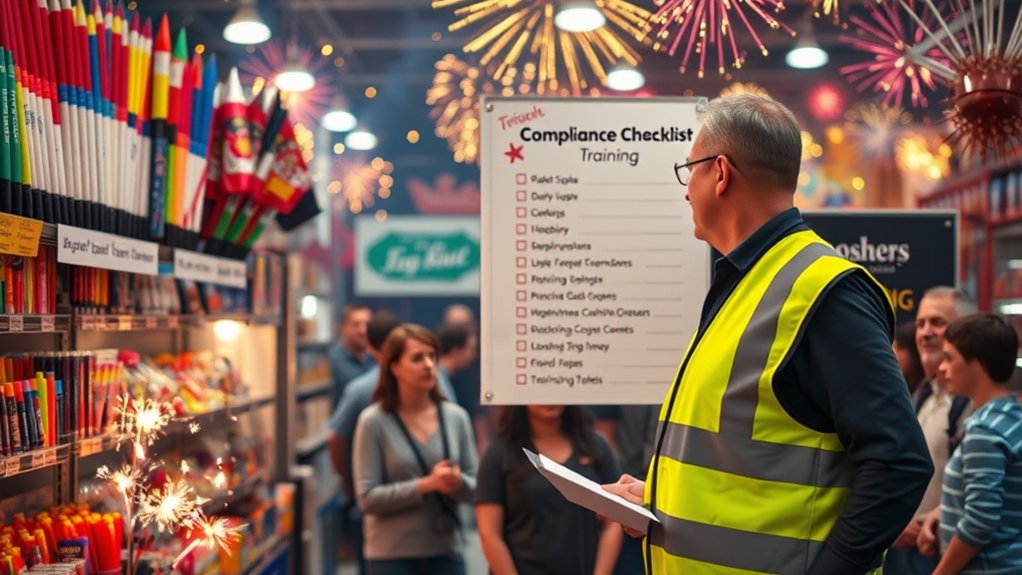
Ensuring proper training and compliance is essential for retailers selling fireworks, as it protects employees, customers, and the wider community.
Implement mandatory training programmes that cover handling, storage, and the specific hazards of aerial and audible ground devices. It’s crucial to verify compliance; keep detailed records of all training sessions and ensure adherence to health and safety regulations, including emergency plans and fire prevention measures. Additionally, ATF inspections occur every three years to verify compliance with storage rules and record keeping. Regular updates and refresher courses help staff stay informed about changing regulations. Furthermore, conducting routine evaluations can help identify areas needing improvement in safety protocols. Additionally, conduct frequent inspections and risk assessments to maintain compliance with safety protocols.
Prioritizing Safety and Enforcement
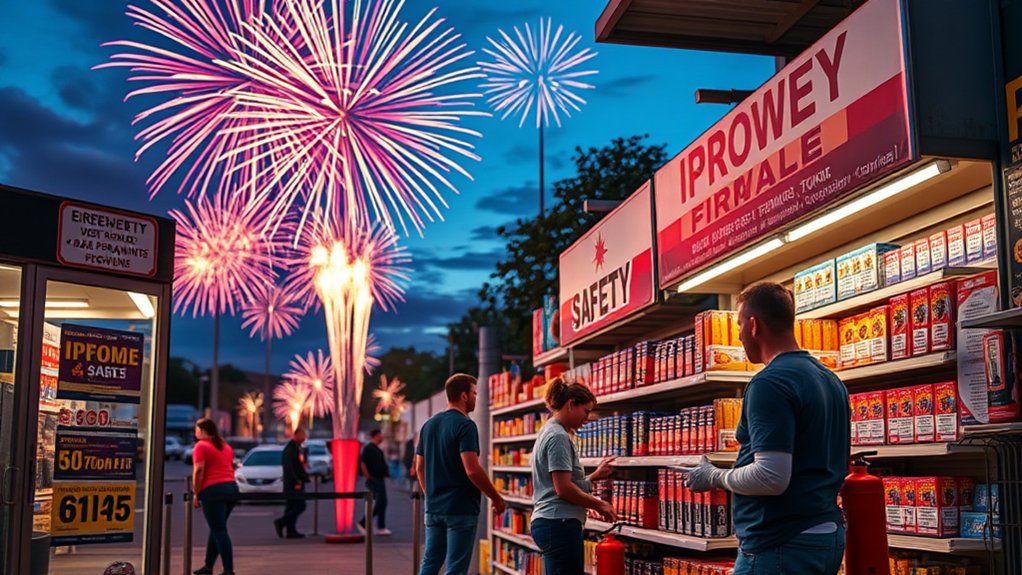
Prioritising safety and enforcement is crucial for retailers dealing with fireworks, as it protects both staff and customers, while also reducing risks to the local community. Implementing clear safety signage and robust emergency protocols is key for compliance.
Here’s a handy reference table to assist you:
| Safety Measure | Description |
|---|---|
| No Smoking Signs | Display within 15 metres of sales areas |
| No Discharge Zone | Maintain a 300-foot radius from the facility |
| Emergency Exit Routes | Clearly mark for quick access |
| Fire Extinguishers | Ensure sales area is stocked with functional fire extinguishers |
| Secure Storage | Lock up facilities when closed to deter unauthorised access |
Managing Operational Considerations and Taxation Responsibilities

When selling fireworks in the UK, it’s crucial to manage operational and taxation responsibilities effectively.
Ensure you obtain all necessary permits and licences before you start trading. Keep accurate records of your inventory and sales to comply with tax regulations, as this is essential for any audits that may arise.
Implement strong inventory management practices to monitor your stock and ensure safety and regulatory compliance at all times. Don’t forget to collect and report VAT according to your local requirements; some areas may also have additional excise taxes.
Regularly review your financial records to stay on top of your tax obligations. By focusing on these key areas, you’ll protect your business and build credibility as a responsible retailer.
Frequently Asked Questions
What Types of Fireworks Can I Legally Sell?
You can legally sell consumer fireworks such as sparklers and cone fountains in the UK, but it’s essential to understand firework classifications and follow legal requirements. Ensure you comply with local laws to avoid selling prohibited items or facing penalties.
Can I Sell Fireworks Year-Round?
You can sell fireworks all year round in the UK, but you need to follow specific regulations regarding the types you can sell and ensure that you meet seasonal demand. It’s crucial to understand the laws in your area to avoid penalties and ensure your business thrives. For example, while some fireworks can be sold throughout the year, others are restricted to certain times, like Bonfire Night or New Year’s Eve. Always check local guidelines to stay compliant.
Are There Age Restrictions for Customers Buying Fireworks?
Yes, there are age restrictions for buying fireworks in the UK. Customers must be at least 18 years old to purchase them. It’s essential to have proper age verification processes in place and to educate customers about these regulations to ensure compliance and avoid fines for selling to underage individuals. For example, always ask for ID when someone looks underage.
How Do I Handle Customer Complaints About Fireworks?
When dealing with customer complaints about fireworks, it’s crucial to resolve issues quickly. Listen carefully to the customer’s concerns, take notes, and offer clear solutions. For instance, if a customer is unhappy about noise levels during a fireworks display, you might explain the safety measures in place or suggest quieter alternatives for future events. This not only addresses their worries but also builds trust and ensures compliance with safety regulations.
What Are the Penalties for Selling Illegal Fireworks?
If you sell illegal fireworks, you could face significant fines, imprisonment, and other legal repercussions. Penalties differ across the UK, with fines typically ranging from £150 to £1,000, and for serious offences, you may even face jail time. It’s simply not worth the risk.
Conclusion
To sell fireworks legally in the UK, you need to ensure compliance with various regulations. First, obtain the necessary licences and permits. This includes a fireworks sales licence and adhering to local council regulations.
It’s essential to follow application protocols carefully and provide appropriate documentation. Staff training is also crucial; ensure your team understands safety measures and legal responsibilities.
For instance, if you’re running a pop-up shop for bonfire night, make sure your staff can advise customers on safe handling and storage of fireworks.
Staying informed about changes in legislation and best practices is vital. By being diligent and proactive, you can run a successful fireworks retail operation while prioritising safety for your customers and the community.