You can keep fireworks for four to five years if they are stored correctly. Ensure they are kept in a cool, dry place, away from direct sunlight and humidity. Regularly check for any signs of damage, such as cracks or dampness. If you spot any issues, it’s best to dispose of them safely. For more information on proper storage and safety measures, continue reading.
Key Takeaways
- Fireworks can typically last four to five years if stored correctly.
- Keeping them in a cool, dry place can extend their usability beyond any expiration dates.
- It’s important to regularly check for any damage or moisture to ensure safety and performance.
- Look out for signs of wear, such as cracks or leaks; these indicate the fireworks may not be safe to use.
- Always dispose of old or damaged fireworks safely and in accordance with local regulations.
Ideal Storage Conditions for Fireworks

When storing fireworks, it’s crucial to keep them in a cool, dry place to ensure their safety and effectiveness. The ideal temperature is between 10°C and 27°C, which helps maintain the stability of the pyrotechnic compositions. Avoid areas with high humidity, as moisture can damage fuses and explosive materials. Consistent temperatures are important to prevent freeze-thaw cycles that could affect packaging and chemical stability. Store fireworks away from direct sunlight to reduce heat build-up and minimise the risk of ignition. Good ventilation is essential to prevent the accumulation of pyrotechnic dust or vapours. Additionally, following NFPA 1124 guidelines ensures proper storage practices and enhances overall safety. It is also important to ensure that fireworks are stored in fire-resistant buildings to comply with safety regulations and reduce explosion risks.
Understanding Shelf Life and Expiration

Understanding the shelf life and expiration of fireworks is crucial for safety and performance. When stored properly, fireworks can last several years, typically around four to five years. While expiration dates on packaging act as guidelines, they don’t mean the fireworks are unusable after that date. Here are some key points to consider:
- Store fireworks in a cool, dry place to extend their shelf life. Proper storage ensures the longevity and safety of the fireworks.
- Avoid moisture, which can significantly impair their performance.
- Check the packaging regularly for any damage or signs of moisture.
- Dispose of old fireworks safely if you’re unsure about their condition.
Signs of Degradation in Stored Fireworks

Proper storage is only part of ensuring your fireworks remain safe and effective over time. Be vigilant for signs of degradation that indicate compromised chemical integrity. Here are key indicators to watch for:
| Visual Damage | Chemical Issues | Packaging Concerns |
|---|---|---|
| Cracks or dents | Powder leakage | Torn or damaged packaging |
| Fading colours | Damp fuses | Missing expiry dates |
| Corrosion on metal | Unusual odours | Signs of water damage |
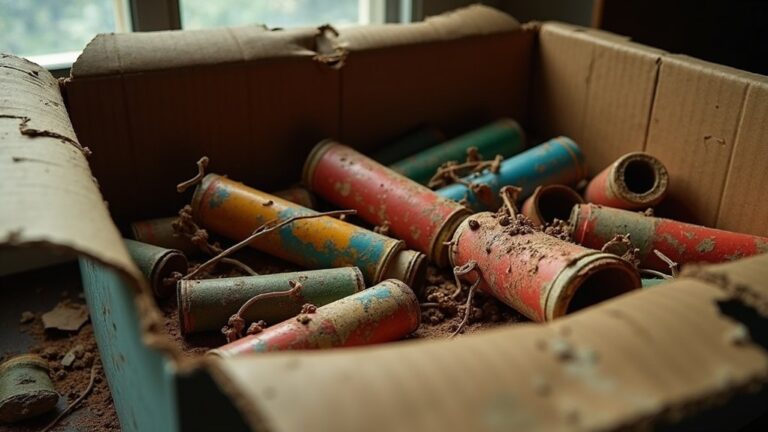
| Warping of materials | Clumped powder | Presence of condensation |
If you spot any of these signs, it’s crucial to take action. Degraded fireworks can misfire or lead to dangerous explosions, so regular inspections are essential for safety. Additionally, compliance with safety guidelines is critical when handling fireworks to prevent accidents during celebrations.
Safe Handling and Inspection Practices

To ensure safety and prevent accidents, it’s crucial to follow strict handling and inspection practices for fireworks. Adhering to these guidelines helps ensure safe transportation and reduces risks.
Here are four essential practices to keep in mind:
- Regular Inspections: Always check for damage or moisture before using fireworks. Keep them in their original packaging until you’re ready to use them.
- Use Non-Sparking Tools: When handling fireworks, use tools that won’t create sparks to avoid accidental ignition.
- Safe Storage: Store fireworks in a cool, dry location, away from heat sources and flammable materials, such as petrol or paper.
- Handler Training: Ensure everyone involved in handling fireworks is trained on safety protocols and knows how to respond in case of an emergency. Additionally, ensure that they are aware of safety zone requirements to maintain a safe distance from the launch area.
Disposal of Old or Damaged Fireworks

Disposing of old or damaged fireworks requires careful attention to safety and legal guidelines.
Start by removing them from storage in a controlled area, away from heat or flames. Avoid touching exposed pyrotechnic material and keep the packaging intact if possible.
Soak the fireworks in water for at least 24 hours to neutralise any chemical reactivity. After soaking, place them in leak-proof, clearly labelled containers for disposal.
Always check local regulations before putting soaked fireworks in your regular bin, as they may be considered hazardous waste.
Contact your local waste management authority to confirm the proper disposal methods, ensuring safety and compliance while preventing any risk of fire or environmental harm.
Frequently Asked Questions
Can I Use Fireworks That Are Several Years Old?
You shouldn’t use old fireworks without a thorough inspection. They can be unsafe due to damaged fuses and unreliable performance. Always prioritise safety; if they show any signs of wear or deterioration, it’s best to dispose of them responsibly.
What Is the Best Temperature Range for Storing Fireworks?
For optimal fireworks storage, maintain a temperature between 18°C and 24°C. Extremes can impair performance, so steer clear of harsh conditions. Ensure the area is dry to avoid moisture damage and keep them out of direct sunlight for safety.
Are There Specific Fireworks Types That Last Longer?
Some fireworks, such as sparklers, tend to last longer because of their straightforward design. On the other hand, aerial shells may offer an extended display but need careful storage to ensure they remain safe and effective.
How Should I Transport Fireworks After Buying Them?
Think of transporting fireworks like moving a valuable item – you wouldn’t let it bounce around. To ensure safety:
- Keep them in the original packaging to prevent damage.
- Avoid exposing them to heat, as this can be hazardous.
- Never carry them in the passenger compartment of your vehicle; always use the boot.
Follow these steps for safe transportation of your fireworks.
Is It Safe to Store Fireworks in a Garage?
Storing fireworks in a garage can be safe if you follow proper storage practices. Keep them away from heat sources, dampness, and any flammable materials. Ensure they are secured to prevent children from accessing them. For example, a locked cabinet can be an effective way to store fireworks safely.
Conclusion
In the realm of celebrations, fireworks are the highlights of the occasion. To ensure they remain safe to use, store them in a cool, dry place, away from moisture and heat. Check for any signs of damage or deterioration before lighting them. If they appear dull or are damaged, it’s best to dispose of them properly. Your safety is paramount for an enjoyable experience, so handle fireworks with care and enjoy the display!