

Safety zones are vital for public protection during large displays, such as firework events. It’s important to set clear boundaries and provide adequate signage to remind people to keep a safe distance. For example, boats should maintain a minimum distance of 100 metres from the display area. Effective crowd control also requires planning entry systems and utilising technology for monitoring. Grasping these elements is essential for compliance and safety. For further details on implementing these crucial safety measures, continue reading.
Key Takeaways
- Set up safety zones with clear signs to protect the public and manage crowd movement during large events.
- Design effective entry systems and venue layouts to reduce congestion and ensure smooth flow of people.
- Use technology like CCTV and crowd-monitoring systems for real-time management of large audiences.
- Carry out thorough risk assessments and work with local authorities to meet safety regulations for these zones.
- Maintain proper distances as per safety guidelines, adjusting zones for factors such as wind and terrain to improve safety.
Understanding Safety Zones: Definition and Legal Framework
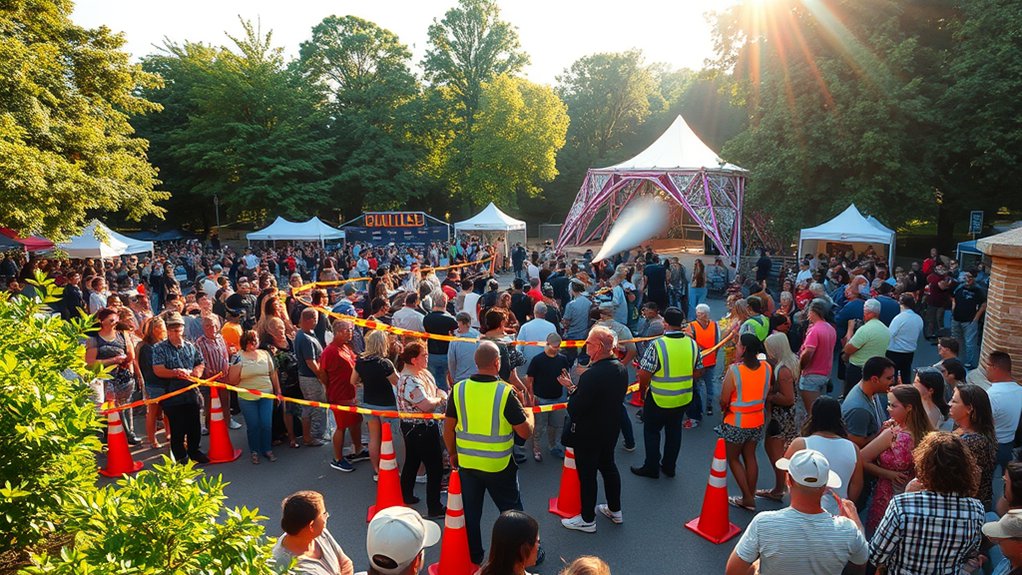
Safety zones are essential areas set up to protect pedestrians and the public from potential dangers in various settings, such as roads, waterways, and airports. These zones are established according to safety regulations, which define their boundaries, usage, and signage requirements.
For example, the UK has specific regulations for safety zones around construction sites and pedestrian areas. Clearly marked zones ensure they’re reserved for foot traffic, helping to reduce accidents. Safety zones must be marked or indicated by adequate signage to ensure they remain effective. Additionally, establishing clear safety zones is crucial to ensure that spectators maintain a safe distance during events like firework displays.
Temporary safety zones can also be created for events or roadworks to boost public safety. By enforcing compliance and imposing penalties for breaches, authorities can maintain effective safety zones, thus protecting pedestrians and minimising risks during potentially hazardous situations.
Understanding these regulations is vital for effective crowd management and public safety.
Fireworks Display Safety Zone Regulations
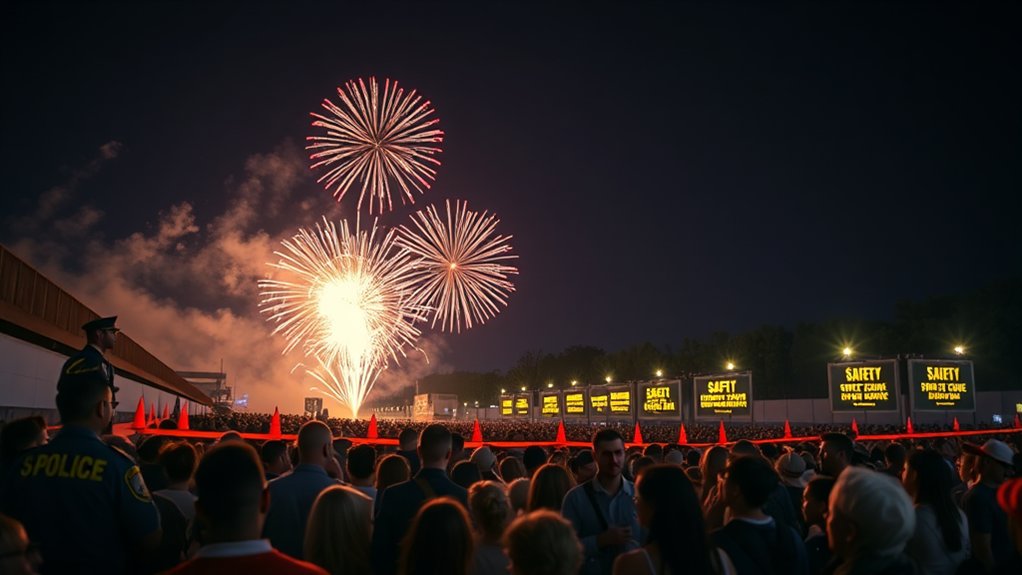
When organising a fireworks display, it’s crucial to understand the regulations regarding safety zones to ensure public safety and legal compliance. Here are the key points to consider:
- Obtain the necessary permits from relevant authorities, such as the local council and fire service.
- Display clear safety signage, including “FIREWORKS – KEEP CLEAR.”
- Set up safety zones that restrict access during the display.
- Maintain a minimum distance of 100 metres for any nearby boats, as fireworks displays create a 1000-foot radius regulated area around the launch site. Additionally, ensure that all staff involved in displays undergo comprehensive training to handle potential safety hazards effectively.
- Coordinate with emergency services to ensure on-site safety.
Adhering to these regulations not only safeguards spectators but also helps you avoid potential legal complications.
Principles of Crowd Control for Large Events
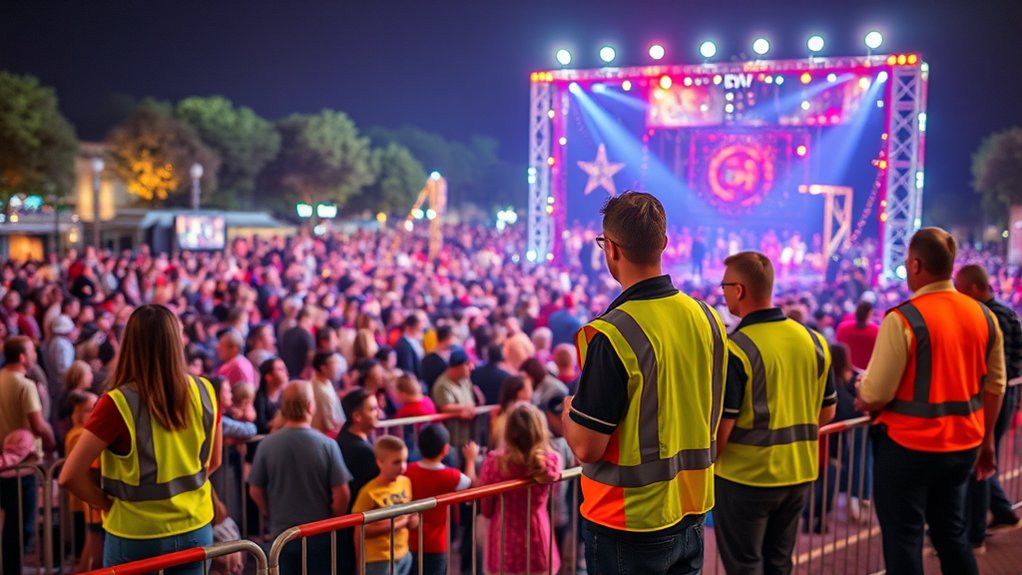
Effective crowd control at large events relies on careful planning and a solid understanding of the venue and audience. It’s crucial to understand crowd psychology to better anticipate behaviours and reactions. Start by creating efficient entry systems to streamline access and reduce congestion. Ensure the venue layout can handle expected crowd sizes, with designated walkways and clear signage to direct attendees. Employ technology like CCTV and crowd-tracking systems for real-time monitoring. Use public address systems and staff radios to communicate essential information quickly. Additionally, proper crowd management ensures adherence to safety regulations, protecting both organizers and attendees. Establishing a designated safety zone around the fireworks display area further enhances safety and mitigates risks. Finally, set up clear emergency protocols so everyone knows where to go and what to do in case of an emergency. This comprehensive approach will enhance safety and improve the overall experience for attendees.
Size and Distance Considerations for Safety Zones
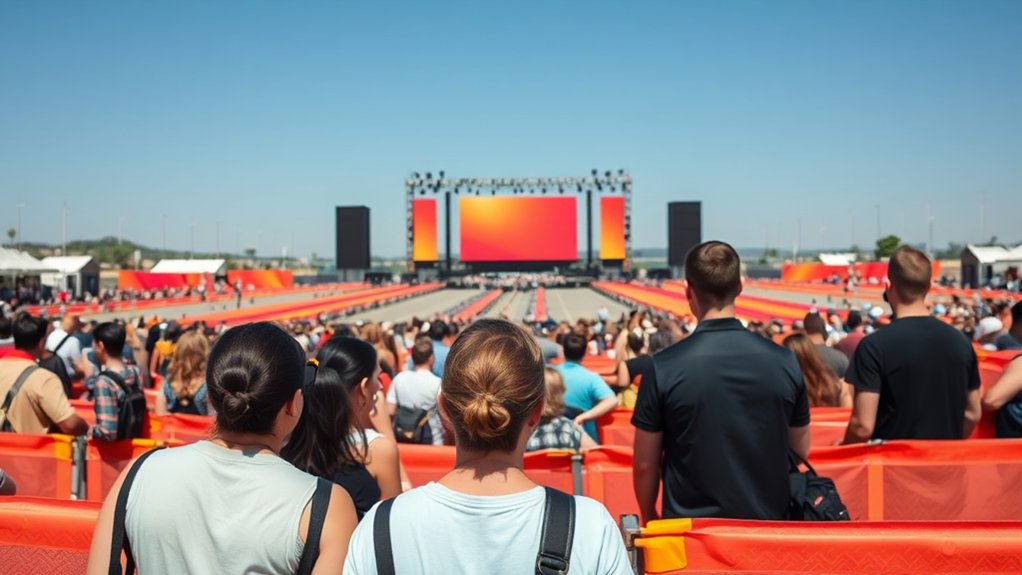
Understanding the size and distance requirements for safety zones is crucial for ensuring the safety of attendees at large events. Here are the key points to consider:
- A safety zone must be at least four times the maximum continuous flame height. For instance, a 3 metre flame necessitates a 12 metre separation, while a 60 metre flame requires 240 metres.
- It’s important to maintain a clear buffer zone around personnel and adjust the safety zone area accordingly.
- Natural barriers, such as hills or solid structures, can help reduce heat impact.
- Wind or uneven terrain may require larger zones to accommodate convective heat effects.
Ensuring Regulatory Compliance and Enforcement

Ensuring regulatory compliance and enforcement is vital for the safety and success of large events. Conduct thorough risk assessments and liaise with local authorities to obtain the necessary permits. Compliance requires clear communication about safety zones and appropriate signage.
| Compliance Aspect | Description |
|---|---|
| Required Signage | “FIREWORKS—STAY AWAY” on platforms |
| Signage Specifications | 25cm high, 4cm wide red lettering |
| Security Personnel | Essential for crowd control |
| Event Safety Plans | Must be submitted and approved before the event |
| Incident Reporting | Required for any breaches or accidents |
Frequently Asked Questions
How Are Safety Zones Determined for Different Types of Events?
Safety zones are established by assessing the type of event and carrying out risk evaluations. Key factors include anticipated crowd size, possible hazards, and specific activities involved. For instance, a music festival may require larger safety zones due to higher crowd density, while a local fair might need smaller zones. This careful planning ensures the safety of both participants and spectators.
Who Is Responsible for Enforcing Safety Zone Regulations?
Enforcement agencies, such as local police and relevant federal bodies, ensure that safety zone regulations are adhered to. Event organisers work alongside these agencies to create protocols that protect public safety while respecting the rights of attendees. For example, during a music festival, organisers may coordinate with the police to manage crowd control and ensure emergency services are on standby.
What Are the Consequences of Violating Safety Zone Restrictions?
Violating safety zone restrictions is akin to wandering into a lion’s den; it can result in serious legal consequences. Offenders may face fines and community service, which not only impact public safety but can also lead to stricter penalties for repeat violations. For example, ignoring safety regulations near schools could endanger children and result in a hefty fine, making it clear that these laws are in place for everyone’s protection.
Can Safety Zones Be Altered During an Event?
Yes, safety zones can be altered during an event, but this must be managed carefully. You’ll need to revise safety plans, secure the necessary permits, and ensure compliance with regulations to keep the public safe. For instance, if crowd sizes change unexpectedly, you might need to expand the safety zone to maintain a safe environment.
How Is Crowd Behavior Monitored Within Safety Zones?
Crowd behaviour is monitored using advanced tools such as AI video analytics and real-time data sensors. These technologies help spot unusual activity, analyse movement patterns, and deliver insights to ensure safety and effective crowd management. For instance, at events like music festivals, these systems can alert organisers to potential overcrowding or disturbances, allowing for swift intervention.
Conclusion
Next time you attend a large display, remember that safety zones are essential—they provide a crucial barrier between fireworks and you. Nobody wants to dodge flaming debris while trying to enjoy the festivities. While proper crowd control might feel tedious, it’s a necessary measure to prevent chaos. Let’s ensure the celebrations remain joyful and safe, not reminiscent of a disaster film. Your safety and peace of mind are worth it.


