To plan a safe garden firework display, select a spacious area with a clearance of at least 30 by 30 metres. Ensure that spectators are positioned 10 to 45 metres away, depending on the type of fireworks being used. Familiarise yourself with the different categories of fireworks and adhere to age restrictions and safety regulations.
Secure the area to prevent any accidents, handle all fireworks with care, and have an emergency plan in place. Once the display is over, make sure to clean up thoroughly to remove any leftover hazards. Following these steps will help ensure your event runs smoothly and safely.
Key Takeaways
- Ensure a minimum 30 by 30-metre clearance for the launch site and maintain safe distances for spectators based on the type of fireworks being used.
- Only use legal fireworks that comply with UK CE standards and follow age restrictions for F1, F2, and F3 categories.
- Clearly mark spectator zones and educate your guests on safety guidelines. Keep pets indoors during the display to prevent distress.
- Set up fireworks on stable surfaces, away from flammable materials, and have water or fire extinguishers readily available for emergencies.
- After the display, clean up thoroughly and dispose of debris safely. Wear protective gear to avoid injuries during the clean-up process.
Selecting the Right Location for Your Display

When choosing the right location for your firework display, ensuring safety and enjoyment for everyone is crucial. Start by selecting a spacious area, ensuring there’s at least a 30 by 30-metre clearance around the launch site. This keeps spectators at a safe distance of 8 to 25 metres, depending on the fireworks used. Avoid launching near buildings, trees, or flammable materials to reduce the risk of accidents. Additionally, create a safety zone by covering nearby tall trees or shrubs with fire-resistant materials. It’s vital to choose fireworks from Category 1 for small gardens to enhance safety while still delivering an impressive show. Visibility is also important; choose a spot where everyone can see the display clearly. Keep an eye on the weather, and be prepared to postpone if wind conditions are too strong. Lastly, establish a secure perimeter to keep unauthorised people away and ensure emergency access is maintained.
Understanding Fireworks Categories and Legal Requirements
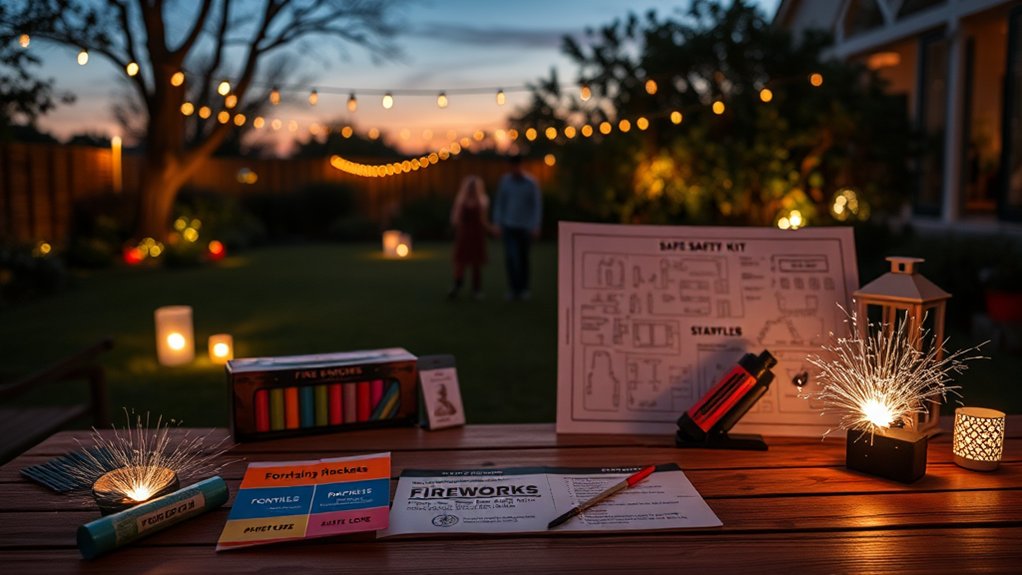
Before you light up the night sky, it’s important to know the different categories of fireworks and their legal requirements in the UK. Each category comes with specific age restrictions and compliance rules that can differ depending on where you live. For instance, some fireworks are only suitable for professional displays, while others can be used in your garden. Following these guidelines is crucial for a safe and enjoyable fireworks experience. Additionally, understanding the legal classifications of fireworks can help you choose the right type for your event. Remember, Roman Candles are classified as consumer fireworks and are legal for purchase by individuals aged 18 and over, provided they adhere to local regulations.
Firework Categories Explained
Understanding the different firework categories is crucial for planning a safe and enjoyable garden firework display. Fireworks are classified into categories F1 to F4, each with varying levels of hazard and specific usage guidelines. Knowing these categories helps in preparing your display and ensuring safety. Additionally, adhering to safety regulations is essential to minimize risks during your event.
| Category | Description |
|---|---|
| F1 | Very low hazard; suitable for indoor use (e.g., sparklers) |
| F2 | Low hazard; designed for small outdoor spaces (e.g., fountains) |
| F3 | Medium hazard; intended for large open areas (e.g., aerial shells) |
F4 fireworks are high hazard and only for licensed professionals. Familiarising yourself with these classifications ensures compliance with safety regulations and reduces risks during your display. Additionally, it’s important to note that all consumer fireworks must meet CE standards for safety and classification to ensure proper use.
Age Restrictions Overview
When planning your garden firework display, it’s crucial to understand the age restrictions for different types of fireworks in the UK.
You can buy F1 category fireworks if you’re 16 or older, but for F2 and F3, you need to be at least 18. The F4 category is banned from public sale altogether.
Always check your local regulations to ensure compliance. If minors are using fireworks, they must be supervised, as failing to do so can lead to hefty fines.
Prioritise safety for an enjoyable experience for everyone.
Legal Compliance Essentials
Planning a garden firework display? Ensuring legal compliance is crucial for a safe and enjoyable event. Here are some key points to consider:
- Firework categories: Familiarise yourself with the differences between 1.3G (professional) and 1.4G (consumer) fireworks. For home displays, you’ll mainly use 1.4G.
- Local laws: Check for specific regulations in your area, as different councils may have their own rules regarding permits and safety measures.
- Enforcement and penalties: Be aware that violating firework regulations can lead to fines or other legal actions.
Always consult your local council to confirm you’re complying with all necessary guidelines.
Ensuring Audience Safety and Animal Protection
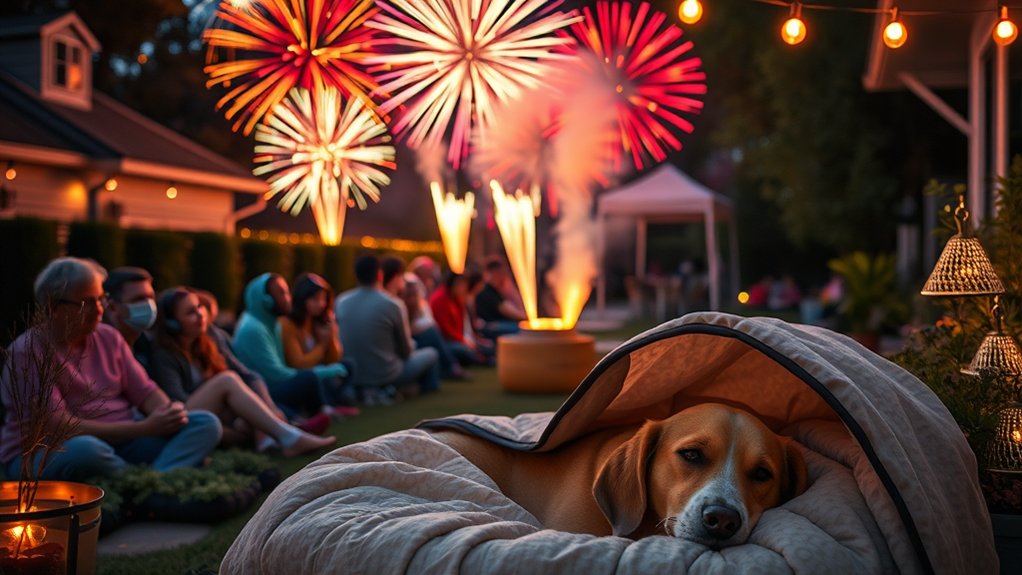
To ensure a safe garden firework display for everyone, it’s crucial to enforce distance guidelines for guests.
Keep spectators at least 10 metres away from ground fireworks and 45 metres from aerial displays. Clearly mark these zones to avoid accidents.
Also, prioritise pet safety by keeping animals indoors and letting your neighbours know about the event so they can prepare.
Guest Distance Guidelines
Ensuring the safety of your guests during a garden firework display is crucial, and it’s essential to follow proper distance guidelines.
Here are some key recommendations:
- Keep guests at least 15 metres (50 feet) away for smaller fireworks, and 30 metres (100 feet) or more for larger aerial shells.
- Set up a clearly marked spectator area with barriers to prevent anyone getting too close to the firing zone.
- Inform your guests of these distance guidelines before the display starts to ensure everyone’s safety.
Pet Safety Measures
Pets can be particularly sensitive to the loud noises and bright flashes of fireworks, so it’s crucial to take specific safety measures to protect them during your garden display. Create a quiet, secure room for your pets that is escape-proof. Play calming background noise and provide familiar comfort items to help ease their anxiety.
| Safety Measure | Description |
|---|---|
| Designate a Safe Room | Choose a quiet space away from the noise |
| Block Light | Use heavy curtains to reduce light from fireworks |
| Keep Pets Indoors | Prevent exposure to fireworks entirely |
| Monitor for Signs of Stress | Look for signs like trembling, hiding, or excessive drooling |
Proper Handling and Ignition Techniques

Proper handling and ignition techniques are crucial for a safe and enjoyable fireworks display in your garden.
Here are some key guidelines to ensure safety:
- Always check the firework label for specific handling instructions and safety distances.
- Set up fireworks on stable surfaces, well away from anything flammable, and keep them dry.
- Light one firework at a time using a long lighter or taper, ensuring you maintain a safe distance from the fuse.
Preventing Fire Risks and Preparing for Emergencies

When planning your garden firework display, it’s crucial to focus on fire risk prevention and emergency preparedness.
Keep a bucket of water, a garden hose, or a fire extinguisher close at hand for quick action if a fire starts. Select a clear area, away from anything flammable, and avoid setting off fireworks on windy days to reduce the risk of sparks spreading.
Ensure everyone knows where emergency contacts are and where water sources can be found. Develop an evacuation plan with clear escape routes and a meeting point.
Have a fully charged mobile phone ready for emergency calls, and keep a first aid kit accessible for any injuries.
Make sure all participants understand how to stop the display if something goes wrong to prevent accidents.
Setting Up Safety Zones and Marking Boundaries

When organising your garden firework display, it’s crucial to set up clear safety zones to ensure everyone’s protection.
Keep a safe distance from spectators and mark boundaries with visible indicators such as stakes and twine.
This straightforward setup helps prevent accidents and ensures a fun experience for all involved.
Establish Clear Safety Zones
Establishing clear safety zones is crucial for a safe and enjoyable firework display in the garden. Here are some key points to follow:
- Keep spectators at least 10 metres (35 feet) away from ground-based fireworks and 45 metres (150 feet) away from aerial ones.
- Ensure children and pets are kept outside of these safety zones to avoid accidents.
- Use physical barriers and clear signage to define restricted areas.
Make sure the launch site is free from obstructions such as buildings and bushes to reduce fire risks.
Regularly check your boundaries, especially in low light, to ensure everyone is at a safe distance.
Use Visual Markers
Establishing defined safety zones is just the beginning; using visual markers effectively is essential for maintaining those boundaries during the event.
Opt for highly visible markers, such as bright reflective cones or fluorescent tape, to clearly delineate your perimeter. Ensure these markers are spaced no more than 3 metres apart, especially near audience areas and fallout zones.
Choose durable materials, like weather-resistant plastic cones, to withstand different conditions. Include clear signage stating “No Entry” or “Safety Zone” at eye level.
Regularly check the markers and adjust as needed to uphold safety. These measures will help ensure everyone remains within the designated areas, making your firework display safer and more enjoyable.
Choosing Appropriate Fireworks for Your Garden Size

Choosing the right fireworks for your garden is essential for a safe and enjoyable display. Here’s what to consider based on your garden size:
- Small gardens: Use Category F2 fireworks, such as small fountains and Roman candles, which need only 8-15 metres of clearance.
- Larger gardens: Go for Category F3 fireworks, like large rockets, requiring at least 25 metres of distance.
- Avoid high-flying shells in compact spaces, as they can be more hazardous.
Always prioritise safety by keeping spectators and structures at a safe distance.
Ensure you purchase fireworks with the British Standard Kitemark BS7114 for quality.
Enjoy your display while keeping it secure!
Post-Display Cleanup and Safe Disposal Practices
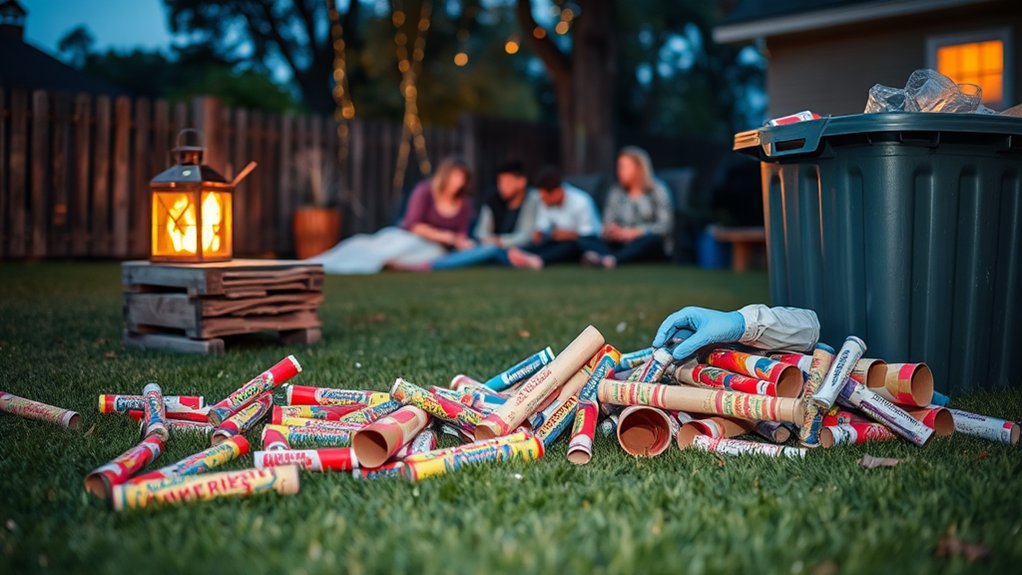
After the final firework has fizzled out, it’s important to focus on post-display cleanup and safe disposal to ensure safety and protect the environment.
Start by collecting all spent firework debris, such as casings and paper, to avoid hazards. Be sure to sweep your garden thoroughly to find any small remnants that could cause harm.
For hot remnants, soak used sparklers in water before disposing of them in metal containers to prevent accidental ignition. Avoid burning any debris, as this can release harmful fumes.
When cleaning up stains, use specialised cleaners for affected surfaces, applying stronger products for tough marks.
Always wear protective gear to shield yourself from sharp debris and chemical residues during cleanup.
Educating Guests About Firework Safety

Once you’ve ensured a thorough cleanup, it’s time to educate your guests about firework safety to ensure a successful display. Here are some key points to share:
- Fireworks should only be handled and lit by adults; children must watch from a safe distance.
- Maintain a minimum distance of 15-30 metres (50-100 feet) from the firing area.
- Never return to a firework that has been lit, and report any malfunctions straight away.
Make it clear that alcohol and fireworks don’t mix, and ensure everyone understands the Firework Code.
Planning for Unexpected Situations and Emergencies

When planning your garden firework display, it’s crucial to prepare for unexpected situations and emergencies to ensure everyone’s safety. Here are some key steps to follow:
- Emergency Protocols: Establish clear procedures for emergencies and ensure all staff are briefed on them.
- Communication: Use two-way radios to maintain contact between display operators and safety personnel.
- Local Services: Inform local emergency services about your event details in advance.
- Evacuation Routes: Designate accessible evacuation routes for spectators.
| Situation | Action Required |
|---|---|
| Fire outbreak | Stop the display immediately and use extinguishers. |
| Firework malfunction | Wait 15-20 minutes, then soak the firework in water. |
| Spectator breach | Suspend firing and enforce a no-entry policy. |
| Weather changes | Monitor conditions continuously and adjust plans as needed. |
| Disorderly behaviour | Coordinate with security for swift intervention. |
Implementing effective crowd management measures will help ensure a safe experience for everyone involved.
Frequently Asked Questions
What Time of Year Is Best for a Garden Firework Display?
The ideal time for a garden firework display is during the warmer summer months, especially around seasonal celebrations like Bonfire Night or New Year’s Eve. For safety, choose evenings with clear skies and avoid windy conditions. Also, ensure your garden is free of dry vegetation to reduce fire risks.
Can I Use Leftover Fireworks From Last Year?
Using leftover fireworks isn’t always safe. First, check their condition; if they’re damaged or past their expiry date, it’s best to dispose of them responsibly. Always follow firework safety and storage guidelines to prevent accidents or injuries. For example, if you find any that are wet or have been stored improperly, it’s a clear sign to get rid of them. Stay safe and enjoy your celebrations responsibly.
How Do I Choose a Reliable Fireworks Supplier?
To select a reliable fireworks supplier, start with comprehensive research. Ensure they have the necessary licences and comply with safety regulations. Look at their range of products – a good supplier should offer a variety of fireworks for different events. Don’t forget to read customer reviews; this will help you gauge their quality and reliability. For example, if you’re planning a wedding display, check if they have experience with similar events. Prioritising these factors will ensure a safe and impressive fireworks experience.
Are There Any Insurance Considerations for Firework Displays?
When organising a firework display, can you risk not having liability insurance? It’s essential for obtaining event permits and safeguarding against potential accidents. Ensure your insurance complies with local regulations to avoid expensive repercussions.
What Should I Do if a Firework Doesn’t Ignite?
If a firework doesn’t ignite, wait 20 minutes before approaching it. Mark the spot and maintain a safe distance. Always prioritise safety—never attempt to relight or handle a dud without taking proper precautions. For example, if a firework doesn’t go off, treat it as a potential hazard and ensure everyone stays well back.
Conclusion
As you prepare for your garden firework display, think of yourself as the captain of a ship navigating a starry night. Every choice you make—where to light the fuse, how to protect your guests—will influence the event. With thorough planning and an understanding of safety, you can light up the sky and create lasting memories. So, plan carefully, stay alert, and enjoy the spectacle as it unfolds under your watchful eye.