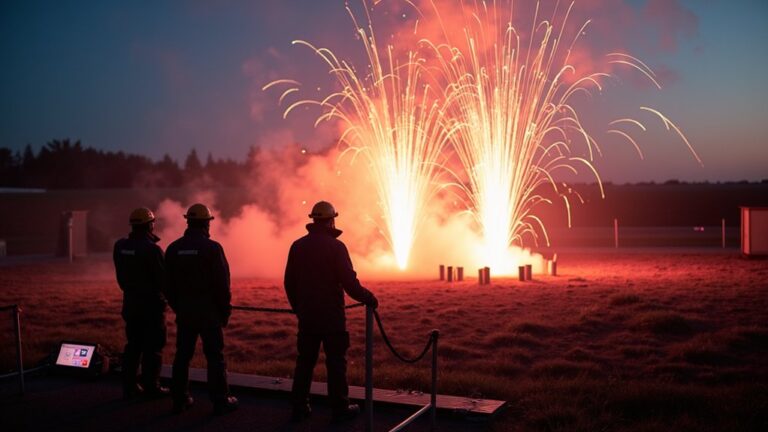
Fireworks can be distressing for pets and wildlife, causing anxiety from their loud bangs and bright lights. To keep your pets safe, ensure windows and doors are secure, create a calming area, and provide their favourite bedding and toys. Microchipping is essential for quick recovery if they escape. Engage your pets in fun activities to distract them from the noise. By taking these steps, you can help ensure a safer experience for your furry friends and find effective ways to calm them down.
Key Takeaways
- Keep pets indoors during fireworks; secure windows and doors to prevent escapes and minimise exposure to noise and light.
- Create a calming environment using familiar bedding, soothing music, and white noise machines to ease anxiety.
- Ensure pets are microchipped and wear ID tags, as this increases the likelihood of being reunited if they escape.
- Engage pets in distraction activities like play or walks beforehand to help them cope with the noise of fireworks.
- Raise awareness in your community about firework safety and support alternatives like LED displays to reduce distress for pets and wildlife.
Understanding Firework Noise and Its Effects on Pets

When fireworks light up the night sky, the loud noises can be distressing for your pets, triggering their natural fear responses.
Dogs and cats have much sharper hearing than humans, with dogs being able to hear sounds up to four times more acutely.
The sudden, unpredictable bangs of fireworks can resemble natural threats like thunderstorms, leading to a phobia in many pets. This fear can manifest as stress, anxiety, and behavioural changes, such as pacing or hiding away.
The combination of loud noises, bright flashes, and strong smells can overwhelm their senses. Fireworks produce extremely loud and unpredictable noises that can further reinforce their fear response. Additionally, the proximity to fireworks can pose health risks for pets due to harmful particles they release.
Even one frightening experience can have lasting effects, so it’s important to understand how fireworks can impact your furry friends.
Safety Precautions for Keeping Pets Indoors

To ensure your pets stay safe and calm during fireworks, it’s important to prepare your home ahead of time.
Start by securing windows and doors to reduce noise and prevent any escapes. Close the curtains to block out flashes of light, and create a quiet area with their familiar bedding where they can feel secure. Additionally, placing small pet cages in quieter areas away from noise sources can significantly reduce their anxiety.
Play calming music or use a white noise machine to drown out sudden sounds, and consider using pheromone diffusers to help ease anxiety. Additionally, keeping pets away from fireworks is crucial to prevent them from becoming frightened or injured.
Provide interactive toys to keep them distracted, and play with them earlier in the day to help burn off energy. Gradually introducing pets to firework sounds in a controlled environment can also help them cope better during celebrations.
Keep an eye out for signs of stress, such as shaking or hiding, and respond calmly.
Lastly, ensure that matches and fireworks are stored safely to maintain a secure environment for your furry companions.
The Importance of Identification for Pets

To keep your pets safe during fireworks, proper identification is crucial. Microchipping offers a permanent solution, significantly improving the chances of reuniting with your pet if they go missing. Additionally, make sure your pet wears ID tags; this simple measure can lead to a quicker return if they stray. Don’t underestimate the importance of these safety steps. Studies show that ID tags can increase the likelihood of pets being returned home significantly.
Microchipping Benefits
Microchipping your pet is one of the most effective ways to ensure their safe return if they ever go missing. The statistics are compelling: microchipped dogs have a reunification rate of around 52.2%, compared to just 21.9% for those without a chip.
Cats show even better results, with microchipped felines being reunited at a rate of 38.5%, vastly outperforming the mere 1.8% of unmicrochipped cats.
Microchips offer a permanent and tamper-proof form of identification that lasts a lifetime, unlike collars, which can easily be lost. The microchipping process is quick and painless, causing minimal discomfort to your pet.
ID Tags Necessity
How can you ensure your pet finds its way home if it ever goes missing? The answer is simple: ID tags.
These vital tools offer several key benefits:
- Visibility: Having your pet’s name and your contact details clearly displayed makes it easier for someone to get in touch with you.
- Quick reunification: ID tags allow for immediate contact, helping to minimise the time your pet is away from home.
- Higher return rates: Pets wearing ID tags are much more likely to be reunited with their owners.
Despite these clear advantages, only one in three pet owners consistently use ID tags.
Don’t take chances with your pet’s safety—make sure your furry friend is wearing an ID tag to boost their chances of returning home.
Distraction Techniques to Calm Anxious Pets
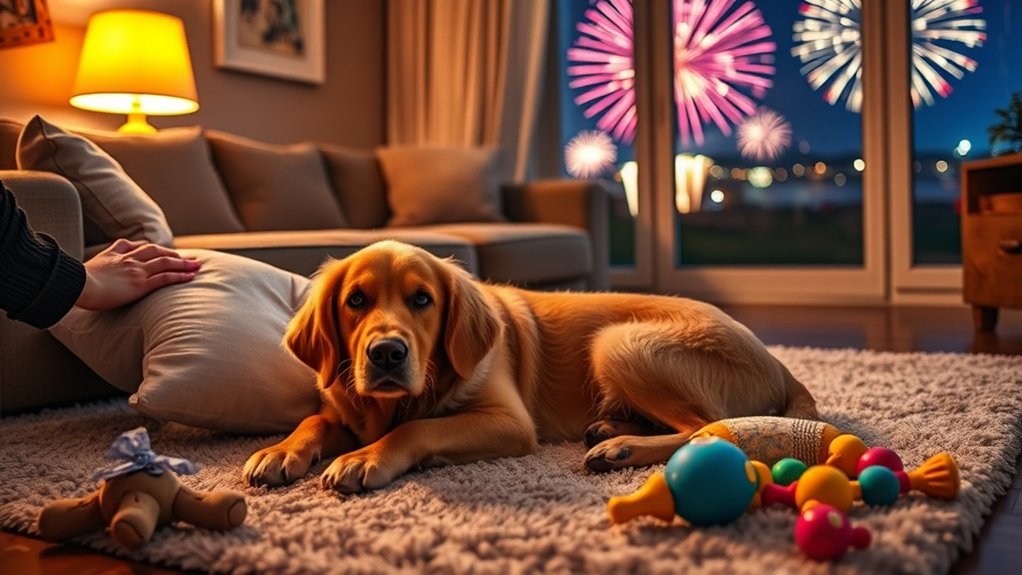
When fireworks go off, pets often feel anxious and frightened.
To help distract them from the noise, engage them in enjoyable activities or play calming sounds. Using toys or background music can create a more soothing atmosphere for your furry friend.
For example, consider playing gentle classical music or offering a favourite chew toy to keep their mind occupied. Additionally, creating a safe space with familiar bedding can help pets retreat and feel secure during loud noises that may trigger their anxiety.
Engaging Activities for Pets
As fireworks light up the sky, keeping your pet engaged with fun activities can help reduce their anxiety.
Focus on both physical and mental exercises to distract them from the noise. Here are three effective strategies:
- Outdoor Exercise: Take your pet for a brisk walk, run, or hike to tire them out before the fireworks start.
- Engaging Games: Play indoor games like hide-and-seek or fetch to keep their mind active.
- Interactive Toys: Use puzzle toys or treat dispensers to stimulate their curiosity and focus.
These activities not only provide distraction but also create a sense of comfort and safety, helping to ease stress during fireworks.
Calming Sound Techniques
Fireworks can bring joy for many, but they often cause anxiety in pets, leaving them scared and vulnerable.
To help your furry friends, try calming sound techniques. Sound therapy, such as relaxing music or white noise, can distract pets from the loud bangs. You can find calming playlists specifically designed for animals that help lower their heart rates and ease tension.
Nature sounds can also create a soothing atmosphere. Start with low volumes and gradually increase as your pet gets more comfortable. Pair these sounds with treats or toys to build positive associations.
Always keep an eye on your pet’s reactions and adjust as needed. With a bit of patience, these techniques can help your pets feel safer during fireworks.
Risks of Fireworks to Wild Animals

Fireworks, with their loud bangs and bright flashes, pose serious risks to wildlife, disrupting their natural behaviours and habitats. The chaos they create can lead to the displacement of animals and significant changes in their behaviour.
Here are some key impacts:
- Panic Responses: Animals may flee their nests or burrows, increasing the risk of accidents, such as collisions with vehicles.
- Abandonment: Migratory birds might abandon crucial resting sites, jeopardising their survival and ability to reproduce.
- Chronic Stress: Ongoing exposure to fireworks can weaken animals’ immune systems, making them more vulnerable to illness.
Recognising these risks highlights the harm fireworks inflict on wildlife, encouraging us to consider safer alternatives for our celebrations.
Health Impacts of Fireworks on Pets

Loud noises and bright lights from fireworks can pose serious health risks for pets, often leaving them anxious and scared. Many animals show signs of distress during fireworks, such as trembling, excessive barking, and drooling.
This isn’t just a temporary fright; the aftermath can result in lasting behavioural changes, with some pets suffering from anxiety for weeks or even months. The stress of fireworks can weaken their immune systems, making them more prone to illness.
Moreover, extreme fear can lead to injuries if pets try to escape. As a responsible pet owner, it’s crucial to be aware of these risks and take steps to reduce your pet’s anxiety during fireworks displays, prioritising their health and safety.
Preventing Pet Loss During Firework Events

As firework events approach, it’s vital to be aware of the increased risk of pet loss. Here are some straightforward strategies to ensure your pets remain safe:
- Keep your pets indoors in a secure, quiet room. Use their familiar bedding and consider white noise to drown out the sounds of fireworks.
- Microchip your pets and ensure their ID tags are current, making it easier to reunite if they escape.
- Avoid taking pets to firework displays, and exercise them beforehand to help alleviate anxiety.
You might also consider alternatives like LED light displays or silent fireworks to keep your pets calm.
Identifying Signs of Stress in Pets

During stressful events like firework displays, it’s crucial to recognise the signs of stress in your pets. Identifying these signals can help you manage their anxiety effectively. Look out for visible signs such as trembling, excessive panting, or vocalisations like whining. Changes in behaviour, such as hiding or being destructive, can also indicate stress.
| Visible Signs | Behavioural Changes |
|---|---|
| Trembling or Shaking | Destructive Behaviour |
| Excessive Panting | Increased Water Intake |
| Tucked Tail | Refusing to Eat |
Being aware of these indicators allows you to respond quickly and provide comfort. Always pay attention to your pet’s body language, as it can reveal their emotional state during fireworks.
Calming Techniques for Anxious Animals

When fireworks light up the sky, having calming techniques ready for your anxious pets is essential. Here are some effective strategies:
- Pressure Garments: Use anxiety vests that apply gentle pressure to help reduce panic during loud events.
- Auditory Management: Play calming music or white noise to drown out sudden sounds. You can also desensitise your pet to firework noises by using low-volume recordings.
- Environmental Modifications: Create a safe space away from windows, filled with familiar items. Close curtains to reduce visual stimuli, allowing your pet to feel more secure.
Incorporating behavioural training, such as desensitisation and sensory distractions, can further improve your pet’s ability to cope with fireworks, leading to a calmer experience for all.
The Role of Veterinary Care in Severe Cases

Despite using calming techniques, some pets may still experience severe distress during fireworks, making veterinary care necessary.
In such cases, your vet will assess your pet’s behaviour and check for any physical injuries like burns or self-inflicted wounds. Based on their findings, treatment options may include anti-anxiety medications or pheromone therapy to help ease their anxiety.
If your pet sustains serious injuries or exhibits extreme stress, emergency care is crucial.
It’s advisable to consult your vet before fireworks season to develop a tailored management plan, ensuring your pet receives the best care during these stressful times.
Preparing for Firework Displays in Advance

To ensure your pets remain safe and calm during firework displays, it’s crucial to prepare in advance.
Here are some straightforward steps to help your pets feel more comfortable:
- Create a Safe Space: Designate a cosy area with their bedding, favourite toys, and some treats to provide a sense of security.
- Seal the Environment: Close the curtains and use white noise machines or calming music to help drown out the sounds of the fireworks.
- Update Identification: Make sure your pets have up-to-date ID tags, and consider microchipping them for extra peace of mind.
Taking these steps can help mitigate your pets’ anxiety during fireworks.
Educating Communities on Firework Safety for Animals

Educating your community about firework safety is crucial for safeguarding pets and local wildlife.
By advocating for responsible firework use and launching awareness campaigns, we can reduce the anxiety animals face during displays.
For instance, consider keeping pets indoors and providing a safe, quiet space for them during celebrations.
Together, we can foster a safer environment for all creatures during festive occasions.
Community Awareness Campaigns
As communities come together to enjoy fireworks, it’s important to consider the effect these loud noises can have on our pets.
Raising awareness is key. Here’s how you can help:
- Team Up with Local Shelters: Work with animal shelters to share vital information on firework safety for pets.
- Utilise Social Media: Use Facebook and Twitter to share tips on keeping pets calm and safe during fireworks.
- Organise Community Events: Host workshops to educate pet owners about calming techniques and safety measures for their animals.
Responsible Firework Usage
Enjoying fireworks can be exciting, but it’s crucial to keep our pets safe during these events. Loud noises can cause anxiety in animals, leading them to escape and potentially injure themselves.
To ensure their safety, always set off fireworks in a location away from homes and flammable materials, and keep a close eye on children.
Consider hosting community workshops to inform others about the risks to pets and the proper use of fireworks. Partner with local vets to share tips on calming anxious animals during celebrations.
Local Wildlife Considerations
Fireworks not only endanger our pets but can also have a significant impact on local wildlife. The loud bangs and bright flashes disrupt their natural behaviour, causing stress and driving them away from their habitats.
Here are three key points to consider for the protection of wildlife:
- Habitat Preservation: Support local efforts aimed at preserving natural habitats to lessen the impact of fireworks on wildlife.
- Education: Raise awareness about the harmful effects of fireworks on local species, encouraging responsible behaviours within the community.
- Alternative Celebrations: Promote the use of silent fireworks or drone light displays that reduce stress on wildlife while still allowing for enjoyable celebrations.
Frequently Asked Questions
Can Certain Dog Breeds Be More Affected by Fireworks Anxiety?
Yes, certain dog breeds are more sensitive to the sounds of fireworks, leading to increased anxiety. Breeds such as the Norwegian Buhund and the Irish Soft Coated Wheaten Terrier often struggle more during firework displays, which can have a negative impact on their well-being.
How Can I Help My Pet Recover After Fireworks?
To help your pet recover after fireworks, create a calm, cosy space where they feel safe. Use gentle petting and play soothing music to provide comfort. This supportive environment can really help ease their distress.
Are There Specific Times of Year When Fireworks Are More Common?
Fireworks are most common during Bonfire Night on 5th November and New Year’s Eve. You’ll also see displays at summer festivals and community events, particularly on weekends when people come together to celebrate.
What Should I Do if My Pet Injures Itself During Fireworks?
If your pet injures itself during fireworks, act quickly. Apply pressure to any bleeding and seek immediate attention from an emergency vet for prompt care and recovery.
Can I Use Natural Remedies for My Pet’s Firework Anxiety?
Yes, you can use natural remedies for your pet’s firework anxiety. Consider herbal supplements and calming techniques, such as setting up a safe space for them. Always consult your vet to ensure these methods are safe and effective for your furry companion.
Conclusion
As fireworks approach, it’s important to consider how they affect your pets and local wildlife. Keep pets indoors during displays, use calming techniques like soothing music, and ensure they are properly identified with collars or microchips. Educating your community about firework safety for animals helps create a kinder environment for all. Together, we can safeguard our furry companions and wildlife, ensuring that celebrations don’t come at the expense of their well-being.