

To create a safe fireworks launch zone, first secure the necessary permits and approvals. Assess your site layout, ensuring the firing line is at least 1.5 times the height of the fireworks from the audience. Establish a safety zone of 600 feet to 500 yards, clearly marked with barriers. Train your staff on emergency protocols and ensure clear communication throughout the event. Keep a close eye on weather conditions and inspect the site for any hazards after the display. There’s a lot to consider for a successful event.
Key Takeaways
- Choose a large, open space for the launch zone, ensuring it is clear of any flammable materials and debris.
- Set up a safety zone extending between 600 feet and 500 yards from the firing line, marked clearly with barriers.
- Position the firing line at least 1.5 times the height of the tallest firework away from the audience.
- Use clear warning signs, such as “FIREWORKS—KEEP CLEAR,” to prevent unauthorised access to the launch site.
- Maintain a 50-foot no-smoking area around storage and launch zones to reduce fire hazards.
Understanding Regulatory Approvals and Permits

When planning a fireworks display in the UK, it’s crucial to understand that obtaining regulatory approvals and permits is essential for safety and legal compliance.
You need to submit your permit application at least 15 days before the event. The application should include a description of the event, firing procedures, and details of a qualified operator. Additionally, ensure that your display is managed by a competent operator as required by local regulations. It is also important to ensure that the fireworks being used are sourced from registered sellers, as this is a legal requirement.
Local councils, and possibly national agencies, may need to approve your plans, especially if the display is near water or airports.
Don’t forget to include liability insurance and arrangements for fire and medical services.
Ensure you comply with all local and national regulations to minimise risks and ensure a safe, successful fireworks event.
Establishing Site Layout and Safety Zones
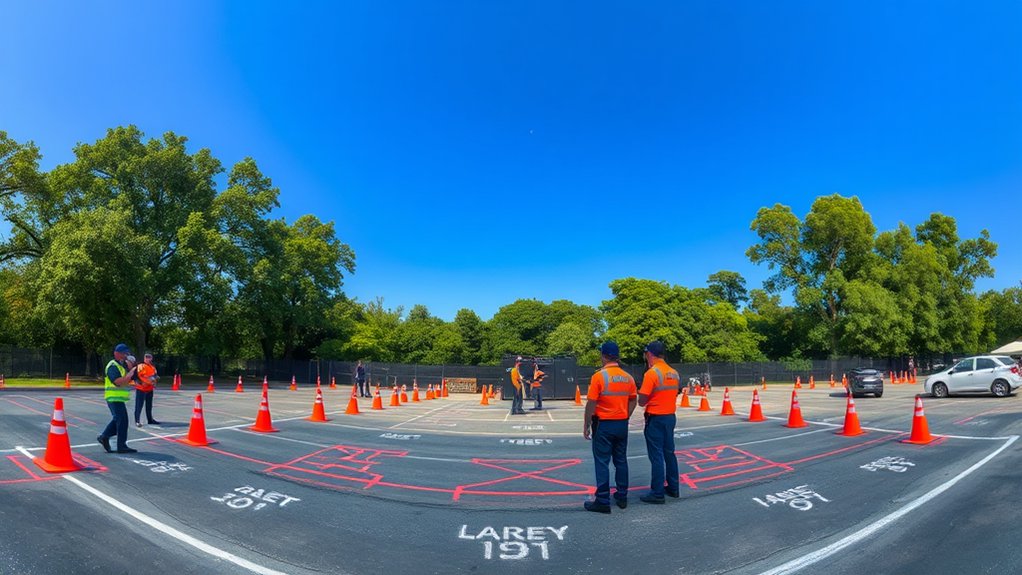
Establishing a safe fireworks launch zone requires careful planning, as the layout affects both crowd safety and display effectiveness.
Begin with a thorough site assessment to choose a large, open area, avoiding overhead wires and obstructions. Position the firing line at least 1.5 times the height of the tallest firework from the audience, ideally upwind to shield spectators from debris. Site selection and setup is critical to ensuring the safety of all attendees. Moreover, adhering to Health and Safety Executive (HSE) guidelines is essential for maintaining safety protocols throughout the event.
Clearly mark safety zones with barriers to keep unauthorized personnel out. Maintain a 50-foot no-smoking radius around storage and launch areas.
Ensure effective crowd management by enforcing boundaries and keeping emergency access routes clear. Regularly monitor the site to adapt to changing conditions and uphold safety measures.
Implementing Weather and Environmental Precautions

To ensure the safety and success of your fireworks display, it’s crucial to implement effective weather and environmental precautions.
Begin by closely monitoring the weather; check local forecasts regularly to stay updated on any changes. Avoid launching in high winds, and be mindful of any temporary fire bans due to dry conditions. Additionally, always purchase fireworks from authorized vendors to ensure their quality and safety.
Assess your launch site for flammable materials and debris, ensuring it’s clear. Consider moistening the area or using fire-resistant mats if necessary.
Establish a safe buffer zone with non-flammable surfaces and have several water sources ready for emergencies.
Finally, liaise with local authorities regarding any potential air quality issues, and be prepared to postpone or cancel the event if weather conditions pose a safety risk.
Ensuring Personnel Training and Supervision

Weather and environmental precautions are crucial for a successful fireworks display, but proper training and supervision of personnel are equally vital for safety. Clearly defining roles and responsibilities helps promote accountability within your team. Regular evaluations and properly documented training sessions underscore the importance of following safety protocols.
| Training Aspect | Key Focus Areas |
|---|---|
| Content Requirements | Emergency procedures, firing sequences |
| Supervision Protocols | Ongoing oversight, clearly defined roles |
Mandatory training, including refresher courses, must be recorded for a minimum of five years. Routine evaluations identify areas needing improvement, ensuring your team remains compliant and proficient. By adopting these practices, you create a safer environment for everyone involved in the fireworks display.
Preparing for Emergency Situations

Before the fireworks display starts, it’s essential to establish clear emergency procedures and coordinate with local fire services.
Ensure that all staff know their roles and how to contact emergency responders if necessary. For instance, having a designated point of contact for emergencies can streamline communication.
Preparing these protocols in advance can significantly improve safety and readiness during the event.
Emergency Procedure Development
When planning a fireworks display, it’s crucial to develop a comprehensive emergency response plan to ensure safety. This plan should include clear procedures for handling medical emergencies, such as burns and eye injuries, as well as steps for quick fire suppression and evacuation.
- Hold regular emergency drills so that everyone understands their role.
- Keep first aid kits accessible and fully stocked with essential supplies.
- Clearly mark evacuation routes to help minimise panic during emergencies.
Appoint a responsible adult to oversee ignition and coordination. Ensure all staff are trained in using fire extinguishers and administering first aid.
Regularly review and update your emergency plan based on previous incidents to keep it relevant and effective. This proactive approach can save lives and reduce chaos in unexpected situations.
Fire Services Coordination
To ensure a successful fireworks display, it’s crucial to coordinate with local fire services, as their expertise significantly improves safety. Start by informing the fire department well ahead of time to ensure they are prepared. Share your detailed plans, conduct joint site inspections, and set up clear communication channels for effective collaboration.
| Task | Importance | Timing |
|---|---|---|
| Notify local fire department | Ensures preparedness | Well in advance |
| Conduct joint site inspections | Identify potential hazards | Before the display |
| Establish communication | Facilitates rapid response | Ongoing |
In addition, incorporate fire response protocols and ensure that emergency medical services (EMS) are briefed on event details for immediate care. This thorough preparation helps mitigate risks and enhances safety for everyone involved.
Coordinating With Local Authorities and Services
Coordinating with local authorities is crucial for a safe fireworks event. Their expertise can help manage risks and enhance emergency response. Engage with local fire services and police early to establish safety measures and secure necessary permits.
- Submit a detailed plan, including site layout and timings.
- Confirm safety zones with clear signage and barriers.
- Maintain direct communication with emergency services during the event.
By proactively collaborating with local authorities, you can create an effective emergency evacuation plan and designate areas for emergency vehicles.
Always adhere to regulatory guidelines to ensure compliance and safety, minimising risks for all involved. Proper preparation is key to a successful fireworks display.
Managing Legal and Insurance Considerations
When organising a fireworks display, it’s crucial to be aware of the local regulations regarding permits and safety standards. Obtaining proper insurance is vital to safeguard yourself and the event from any potential liabilities. For example, if a firework misfires and causes damage, having comprehensive insurance can cover the costs. Always check your legal responsibilities and ensure your insurance meets or exceeds the necessary requirements before moving forward. Additionally, ensure that all fireworks comply with CE/UKCA marking regulations to avoid legal issues.
Understanding Regulatory Requirements
Understanding the regulatory requirements for fireworks displays is crucial for ensuring safety and compliance. You must navigate various regulations to enforce safety, including:
- Establishing a safety zone that extends between 600 feet and 500 yards to prevent unauthorised access.
- Displaying clear warning signs such as “FIREWORKS—STAY AWAY” at launch sites.
- Complying with health and safety standards by keeping pyrotechnic materials dry and banning smoking near storage areas.
Following these regulations protects both participants and spectators, while also reducing legal risks.
Non-compliance can result in hefty fines or suspension of your event, so it’s essential to prioritise safety and legality for a successful fireworks display.
Keep it safe and compliant for a smooth event.
Securing Adequate Insurance Coverage
Securing adequate insurance coverage is vital for protecting your interests and minimising potential risks associated with fireworks events. Start with general liability insurance, ensuring coverage limits of at least £1,000,000 per occurrence and £3,000,000 in total.
If you plan to serve alcohol, include host liquor liability in your policy. Check that vendors provide certificates of insurance naming you as an additional insured, with high limits—ideally £5,000,000 per occurrence.
Don’t overlook property insurance to safeguard equipment and materials from loss or damage. Consider event cancellation insurance to cover unexpected circumstances, like adverse weather.
Clearly outline coverage limits in all policies to ensure comprehensive protection and avoid disputes during claims.
Designing Effective Warning and Safety Signage
Effective warning and safety signage is crucial for ensuring public awareness during fireworks displays. Your sign design should focus on visibility to clearly communicate hazards.
Consider the following key elements:
- Diamond-shaped signs measuring 1.2 metres by 1.2 metres with a white background.
- A 7.5 cm orange retro-reflective border for enhanced visibility, especially at night.
- Bold black block letters stating “DANGER” in 25 cm, with “FIREWORKS” and “STAY AWAY” in 15 cm.
Place your signs 90 cm above ground level on both sides of fireworks barges or along shorelines.
This positioning ensures maximum visibility, allowing anyone approaching to easily read the warnings and understand the safety zones around the launch site.
Conducting Pre-Event Safety Briefings
Before setting off fireworks, it’s crucial to conduct comprehensive safety training to ensure everyone understands the risks and procedures.
Clearly outline emergency protocols so everyone knows their responsibilities in a crisis.
Establishing effective communication methods among team members is vital to maintaining a safe environment during the event.
For example, using walkie-talkies can help keep everyone informed and coordinated.
Importance of Safety Training
Organising a fireworks display can be thrilling, but prioritising safety through pre-event briefings is essential.
Training is vital, ensuring everyone understands key safety protocols and their specific responsibilities.
- Imagine a well-coordinated team reviewing the launch site layout and confirming that everyone is aware of the exclusion zones.
- Picture staff wearing personal protective equipment, prepared to handle fireworks safely.
- Visualise a safety officer liaising effectively with local emergency services, ready for any eventuality.
Emergency Procedures Overview
To ensure a safe and successful fireworks display, it’s crucial to conduct thorough pre-event safety briefings for all team members and participants. During these briefings, stress the importance of staying behind designated barriers and following safety instructions.
Clearly outline emergency procedures, including who’s responsible for contacting emergency services should an incident occur. Discuss emergency drills so everyone knows their role and response strategies.
Identify the designated fire zone and demonstrate the correct use of ignition tools, ensuring backups are available. Remind team members to stay aware of their surroundings and use clear communication signals.
Communication Protocols Established
Effective communication protocols are vital during pre-event safety briefings to ensure everyone understands their roles and responsibilities.
It’s crucial to communicate clearly by defining role assignments and outlining key safety rules. Here are some key points to focus on during your briefing:
- A designated sober adult must manage the handling of fireworks.
- Maintain safe distances for spectators and crew from the launch area.
- Provide clear instructions on the proper handling, lighting, and disposal of fireworks.
Reinforce that alcohol and drugs are strictly prohibited.
Emphasise the importance of wearing protective gear and staying aware of environmental conditions.
Setting Up Fireworks Launch Equipment Safely
Ensuring the safe setup of fireworks launch equipment is crucial for preventing accidents and maintaining a secure environment. Start by securing the launch site to control access and protect your equipment from unauthorised entry.
Choose a flat, stable surface that’s clear of obstacles, and keep an eye on the weather to avoid unsafe launches. Check all equipment for defects, ensuring mortars fit shells properly and are securely anchored.
Establish clear safety zones, maintaining a no-smoking area and positioning launch tubes away from spectators.
It’s important to wear appropriate personal protective equipment during setup, and refrain from using mobile phones or placing any body parts over mortars.
Follow established setup procedures to ensure a safe and successful fireworks display.
Performing Post-Display Site Inspections
After safely setting up the fireworks launch equipment, it’s crucial to carry out thorough post-display site inspections to minimise any remaining hazards.
Pay attention to potential risks that could endanger people or the environment.
- Look for smouldering debris in fallout areas to prevent fires.
- Check mortars and tubes for any damage or irregularities.
- Ensure there are no hazardous materials left in the soil.
Effective debris management is essential; promptly remove all remnants to avoid contamination.
Isolate and handle any misfired shells using approved containers.
Complete a detailed inspection checklist to document conditions and findings, and submit reports to the relevant authorities.
Frequently Asked Questions
What Types of Fireworks Are Safest for Public Displays?
For public displays, it’s best to use aerial shells and ground spinners. Aerial shells produce controlled bursts with predictable paths, making them safer for spectators. Ground spinners, like Catherine wheels, create captivating effects without the high injury risks often linked to consumer-grade fireworks.
How Can I Minimize Noise Pollution During a Fireworks Event?
To minimise noise pollution during a fireworks event, think of it like seeking shelter from the rain. Use noise barriers such as solid fences or acoustic panels to dampen sound. Adhere to local sound regulations to keep noise at acceptable levels. Consider using quieter fireworks or alternative displays, like laser shows or sparklers, to reduce disturbances for your community and local wildlife.
What Are Common Fire Hazards Associated With Fireworks?
Fireworks pose serious fire hazards, such as igniting dry grass or foliage and damaging property. To reduce these risks, it’s essential to follow firework safety guidelines. For instance, always light fireworks in clear areas away from buildings and trees. By taking these precautions, we can ensure a safer celebration for everyone.
How Do I Choose a Suitable Launch Site Location?
To select a suitable launch site, ensure it’s free from obstructions and complies with safety regulations. Keep a safe distance from spectators and nearby buildings, and take environmental factors, such as wind direction, into account to improve safety during the event. For instance, if you’re launching a drone, choose an open field away from busy roads and homes to minimise risk.
What Should I Do if a Firework Misfires?
When a firework misfires, your heart races. Here’s what to do: step back, alert those around you, and maintain a safe distance. Stay calm during this emergency. Once the firework has cooled down, handle any duds carefully to avoid accidents.
Conclusion
Creating a safe fireworks launch zone is essential for a successful celebration. Start by familiarising yourself with local regulations regarding fireworks. Next, plan the layout of your launch area carefully; ensure it is a safe distance from spectators, buildings, and flammable materials.
Proper training is crucial; ensure that all personnel involved in the launch are knowledgeable about safety protocols. Be prepared for emergencies by having fire extinguishers and first aid kits on hand. Clear signage to guide spectators away from the launch site is also important.
With careful planning and attention to detail, you can ensure a spectacular and safe fireworks display that everyone can enjoy. Safety should be a priority, not an afterthought.


