

Fireworks can be used during the day, but they face visibility challenges. Bright sunlight can wash out colours, making the display less vibrant. It’s also harder to follow the paths of the fireworks, which can lessen audience enjoyment. However, certain types, such as bright smoke and parachute fireworks, can stand out better in daylight. Always prioritise safety by following guidelines and checking local regulations. If you want to know more about suitable types and best practices for daytime displays, there’s plenty to discover.
Key Takeaways
- Fireworks are much harder to see in daylight, which diminishes their colours and effects.
- Bright smoke and parachute fireworks work better during the day to improve visibility.
- Daytime events may draw fewer spectators, which could impact the overall enjoyment.
- It’s essential to maintain safety measures, such as ensuring a large area and being prepared for emergencies during daytime displays.
- Local regulations and licensing requirements must still be followed, regardless of whether fireworks are used at night or during the day.
Visibility Challenges of Daytime Fireworks
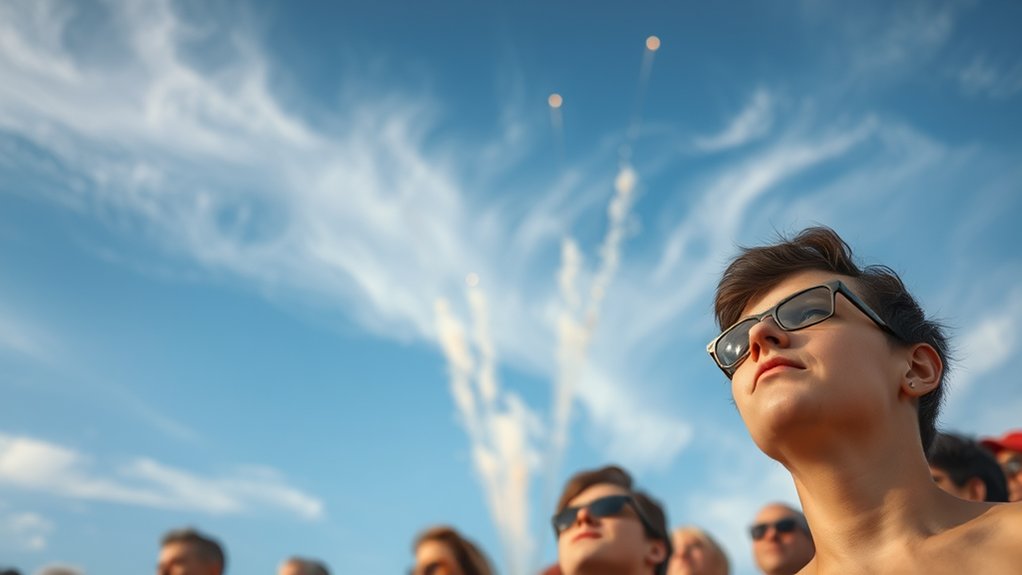
How can you truly enjoy fireworks during the day? The visibility challenges are significant. Bright sunlight diminishes the colour contrast, making the vibrant displays look dull compared to nighttime shows. This lack of contrast can leave you straining to see the action.
Firework operators also struggle to track the full trajectory of each firework, which complicates the performance. Although daytime pyrotechnics often include special features like bright smoke and parachutes, these may not fully counteract the intense sunlight. Daytime fireworks often focus on bold effects that are easily seen in daylight, which can help enhance the viewing experience despite the challenges.
Overcast days offer the best viewing conditions, as clouds can reduce glare and enhance visibility. Ultimately, appreciating fireworks in daylight involves recognising these unique challenges.
Safety Protocols for Fireworks Use
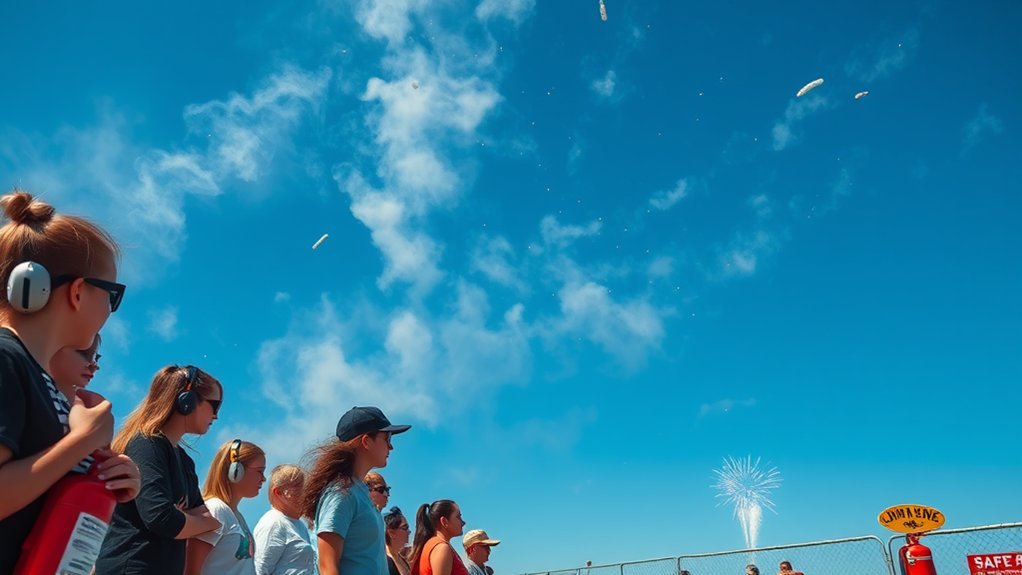
Here are important safety tips you should consider:
- Only use fireworks outdoors in spacious areas, well away from anything flammable.
- Have a bucket of water or a hose ready for emergencies.
- Light one firework at a time and ensure you move back quickly.
- Fireworks should only be handled by adults; keep children well out of the way.
- If a firework doesn’t go off, don’t attempt to relight it. Soak it in water and dispose of it safely.
- Additionally, compliance with safety guidelines is essential for injury prevention.
Regulatory and Licensing Requirements

Following safety protocols is essential when enjoying fireworks, but understanding regulatory and licensing requirements is just as crucial. It’s important to know the different classifications of fireworks, as these determine the necessary permits and fees. For example, consumer fireworks generally have fewer restrictions compared to dangerous fireworks, which demand strict regulatory compliance. Additionally, understanding that fireworks usage varies by state is vital for ensuring compliance with local laws. Misuse of fireworks can lead to serious penalties, including fines up to £5,000, so always ensure you have the correct licences before buying or using fireworks.
| Category | Licensing Requirements |
|---|---|
| Consumer Fireworks | Basic permits, age verification |
| Dangerous Fireworks | Special authorisation required |
| Sparkling Devices | Limited size/type restrictions |
| Sale of Fireworks | Licensing fees applicable |
| Use Restrictions | Local laws dictate permitted times |
Always check local regulations to avoid penalties, and ensure you have the correct licences before buying or using fireworks.
Environmental Impact of Fireworks
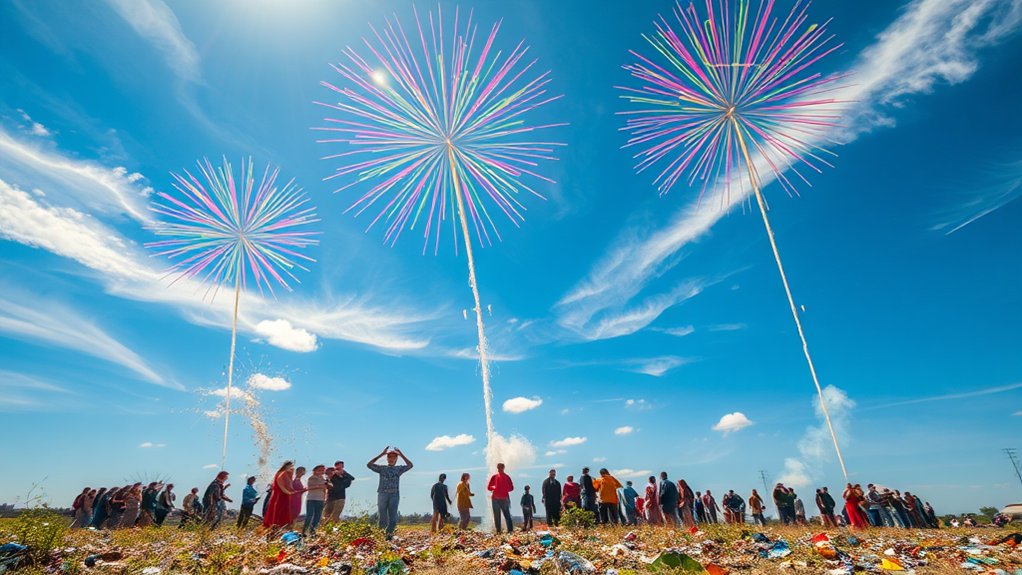
The environmental impact of fireworks is significant. They release smoke and debris, which contribute to air pollution.
The loud bangs can upset wildlife and local communities, causing stress and confusion. Moreover, improperly discarded firework remnants can contaminate soil and water, raising serious concerns about long-term ecological health.
For instance, after a fireworks display, the litter left behind can find its way into rivers and parks, harming local ecosystems. Additionally, fireworks release toxic metals that can linger in the environment, further compromising air and water quality.
It’s crucial to consider these effects when planning celebrations.
Smoke and Debris Pollution
Fireworks are often admired for their dazzling displays, but they bring serious environmental concerns, particularly related to smoke and debris pollution.
Here’s what you need to know:
- Fireworks can increase PM2.5 levels by as much as 42%, which can severely affect air quality.
- Toxic substances like sulphur dioxide can lead to respiratory problems.
- Debris management is crucial, as leftover materials can clutter land and waterways.
- Heavy metals from fireworks can seep into ecosystems, posing risks to wildlife.
- Clean-up efforts are frequently insufficient, resulting in long-lasting contamination.
Even during daytime shows, smoke can still impact air quality.
Being aware of these effects helps you recognise the hidden costs of fireworks beyond their aesthetic charm.
Noise Disturbance Factors
Fireworks are a visual delight, but they also produce loud noise that can disrupt both communities and wildlife. With noise levels reaching up to 175 decibels, they contribute to significant noise pollution, causing stress and anxiety for residents, especially in urban areas.
This is particularly concerning for vulnerable groups like the elderly, whose daily routines may be interrupted. Wildlife is affected too; the loud bangs can frighten birds and pets, leading to changes in behaviour and even fatalities.
The noise can carry over long distances, impacting those far from the source of the celebration. While there are regulations in place to reduce these disturbances, finding a balance between festivities and the well-being of people and the environment remains a challenge.
Disposal and Contamination Risks
As communities enjoy spectacular firework displays, the environmental impact raises serious concerns, especially regarding waste disposal and contamination.
Fireworks leave behind plastic casings, metal wires, and cardboard tubes, contributing to solid waste pollution. Often, these materials are improperly disposed of in open areas, leading to litter and chemical residues that can contaminate soil and water.
To tackle this issue, consider the following:
- Promote responsible disposal methods at events.
- Get involved in cleanup initiatives after displays.
- Raise awareness about the risks of heavy metals in fireworks.
- Familiarise yourself with local regulations on fireworks waste.
- Advocate for eco-friendly alternatives to reduce pollution.
Types of Fireworks Suitable for Daylight

For daytime celebrations, you need fireworks that can stand out in bright sunlight. Smoke bombs are a great option; they produce thick clouds of colourful smoke that create a vibrant visual effect. These devices often incorporate loud sounds like whistles or bangs to enhance the experience.
Aerial shells are another good choice, as they release streamers or parachutes instead of bright sparks, making them visible during the day. Parachute fireworks can deploy small floating parachutes, adding to the spectacle.
Additionally, noise-heavy fireworks can deliver impressive booming sounds that draw attention, compensating for the lower visibility. By combining sound and smoke effects, you can make your daytime event memorable and engaging for everyone involved.
Best Practices for Daytime Fireworks Displays

When organising a successful daytime fireworks display, it’s crucial to comply with safety regulations and secure the necessary permits. Proper planning enhances both audience engagement and safety.
Here are some key best practices:
- Acquire all relevant permits and inform aviation authorities.
- Define a clear, safe launch area, ensuring a minimum safety radius.
- Utilise long-reach lighting equipment and adhere to strict firing protocols.
- Supervise spectators, particularly children, and enforce safety zones.
- Set up a first aid station and ensure trained personnel are on hand to manage the fireworks.
Frequently Asked Questions
Can Fireworks Be Used Safely at Private Events During the Day?
Fireworks can be used at private daytime events in the UK, but it’s essential to adhere to strict safety regulations. Be mindful of the noise they create, as this can disturb nearby residents. Always ensure you have the necessary permits and implement safety measures to protect everyone involved. For instance, consider the distance from spectators and have a clear plan for firework disposal.
What Are the Best Alternatives to Traditional Fireworks for Daytime Shows?
For daytime events, consider using airborne drones for impressive light displays or ground-based smoke effects to boost visual appeal. These alternatives ensure safety and protect the environment, all while captivating your audience with creativity and excitement.
How Do Weather Conditions Affect Daytime Fireworks Displays?
Weather conditions significantly impact daytime fireworks displays. High humidity and rain can obscure visibility, making it difficult for audiences to fully enjoy the show. For instance, if it’s drizzling, you might struggle to see the colours and patterns clearly. Temperature inversions can trap smoke, which further reduces clarity and can make the sky look hazy. Additionally, sound perception can vary with weather, potentially affecting how spectators experience the bangs and booms of the fireworks. Overall, the weather plays a crucial role in determining the success of these displays.
Are There Specific Locations Ideal for Daytime Fireworks Displays?
For daytime fireworks displays, seek outdoor venues that prioritise safety. Ideal locations are open areas, such as parks or fields, that are free from flammable materials. Look for spaces with clear sightlines and ample room for spectators. Ensure you have the necessary approvals for a smooth event.
Do Different Cultures Have Unique Traditions for Daytime Fireworks?
Different cultures have their own unique traditions for daytime fireworks, often incorporating them into various celebrations. For instance, in the UK, Bonfire Night features daytime firework displays as part of commemorating the foiling of the Gunpowder Plot. Similarly, Chinese New Year celebrations often include daytime fireworks to ward off evil spirits and usher in good fortune. These displays not only add to the festive atmosphere but also foster a sense of community and shared joy, showing how traditions can evolve to fit different occasions.
Conclusion
Fireworks can be challenging to see in daylight, much like stars fade against a bright sky. However, with the right choices and safety precautions, you can still create an impressive display. Opt for larger, more vivid fireworks that are designed for daytime use, and always adhere to local regulations. With proper planning, you can transform a regular day into an exciting event, leaving a memorable impression.


