

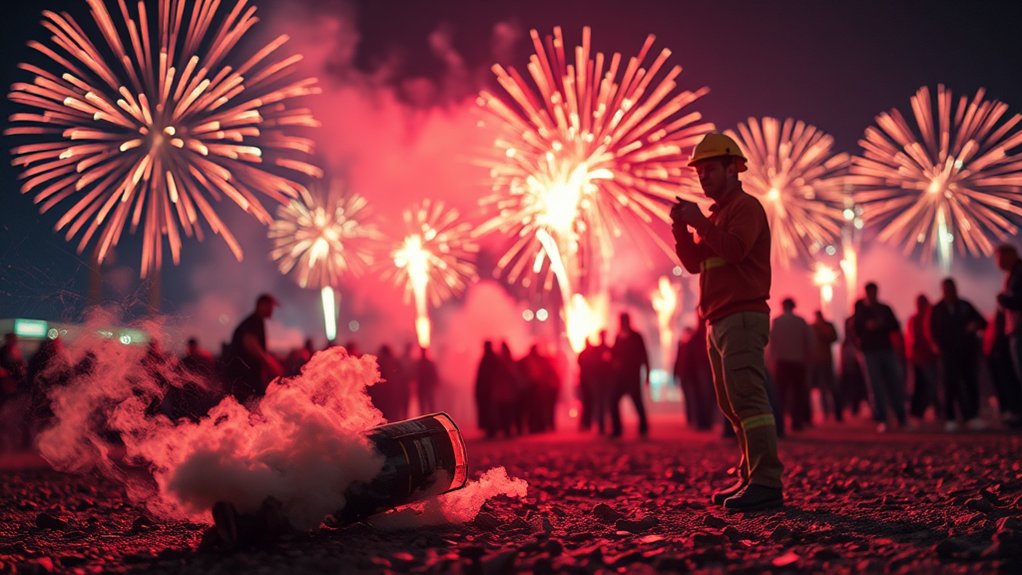
If a firework tips over, stop any interaction immediately and move to a safe distance. Ensure that others, especially children and pets, stay well clear. Don’t attempt to reposition it; simply wait. If it ignites, douse it with water and keep it submerged for 15-20 minutes. Only check it after at least 20 minutes, and never try to relight it. For further safety tips and legal guidelines, please continue to seek additional information.
Key Takeaways
- Move to a safe distance and ensure that bystanders, especially children and pets, keep away from the tipped firework.
- Do not try to reposition or interact with the tipped firework until it is safe to do so.
- Have water sources ready, like hoses or buckets, to put out any potential fires.
- If the firework ignites, douse it with water and keep it submerged for 15-20 minutes.
- Wait at least 20 minutes before checking the tipped firework, and do not attempt to relight it.
Recognizing the Hazards of Tipped Fireworks

When setting up fireworks, it’s vital to be aware of the dangers posed by those that tip over. Tipped fireworks significantly increase the risk of injuries, with around 9,700 people treated in emergency departments in 2023. The most common injuries include burns to the hands and face, particularly affecting vulnerable groups like children and young adults under 20, who make up half of these cases. Misuse and malfunctions, such as tipping, play a major role in these concerning statistics. Fireworks start an average of 18,000 fires annually, which highlights the potential for serious consequences when they tip over. Compliance with safety guidelines is crucial to minimize these risks. When fireworks tip, they can misfire unpredictably, posing a threat to bystanders. There’s also a considerable risk of fires from tipped fireworks, which can set nearby flammable materials alight. Always ensure a stable setup to reduce these risks and keep everyone safe.
Immediate Actions to Take When a Firework Tips Over

Tipped fireworks require immediate action to prevent accidents. First, stop any interaction with the tipped firework and move away to a safe distance. This reduces your risk if it ignites unexpectedly. Ensure that bystanders, especially children and pets, keep their distance. Avoid putting any body part near the firework and don’t attempt to reposition it until you’re certain it’s safe. Have water sources like hoses or buckets ready to extinguish it if necessary. If it ignites, douse it immediately with water and keep it submerged for at least 15-20 minutes. Remember that public displays are conducted by trained professionals to minimize risks, which highlights the importance of safety when handling fireworks. It’s crucial to recognize that firework-related injuries can be severe, so always prioritize safety. Alert others nearby and contact emergency services if the fire spreads or if there are any injuries. Quick action is vital for firework safety.
Preventing Fireworks From Tipping Over

To prevent fireworks from tipping over, follow these essential steps before lighting them.
First, select a hard, flat, level surface for ignition—avoid grass or gravel. If you must use uneven ground, place a flat piece of wood underneath for added stability. Fireworks should be used on a hard, flat, and level surface to ensure they remain stable during use. It is crucial to always check that the launch site is free from obstructions to reduce fire risks.
For taller fireworks, brace them with bricks or partially bury them in soil or sand. Always maintain a safe clearance radius and ensure the area is free of debris.
Use a long-handled lighter to ignite the fireworks safely, as this keeps you at a distance from potentially unstable setups.
Finally, ensure that your audience is at a safe distance to minimise risks. Adhering to these precautions can significantly improve firework safety.
Essential Protective Measures and Equipment

When handling fireworks, it’s crucial to wear eye protection; goggles made from impact-resistant polycarbonate will guard against sparks and debris.
Also, keep emergency supplies like water and fire extinguishers on hand to prepare for any surprises.
Prioritising these safety measures can greatly enhance your protection during fireworks displays.
Eye Protection Importance
Enjoying fireworks can be exciting, but the importance of eye protection is crucial. If you’re within 500 feet of fireworks, it’s essential to wear eye protection that meets safety standards, such as ANSI-certified glasses.
Safety glasses made from polycarbonate or shatter-resistant materials can protect your eyes from flying debris and intense heat. Goggles provide a snug fit to keep out fine particles, while face shields offer added protection for your entire face. Regular sunglasses aren’t sufficient, though UV-protective sunglasses can help reduce glare.
Eye injuries from fireworks are common and can have serious consequences, so it’s vital to prioritise safety for yourself and those around you.
Ensure everyone nearby, especially children who are at greater risk, wears appropriate eye protection.
Emergency Supplies Readiness
Having the right emergency supplies ready can be crucial in preventing a minor incident from turning into a serious situation during a fireworks display.
Start by putting together an emergency kit that includes at least one gallon of water per person per day and a three-day supply of non-perishable food.
Make sure to include a fully charged fire extinguisher suitable for fireworks, a bucket of water for small fires, and a hose connected to a water supply for larger outbreaks.
Additionally, pack gloves, protective clothing, and a first aid kit for injuries.
Don’t forget a flashlight, dust masks, and communication tools like a battery-powered radio.
These essential items will boost your fire safety measures and overall preparedness during fireworks events.
Legal Guidelines for Safe Firework Use
Understanding the legal guidelines for safe firework use is crucial for a fun and compliant celebration. Firstly, check the regulations in your area regarding which fireworks are allowed and when you can buy them. In the UK, you must be at least 18 to purchase fireworks.
Fireworks can typically be bought from 15 October until 10 November for Guy Fawkes Night, and from 26 December to 31 December for New Year’s Eve, although local councils may have stricter rules.
Always seek permission from property owners before using fireworks, and ensure they’re ignited in open spaces, away from flammable materials.
Keep a close eye on children, and remember that only adults with experience should handle fireworks. By following these guidelines, you can enjoy fireworks safely and legally.
Understanding Firework Types and Their Risks

Fireworks come in various types, each with distinct risks that users need to understand for safety. In the UK, fireworks are primarily classified into two categories: Category 4 (Display Fireworks) and Category 3 (Consumer Fireworks), each governed by specific safety regulations.
| Firework Type | Risks |
|---|---|
| Category 4 | Requires professional handling; high explosion risk. |
| Category 3 | Lower risk, but can cause burns and fires if misused. |
Consumer fireworks, such as bottle rockets and Roman candles, can easily tip over, resulting in unpredictable trajectories. Always ensure a stable setup and adhere to safety guidelines to minimise hazards. Being aware of these risks is crucial for safe enjoyment.
Emergency Response for Firework-Related Injuries

If someone is injured by fireworks, it’s important to act swiftly.
Begin with basic first aid by applying direct pressure to any bleeding and covering burns with a clean cloth.
If the injuries are serious or you’re unsure what to do next, don’t hesitate to call for emergency services.
Immediate First Aid Steps
In the event of a firework-related injury, swift first aid is crucial for recovery. Follow these steps to ensure safety and aid in injury prevention:
- Cool the burn with cool running water for 10-20 minutes; don’t use ice.
- Apply firm pressure to any bleeding wounds using a clean cloth and elevate if possible.
- For eye injuries, avoid rubbing; instead, shield the eye with a rigid cover and seek medical assistance.
- Keep wounds clean and covered with sterile dressings to prevent infection.
- Watch for signs of infection and check tetanus vaccination status promptly.
These actions can significantly reduce complications and promote healing.
If injuries are serious, seek professional medical care without delay.
Contacting Emergency Services
In emergencies involving firework injuries, it’s crucial to contact emergency services immediately.
Call 999 for serious burns, particularly those with blisters or affecting sensitive areas like the face and hands.
When speaking to emergency responders, provide clear information about the type and severity of the injury, and whether the person is conscious and breathing normally.
If there are multiple injured individuals or any hazards, make sure to mention these as well.
Avoid transporting the injured person yourself if their injuries are severe; instead, focus on communicating with emergency services to ensure they receive the necessary care as quickly as possible.
Your prompt actions can make a significant difference.
The Importance of Professional Firework Displays

While fireworks certainly add excitement to celebrations, the importance of professional firework displays shouldn’t be underestimated. Hiring trained pyrotechnicians ensures community safety and reduces the risk of injury.
Here are some key reasons why professional displays are vital:
- They follow strict safety regulations, which helps minimise hazards.
- Quality-controlled fireworks significantly reduce the chances of malfunctions.
- Professionals set up safety perimeters, keeping the public at a safe distance.
- Proper timing prevents tipping or accidental ignition of fireworks.
- Adhering to legal requirements ensures that celebrations are conducted lawfully.
Reporting Unsafe Firework Incidents

Reporting unsafe firework incidents is crucial for public safety and preventing future accidents. To ensure effective communication, follow these steps:
| Key Steps | Details |
|---|---|
| Use Incident Forms | Complete the relevant forms (e.g., F223 in England) |
| Document Incident | Record the date, time, location, and a brief description |
| Report Timing | Report injuries immediately; other incidents within 10 days |
| Involved Parties | Provide details of those affected |
| Submit Form | Sign and submit to the relevant authority |
Accurate documentation aids regulatory actions and reduces liability. Remember, failing to report can have legal repercussions, so act swiftly to protect your community.
Frequently Asked Questions
What Types of Fireworks Are Most Prone to Tipping Over?
Fountain fireworks and aerial shells are particularly prone to tipping over due to their design and height, which can affect stability. Always ensure they are positioned on flat, stable surfaces to reduce the risk of accidents.
Can I Use Damp Ground for Setting up Fireworks Safely?
Setting up fireworks on damp ground can be safe, but stability is key. While moisture reduces the chance of accidental fires, ensure the area is level and free from any flammable materials. Keep safety equipment nearby to ensure a secure setup.
How Can I Safely Dispose of Used Fireworks?
To safely dispose of used fireworks, soak them in water for at least 15 minutes. Once soaked, wrap them securely to prevent them from drying out, and then place them in your household rubbish. Avoid putting them in recycling bins for safety.
Are There Specific Weather Conditions to Avoid When Using Fireworks?
Have you ever thought about why some evenings are better for fireworks? It’s best to avoid launching them during bad weather, particularly when strong winds are present. High winds can alter the path of the fireworks, creating hazards and spoiling your display. For safety’s sake, check the weather before you light up the sky!
What Should I Do if a Firework Does Not Ignite?
If a firework fails to ignite, your safety is the top priority. Wait for 10 to 20 minutes before approaching, as it may still go off unexpectedly. Keep a safe distance and have a bucket of water ready for disposal once it’s safe to do so.
Conclusion
In summary, it’s crucial to stay alert and prepared when using fireworks, especially if one tips over. Act quickly and follow safety guidelines to avoid accidents and protect yourself and those around you. Remember, enjoying fireworks safely is far better than risking chaos and injury. Always prioritise safety, whether you’re celebrating with friends or watching a professional display. Let’s ensure that the night sky remains a source of joy, not danger.


