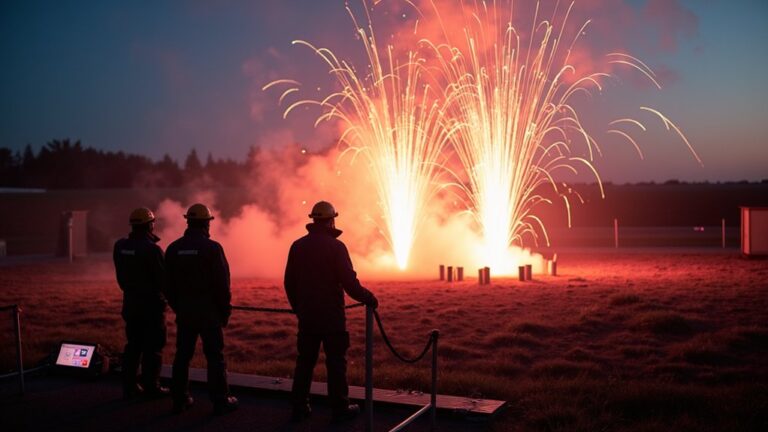
Setting up a fireworks zone in your back garden requires careful consideration of safety and legality. Ensure you have at least 30 by 30 metres of clear space, keeping at least 30 feet away from buildings and flammable materials. Organise your fireworks by type for easy access; place larger fireworks towards the back. Always check local regulations and weather conditions before proceeding. It’s also wise to have emergency plans in place. With these precautions, you can enjoy a safe and enjoyable fireworks display.
Key Takeaways
- Ensure you have a minimum area of 30 by 30 metres for safe firework spacing, keeping at least 30 feet from buildings and flammable materials.
- Sort your fireworks by type; place quieter items at the front and larger aerial shells at the back for safety and visual effect.
- Always check local regulations regarding permitted fireworks and required safety distances, particularly for aerial fireworks, which should be at least 100 yards away from spectators.
- Use sturdy bases for launching fireworks and keep fire extinguishers on hand, alongside a clear evacuation plan for emergencies.
- Keep an eye on the weather; avoid launching during rain or strong winds to ensure safety and that your fireworks perform well.
Choosing the Right Location

When planning to set up a fireworks zone in your garden, it’s important to choose the right location for safety and enjoyment.
Ensure you have at least a 30 by 30 metre open area for firework spacing, which allows for fallout and spectators. Keep the launch area away from buildings and flammable materials, maintaining a minimum clearance of 30 feet.
Avoid overhead obstructions like tree branches and power lines that could disrupt firework trajectories. Place more powerful fireworks at the back of the zone and less powerful ones nearer the front. Additionally, ensure that you select fireworks from the British Standard Kitemark BS7114 to guarantee quality and safety.
Always consider wind direction to prevent debris from affecting spectators or nearby properties. Additionally, ensure that the fireworks zone is set up with a designated safety zone to maintain adequate distance from spectators. Following these guidelines will enhance safety and ensure a memorable celebration.
Legal Considerations for Fireworks Use

Before setting off your fireworks, it’s important to check the local regulations, as the rules can vary significantly from one area to another. Ensure you know what’s permitted and the specific times you can use them. In the UK, for example, fireworks are prohibited from being set off between 11 pm and 7 am, with specific dates allowing for extended use. Additionally, some areas may have specific local council guidelines that dictate when and where fireworks can be used. It’s also courteous to inform your neighbours well in advance so they can prepare for the noise and any safety concerns. This helps maintain good relationships and avoids any misunderstandings.
Local Fireworks Regulations
Understanding local fireworks regulations is crucial for anyone planning to use fireworks in their garden, as these laws ensure safety and compliance. Familiarise yourself with the different categories of fireworks and their required safety distances. Additionally, securing the necessary permits is essential for legal use. It is important to note that most fireworks sold are categorized as F2 and F3 for outdoor use. Operators must obtain an explosives licence to ensure they are legally permitted to handle fireworks.
Here’s a brief overview of key local regulations:
| Firework Category | Age Restriction | Safe Viewing Distance |
|---|---|---|
| Category 1 | 16+ | Indoor only |
| Category 2 | 18+ | 5-8 metres |
| Category 3 | 18+ | 25 metres |
| Category 4 | Professional use | N/A |
Be sure to follow local noise restrictions and time limits to avoid fines. For example, setting off fireworks late at night can lead to complaints from neighbours. Always prioritize safety and legality when planning your fireworks display.
Notify Neighbors Early
Notifying your neighbours in advance is essential when planning a fireworks display in your garden. This not only shows consideration but also helps to minimise any surprise or distress caused by the noise.
A brief note outlining the date, time, duration, and expected noise level can be very effective. You might also consider sharing this information through local social media groups.
While there’s no legal obligation to inform neighbours, doing so can help reduce complaints and foster better community relations. It’s particularly thoughtful to let those with pets or vulnerable individuals know.
Aim to notify them several days ahead to give them time to prepare. By taking these steps, you promote safety and maintain a positive atmosphere in your neighbourhood.
Ensuring Safety Distances

To ensure a safe fireworks display, it’s crucial to maintain proper safety distances. For ground-based fireworks, keep a minimum clear radius of 30 feet, while aerial fireworks should be at least 100 yards (approximately 300 feet) away from spectators.
Set up a safety perimeter around the launch area using caution tape or barriers, ensuring that spectators are positioned at least 150 feet from aerial fireworks and 35 feet from ground fireworks.
Be aware of local regulations as they may require greater distances. Avoid launching near sensitive areas such as schools or hospitals.
Always maintain clear escape routes and supervise children closely around the launch zone. These measures significantly reduce the risk of injury and create a safer environment for all involved.
Setting Up the Launching Surface

When setting up the launching surface for your fireworks display, it’s vital to choose a hard, flat, and level area that can securely support the fireworks and withstand vibrations during ignition.
Follow these steps to ensure proper preparation and stability:
- Choose a solid surface such as concrete or plywood; steer clear of grass or gravel.
- Secure the tubes with supports like 2×4 timber to ensure they don’t move.
- Align mortar tubes vertically, maintaining adequate spacing to avoid collisions.
- Stabilise individual fireworks with sandbags or wooden wedges to prevent tipping.
Weather and Environmental Factors

Understanding weather and environmental factors is crucial for a successful fireworks display, as they significantly influence safety and visibility.
Wind conditions play a major role; moderate winds can help disperse smoke, but strong winds can create serious safety risks.
Rain or high humidity can affect the reliability and vibrancy of the fireworks, making dry air preferable.
Warm temperatures improve performance by allowing higher trajectories and quicker smoke dispersal, while cold air can cause smoke to linger, reducing visibility.
Always check local weather forecasts before your event.
Setting off fireworks during droughts or high winds increases fire hazards, so it’s essential to be aware of these factors for a safe and spectacular display.
Required Equipment and Materials

A successful fireworks display relies on having the right equipment and materials. Here’s what you need to ensure safety and efficiency:
- Launching Equipment: Use sturdy bases like plywood or OSB, and build racks with 2×4 or 2×6 timber for stability.
- Safety Gear: Keep fire extinguishers and buckets of water close by. Make sure everyone wears fire-resistant gloves and safety goggles.
- Firing Tools: Choose long-reach lighters or electric ignition systems to maintain a safe distance while firing.
- Storage: Store fireworks in a cool, dry location, using secure containers for safe transport.
Organizing Fireworks for Easy Access

To ensure easy access to your fireworks, start by choosing suitable storage solutions that keep them safe and organised.
Arrange them by type and how often you use them, making it easier to retrieve them when setting up. For example, keep sparklers and fountains near the top if you use them more frequently, while larger displays can be stored at the back.
Effective Storage Solutions
Effective storage solutions for fireworks are crucial for ensuring safety and easy access. Here are some straightforward tips to organise your firework containers:
- Select a cool, dry place with good ventilation to avoid moisture damage.
- Use sturdy outdoor racks or magazine storage that are weather-resistant and allow for airflow.
- Keep different types of fireworks separate, such as sparklers away from aerial shells and fountains, to reduce fire hazards.
- Store fireworks in locked containers to prevent unauthorised access and enhance safety.
Firework Layout Strategies
Arranging your fireworks properly can significantly enhance safety and enjoyment during your backyard display.
Start by sorting your fireworks by type; place quieter items at the front for easy access and larger shells at the back for safety. Ensure you maintain safe distances from spectators, using clear markers to define boundaries.
A linear or loop layout that follows your planned sequence will make lighting easier. Group fireworks with similar firing directions to reduce confusion.
To maximise visual impact, alternate colours and heights, and consider using multiple stations to create depth in your display.
Lastly, make sure each firework is stable and visible for safe monitoring. This thoughtful arrangement not only prioritises safety but also improves the overall experience for your audience.
Quick Access Setup
Organising your fireworks for quick access can make your backyard display safer and more efficient. Here’s how to do it:
- Use waterproof, airtight containers to keep them dry, and label each one for easy identification.
- Sort fireworks by type, placing ground-based ones separate from aerials to prevent any damage.
- Set up shelving or racks near the launch area, ensuring walkways are clear for easy movement.
- Prepare transport bins to carry multiple fireworks at once, reducing trips and keeping your focus during setup.
Crowd Management Strategies

As you prepare for a fireworks event in your garden, implementing effective crowd management strategies is crucial for a safe and enjoyable experience.
Start by setting up crowd control measures early, using flexible barriers to accommodate varying crowd sizes. Clearly marked signage will help guests navigate entry and exit points with ease.
Consider using a timed ticketing system to reduce congestion and provide multiple access gates for better crowd distribution. Keep an eye on the crowd with CCTV and trained staff to manage behaviour and density.
To enhance the guest experience during wait times, consider providing music or light entertainment, ensuring everyone can enjoy the event without feeling overwhelmed.
Emergency Preparedness and Safety Measures

When hosting a fireworks event in your garden, it’s crucial to prioritise emergency preparedness and safety measures to protect everyone involved.
Here are four essential steps to ensure a safe experience:
- Appoint a responsible adult as the firework operator to oversee safety and manage any emergencies.
- Set up a clear communication plan and ensure direct access to emergency services for swift assistance if needed.
- Brief all participants on basic first aid for burns and emphasise the importance of staying clear of unexploded fireworks.
- Review and establish evacuation routes and safe zones for quickly moving anyone injured away from potential dangers.
Best Practices for a Successful Fireworks Display

To ensure a successful fireworks display, maintain a safe distance of at least 150 feet between the launch site and the audience.
Next, ensure your launching surface is stable; securely fasten the fireworks to prevent any tipping during ignition.
Safety Distance Requirements
Ensuring a safe fireworks display starts with following the safety distance requirements, crucial for protecting both spectators and property.
Adhere to these guidelines based on the type of fireworks being used:
- Aerial fireworks: Maintain a minimum distance of 150 feet (about 45 metres) from spectators and buildings.
- Ground-based fireworks: Keep a distance of 35 to 50 feet (roughly 11–15 metres) from spectators.
- Designate distance zones: Clearly mark areas for spectators to ensure safety and comply with local regulations.
- Read product labels: Some fireworks might’ve specific distance requirements that are more stringent than general guidelines.
Launching Surface Stability
The success of a fireworks display depends largely on the stability of your launching surface.
Even small shifts can lead to serious accidents. To ensure a safe setup, opt for flat, hard surfaces like concrete. If the ground is uneven, consider using flat wooden boards or containers filled with sand for added support.
For larger fireworks, secure them with heavy objects placed on the side away from the audience or use tethering.
Bury mortar tubes at least 75% of their length to improve stability. Always check the area for moisture and remove any obstacles to minimise risks.
Frequently Asked Questions
What Types of Fireworks Are Safest for Backyard Use?
Consider backyard fireworks as a vibrant display; fountain fireworks and low-risk handheld options provide a safe spectacle. Steer clear of aerial shells, as they can pose risks with erratic flight paths and safety concerns.
How Can I Prevent My Pets From Getting Scared During the Show?
To prevent your pets from getting frightened during the show, focus on their safety by reducing noise. Keep them indoors, close all windows, and create a snug space for them. Playing calming sounds, like soft music or white noise, can help ease their anxiety.
Are There Specific Times When Fireworks Are Prohibited?
Fireworks regulations in the UK permit displays but come with strict noise restrictions. You cannot set off fireworks between 11pm and 7am, except on specific holidays like Bonfire Night and New Year’s Eve, when later times may be allowed. Always check your local guidelines for details.
What Should I Do if a Firework Doesn’t Launch?
If a firework doesn’t launch, don’t rush over straight away. Wait for 20 minutes before approaching it. When you do, wear protective gear and handle it with care. Check for any visible damage as part of troubleshooting, which can help prevent future malfunctions.
How Can I Dispose of Used Fireworks Safely?
Got leftover fireworks? Instead of wishing for a fireworks recycling solution, soak them in water, wrap them securely, and dispose of them in the general waste. Remember, hazardous waste disposal isn’t just for show!
Conclusion
Setting up a fireworks zone in your back garden is not just about the show; it’s about being responsible. Safety and enjoyment go hand in hand. Think carefully about where you set up, follow legal guidelines, and be prepared for emergencies. This way, you’ll create a memorable display and a safe environment for everyone. Enjoy the excitement of fireworks while keeping safety in mind, and your celebration will light up the night without any issues.