
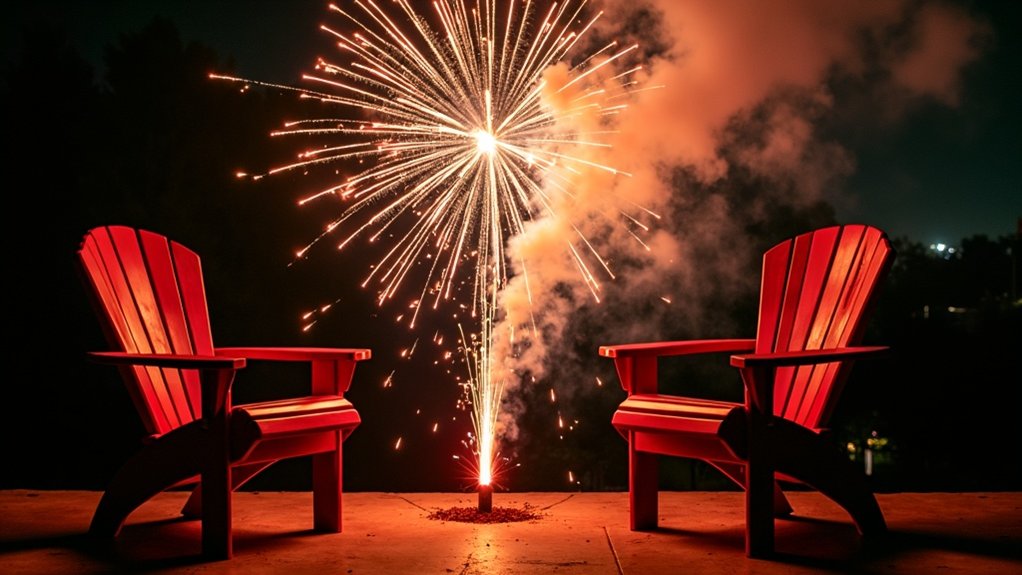
Fireworks can easily set alight flammable garden furniture, posing a risk to your outdoor space. Keep furniture at least 10 metres away from fireworks. Always use legal fireworks and keep a close eye on children. If possible, relocate cushions and other flammable items during displays. Have water or a fire extinguisher nearby for emergencies. Being mindful of fire hazards can help protect your property. There’s plenty to learn about keeping your garden safe during fireworks.
Key Takeaways
- Keep garden furniture away from areas where fireworks are launched to minimise the risk of fire damage from stray sparks.
- Use fire-resistant covers on outdoor cushions and furniture to protect them from potential fire hazards.
- Regularly clear away dry leaves and debris from the garden to reduce flammable materials near seating areas.
- Water the lawn and furniture before a fireworks display to lower flammability and enhance safety.
- Always supervise children and maintain a safe distance from fireworks to prevent accidents and injuries.
Understanding Fireworks-Related Fire Hazards

When using fireworks, it’s crucial to recognise the fire hazards that can cause serious injuries and damage to property.
In recent years, fireworks have ignited thousands of fires in the UK, including fires in homes and vehicles, leading to millions in damages. In the U.S., fireworks were responsible for over 31,000 fires in 2022, highlighting the significant risk they pose.
To ensure safety, always follow the instructions and never handle faulty devices.
If you plan to use fireworks near your garden, be aware that dry leaves and flammable furniture can easily catch fire.
Keeping your garden tidy by clearing debris and watering plants can help reduce these risks.
Always supervise children around fireworks, as they’re especially at risk of injury.
The Impact of Fireworks on Garden Furniture

Fireworks can cause significant damage to your garden furniture. Outdoor cushions are especially at risk, often suffering from burn marks or charring due to stray sparks and embers. This can lead to expensive repairs, such as reupholstering, especially if smoke damage compromises the fabric. To ensure firework safety, it’s crucial to remember that errant sparks can easily ignite flammable materials near your seating area. Additionally, keeping flammable materials away from firework displays is essential to minimize the risk of fire.
To protect your outdoor furniture, consider applying flame-retardant treatments to the fabrics and positioning your furniture away from firework launch sites. Regularly clearing dry debris from your patio can also help reduce fire risks. Furthermore, maintaining a safe distance from lit fireworks can significantly decrease the likelihood of damage to your garden furniture.
Common Materials at Risk in Outdoor Spaces

When enjoying outdoor spaces, be mindful that common materials such as wood and fabric can easily catch fire. For instance, untreated cushions and fabrics can ignite rapidly from sparks. Meanwhile, synthetic plastics can melt and release toxic fumes. Being aware of these risks will help you make safer choices for your garden furniture. Additionally, it’s crucial to maintain a safe distance from fireworks to minimize potential fire hazards. Consider investing in fire-resistant covers to protect your furniture from potential fire hazards.
Wood and Fabric Risks
As you get ready for outdoor celebrations, it’s important to be aware of the fire risks associated with wood and fabric materials in your garden.
Kiln-dried wood can easily catch fire, igniting at temperatures as low as 295°C (575°F), especially near fireworks. Keep wooden furniture a safe distance of at least 9 to 15 metres away from any fireworks displays.
Fabrics, particularly those made from natural fibres, are also highly flammable and often lack sufficient flame retardants, which means flames can spread quickly. To improve safety, remove fabric cushions and cover your furniture with fire-resistant materials during fireworks. Additionally, trim any overhanging branches that could catch fire, ensuring a clear area around fireworks to safeguard your property from potential fire hazards. Always remember that compliance with fireworks regulations is crucial for safety and quality in outdoor celebrations.
Plastic and Synthetic Hazards
While wood and fabric materials can be fire hazards, plastic and synthetic components in your outdoor space can be equally dangerous.
For instance, polyurethane foam cushions catch fire easily, producing thick smoke and toxic fumes such as hydrogen cyanide. Polypropylene and nylon are highly flammable, while PVC can warp when exposed to heat.
These materials can accelerate fire spread, reaching flashover in under five minutes. Burning plastics release harmful chemicals that can worsen respiratory issues and pose long-term health risks.
It’s wise to be cautious with synthetic furniture and avoid untreated plastics near fire features. Opting for fire-rated materials can help reduce the risks associated with plastic toxicity and synthetic flammability in your outdoor area.
Stay safe and informed!
Safety Guidelines for Fireworks Use

For a safe and enjoyable fireworks display, it’s essential to follow key guidelines that reduce risks.
Keep these outdoor safety tips in mind:
- Select a clear, open space away from anything flammable, like trees or buildings.
- Maintain a safe distance: 45 metres for aerial fireworks, 15 metres for ground devices, and 10 metres for fountains.
- Have a fire extinguisher or a bucket of water nearby to tackle any small fires quickly.
- Only light one firework at a time and step back immediately after lighting it.
- Never use fireworks if you’ve been drinking alcohol or taking drugs, as it impairs your judgement.
Legal Considerations for Fireworks in Gardens

When planning to use fireworks in your garden, it’s crucial to be aware of the legal restrictions to ensure a safe and compliant experience.
You must only set off fireworks on your own property and keep them at least 60 metres away from residential buildings. Avoid using them near open flames or anything flammable.
Always check local regulations, as many areas require a permit for fireworks displays, particularly for larger events. Igniting fireworks while under the influence can lead to serious penalties.
If you’re near sensitive locations like schools or hospitals, you’ll need written permission. Failing to comply can result in fines or other legal consequences, so follow the guidelines to enjoy your fireworks safely and legally.
Injury Risks Associated With Fireworks

Fireworks can cause serious injuries, particularly burns and eye damage, if not used safely.
To protect yourself and others, it’s important to be aware of common injuries and implement effective safety measures. For instance, always wear protective eyewear when handling fireworks and keep a safe distance.
A moment of inattention can lead to lasting harm, so remain vigilant and informed.
Common Injury Types
Handling fireworks can create spectacular displays, but it also comes with significant injury risks.
It’s important to be aware of common types of injuries associated with fireworks:
- Burns: These make up 37-42% of all firework-related injuries.
- Hand and Finger Injuries: Close handling and explosions account for nearly 36%.
- Eye Injuries: About 14% can result in serious vision loss.
- Fractures and Sprains: More than 40% of hospitalised cases involve limb injuries.
- Blunt Trauma: Explosions may lead to contusions and lacerations.
Being aware of these risks can help you celebrate safely with fireworks.
Always prioritise safety to avoid potentially serious injuries.
Prevention Strategies
To prevent injuries from fireworks, it’s crucial to adopt safety measures that protect you and those around you.
Attend organised fireworks displays rather than using consumer fireworks at home. Always buy legal, labelled fireworks from licensed retailers, ensuring they’re allowed in your area.
Raise community awareness about the risks, particularly for young children and older adults, who are more vulnerable to injuries. Keep buckets of water or hoses handy to extinguish any fires.
Follow fireworks etiquette by maintaining a safe distance and closely supervising children. Never relight “dud” fireworks and make sure to wear protective eyewear.
Best Practices for Fireworks Displays

When planning a fireworks display, it’s crucial to follow best practices to ensure safety and compliance. Here are key guidelines for your preparation:
- Secure all necessary permits from local authorities and the relevant governing bodies.
- Select a safe location, away from crowds and any flammable materials, such as buildings or trees.
- Only use legal fireworks that meet safety standards.
- Employ a qualified operator and ensure assistants are properly trained for setup and ignition.
- Keep emergency services informed and have clear procedures in place for any incidents.
Preventing Fire Damage to Your Garden Furniture

Fireworks can create a celebratory atmosphere, but they also pose a serious risk to your garden furniture. To ensure fire safety, clear away dry leaves and debris from your garden, and move furniture away from areas where fireworks are launched.
Watering your lawn and furniture beforehand can help reduce their flammability. Keep hoses or buckets of water handy for a quick response to any sparks. Consider using fire-resistant covers for your furniture and avoid placing it on dry grass or near firewood.
Maintain a safe distance from fireworks, ideally at least 30 feet. After the display, check your furniture for any damage and address any issues promptly. Following these steps will protect your furniture and minimise fire risks during fireworks displays.
Frequently Asked Questions
What Types of Fireworks Are Safest to Use in Gardens?
Sparklers, fountains, and Catherine wheels are the safest fireworks to use in your garden. To ensure a fun and safe experience, keep a safe distance, soak used fireworks in water, and keep flammable materials well away from the area.
How Can I Protect My Garden Furniture From Fireworks?
To safeguard your garden furniture from fireworks, opt for fire-resistant materials and move your items away from the launch area. Cover them with fireproof tarps for added protection. It’s essential to keep a clear space around your furniture to enhance safety during fireworks displays.
Are There Specific Plants That Are More Flammable?
Certain plants, such as eucalyptus and juniper, can easily catch fire and increase the risk of wildfires. To create a safer garden, choose flame-resistant plants like succulents and hardwoods, which have fire-retardant properties. This helps build a landscape that is more resilient against potential fires.
What Should I Do if a Fire Starts During a Display?
If a fire breaks out, activate emergency response protocols without delay. Use your water source to safely extinguish small fires, alert the emergency services, and evacuate everyone to a safe distance. Always prioritise fire safety during the incident.
Can I Use Fireworks in My Garden if It’s Raining?
You shouldn’t use fireworks in your garden if it’s raining. Wet conditions can dampen fuses and impair performance, which increases the risk of misfires and potential hazards. Always prioritise safety over entertainment.
Conclusion
When enjoying fireworks, consider the risks to your garden furniture. Flammable materials can ignite easily, leading to costly damage and safety hazards. Think about your outdoor space: is it worth the excitement of fireworks if it puts your cherished patio set at risk? By following safety guidelines, you can protect both your furniture and loved ones. A bit of caution ensures a safe and enjoyable celebration.


