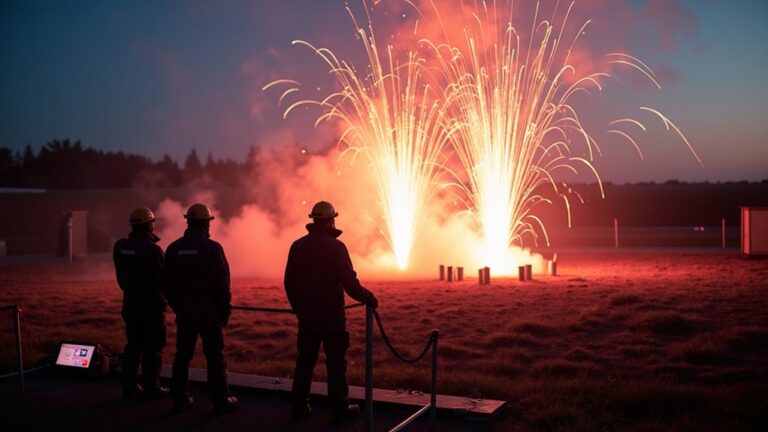
Using ground fireworks safely around pets is essential for their comfort and safety. Pets are often sensitive to loud noises and bright lights, so it’s best to keep them indoors during firework displays. Create a snug, quiet area with their favourite toys and some calming music to help soothe their anxiety. Always check local regulations and consider letting your neighbours know in advance. By taking these precautions, you can protect your furry friends during firework events and ensure they feel secure.
Key Takeaways
- Keep pets indoors in a secure, quiet area during ground fireworks displays to reduce their exposure to loud noises and bright lights.
- Let your neighbours know about your plans to use ground fireworks so they can prepare their pets and help minimise anxiety.
- Avoid using ground fireworks close to homes or areas where pets are present to prevent accidents and injuries.
- Keep a close eye on your pets for signs of distress, and provide calming items like toys or blankets to help soothe them.
- Consider using calming products specifically for dogs or consult your vet for advice on managing pet anxiety during fireworks.
Understanding Pets’ Sensory Sensitivities to Fireworks

When fireworks illuminate the night sky, pets often experience significant stress due to their heightened sensory sensitivities. Dogs can hear sounds up to four times better than humans, while cats typically have even greater sensitivity to noise. The sudden, loud bangs can trigger their survival instincts, causing them to seek safety. This sensory overload, coupled with bright flashes and pungent smoke, creates a terrifying atmosphere. Even a single negative experience with fireworks can instil a lasting fear, as pets struggle to understand these loud noises and dazzling lights as harmless. Recognising their sensitivities allows you to create a safer environment for them during celebrations, particularly since animals perceive sounds as unpredictable and threatening.
Common Behavioral Reactions of Pets to Fireworks

As fireworks illuminate the night sky, many pets react with anxiety and fear, exhibiting a range of common behaviours. You may observe your pet trying to escape the noise, which can lead to injury. Vocalisations such as barking or whining, alongside physical signs like trembling or hiding, indicate their distress. Some pets may even take a long time to recover, with their fear escalating during repeated exposures. Individual temperament significantly influences how pets respond, resulting in varied behaviours. If left unaddressed, noise phobia can lead to chronic anxiety. Fireworks disrupt wildlife breeding and supervision of young users can help your pet manage their fear during fireworks, making future experiences less distressing.
Health Risks Associated With Fireworks for Pets

Fireworks release harmful particles that can harm your pet’s respiratory and cardiovascular systems, particularly in those with pre-existing conditions. The loud bangs can induce severe anxiety in pets, leading to increased heart rates and elevated cortisol levels due to stress. Additionally, wildlife rehabilitation centers often report a surge in injured animals following fireworks displays, highlighting the widespread impact of these celebrations. Being close to fireworks can also result in injuries from burns or accidents as pets may try to flee. Moreover, toxic chemical residues can be dangerous if ingested. It’s crucial to prioritise firework safety to protect your pets and maintain their well-being during these festive occasions.
Creating a Safe Space for Pets During Firework Displays
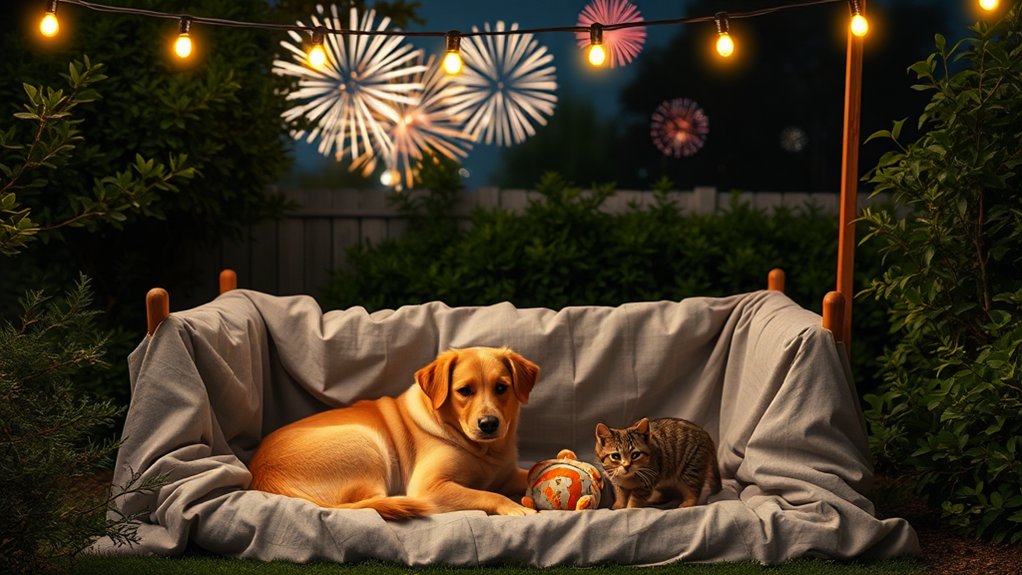
To create a safe space for your pets during firework displays, start by securing a quiet indoor area that reduces noise and light.
Play some calming music or sounds to help ease their anxiety.
Set up a few cosy retreat spots where they can feel safe.
Secure Indoor Environment
Creating a secure indoor environment is vital to keep your pets calm during firework displays.
Choose a quiet, windowless room to reduce noise and visual distractions. Ensure curtains and windows are tightly closed, and that the space is spacious enough for your pets to move around comfortably.
Include soft bedding, familiar toys, and items with your scent to help them feel secure. Provide hiding spots, like under furniture or in wardrobes, so they can retreat if needed.
Make sure all doors and windows are securely shut to prevent escape, and fill the area with their favourite items.
Calming Music and Sounds
Once you’ve created a calm indoor environment, adding calming music can help soothe your pets during firework displays.
Playlists specifically designed for dogs can significantly reduce anxiety from loud noises. Choose music with steady rhythms and soft instrumental tones, steering clear of sudden peaks that might cause distress.
Sound therapy, such as tracks that blend relaxing melodies with faint firework sounds, can help desensitise your dog to these stressful noises. Start playing the music before the fireworks begin to set a calm atmosphere.
Ensure the volume is at a comfortable level to mask external sounds without overwhelming your pet. By consistently using calming music during firework events, your pets can learn to associate these sounds with safety and relaxation.
Safe Retreat Areas
Creating a safe retreat area for your pets during firework displays is crucial for their comfort and security.
Select a quiet room away from windows to reduce noise and visual distractions. To make it more soundproof, include familiar items like their bed and favourite toys, and ensure there’s good ventilation.
Secure doors and windows to prevent escapes due to pet anxiety, using barriers for controlled access. Allow your pets to enter the space at their own pace, providing multiple entry points.
Prepare this area before fireworks start, and consider using calming aids if necessary. Regularly check the space to keep it welcoming, ensuring your pets feel safe and at ease during stressful times.
Environmental Modifications to Alleviate Firework Stress

To help your pet manage firework stress, it’s essential to create a calming environment.
Set up a safe space with their favourite bedding, play some soothing music, and consider using white noise machines to mask the sound.
These simple changes can significantly reduce anxiety and provide comfort during loud celebrations.
Calming Music Options
Fireworks can be thrilling for many, but they often cause considerable stress for pets. Playing calming music is a great way to help ease their anxiety. Music therapy can create a soothing atmosphere, drowning out the loud bangs and flashes that unsettle our furry friends.
| Music Genre | Effect on Pets |
|---|---|
| Classical Music | Reduces stress, encourages calmness |
| Reggae & Soft Rock | Effectively calms |
| Heavy Metal | Increases agitation |
Keep the music at a moderate volume to accommodate your pet’s sensitive hearing. Exposing puppies to sounds early on can help prevent noise anxiety later in life. For the best results, combine calming music with other techniques to reduce anxiety.
Safe Space Creation
Creating a safe space for your pet can significantly reduce their stress during fireworks, ensuring they feel secure.
Choose a small, enclosed area away from windows and doors, like a utility room or bathroom, to minimize noise and light. Use barriers to block escape routes and remove any dangerous items.
Fill the space with familiar bedding and toys to comfort your pet. Stick to regular routines for feeding and bathroom breaks to provide stability.
Position the safe area in a central location for easy monitoring, and encourage your pet to use it well before the fireworks begin. Additionally, consider informing your neighbors about the event to help them prepare for noise, as this can further enhance your pet’s sense of safety during the display (ensuring audience safety).
These steps can help your pet cope better during stressful events.
Noise Masking Techniques
Even with a safe space set up, the loud noise of fireworks can still upset pets. Noise masking techniques can help ease their anxiety. Playing calming music or background sounds, such as white noise, can create a soothing environment that reduces the impact of fireworks.
Classical music or tracks specifically designed for pets, played at a moderate volume, work well.
Another effective method is sound conditioning—gradually introducing low-volume firework sounds to help your pet adjust over time. Rewarding calm behaviour with treats during these sessions can reinforce positive associations.
Additionally, taking physical steps, like closing windows, can enhance your pet’s comfort during fireworks displays.
Management Strategies for Taking Pets Outside

When planning to take your pets outside during fireworks season, it’s vital to consider their comfort and safety.
Schedule outdoor activities for daylight hours, when fireworks are less likely, and check local event schedules to avoid peak noise times.
Stick to quiet, familiar walking routes and limit outdoor time near fireworks displays.
Always keep your pets on a secure lead or harness to prevent them from escaping if they become startled.
Offering calming items, such as their favourite toys or anxiety wraps, can help reduce stress.
Keep an eye on their behaviour; if they show signs of fear, take them to a quieter location.
Keeping Hazardous Items Away From Pets

It’s vital to keep hazardous items, such as leftover fireworks and their debris, out of reach of your pets.
Use secure storage solutions to ensure they can’t access any dangerous materials before, during, or after fireworks displays.
This simple precaution can significantly lower the risk of injury or poisoning.
Identify Dangerous Items
To keep your pets safe during fireworks season, it’s crucial to identify and remove hazardous items from their surroundings.
Dangerous items such as aerial shells, ground-based fireworks, and even sparklers can cause significant anxiety and harm to your pets. Be alert for debris left behind, as it can lead to ingestion or injuries.
Chemicals from fireworks can affect their breathing, so ensure your pets stay indoors during displays. Additionally, fireworks-related injuries can occur not only to humans but also to pets if proper precautions are not taken.
Also, keep lighters, matches, and unused fireworks out of reach to prevent burns or choking hazards.
Secure Storage Solutions
Creating a safe environment for your pets means not only recognising hazardous items but also ensuring dangerous materials, such as fireworks, are stored securely.
For optimal firework safety, keep them in a locked, pet-proof container that’s clearly labelled and out of your pet’s reach. Store them in a cool, dry, and well-ventilated area to prevent accidental ignition.
After using fireworks, clean up thoroughly to remove any debris that could harm your pets. Using barriers like baby gates can also restrict your pets’ access to storage areas.
Regularly check that your storage solutions are secure and ensure everyone in your home understands proper firework storage.
Consultations With Veterinarians for Pet Anxiety
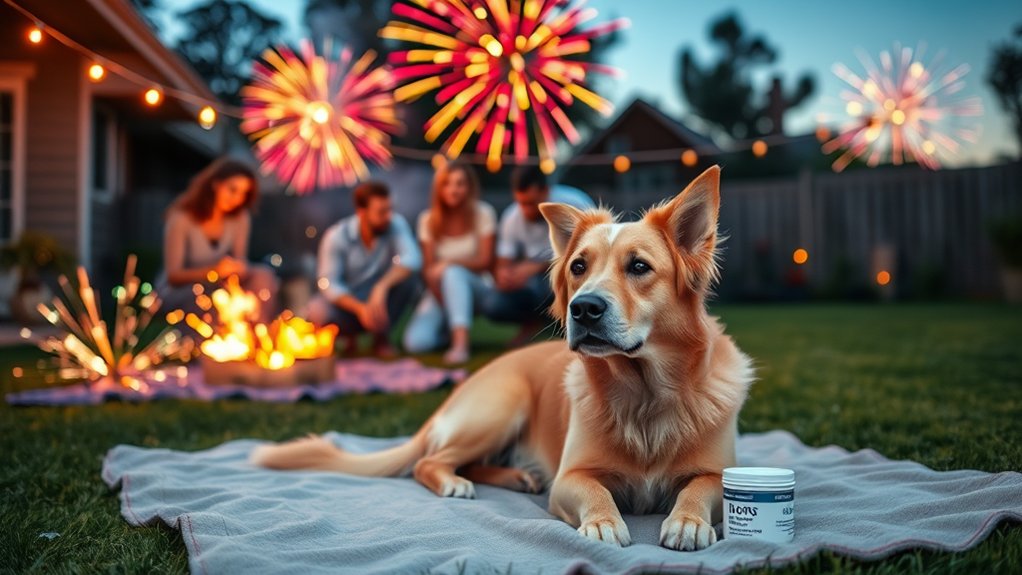
When your pet exhibits signs of severe anxiety during fireworks, consulting a vet is crucial for their well-being.
It’s advisable to schedule an appointment ahead of major events to ensure early assessment. Clear communication with your vet is essential; they can evaluate your pet’s anxiety and create a tailored treatment plan based on their age and health history.
They’ll also provide advice on the use of medications or calming supplements. Some pets may require prescription medications, while others might benefit from non-medical approaches.
Remember, only a vet can determine the safest options and dosages, ensuring your furry friend receives the best care during stressful situations.
Prioritise your pet’s comfort by seeking professional guidance.
Behavioral Modification Techniques for Noise Sensitivity

Fireworks can cause anxiety in pets, but there are effective behavioural modification techniques to help reduce their noise sensitivity. Here are some straightforward strategies:
- Use desensitisation techniques by gradually exposing your pet to low-volume firework sounds and then slowly increasing the volume over time.
- Implement counterconditioning methods by offering treats or engaging in play immediately after your pet is exposed to loud noises, helping to create positive associations.
- Set up a safe retreat area that’s soundproofed and filled with your pet’s favourite toys.
- Play calming music or white noise to help mask the sudden sounds of fireworks.
- Be patient; improvements may take time, especially with older pets.
Community Responsibility and Fireworks Regulations

Understanding community responsibility regarding fireworks regulations is essential for the safety of both pets and people during celebrations. By following local fireworks laws, you help ensure safety and compliance in your area.
Many local councils impose restrictions on when fireworks can be used and ban certain types to minimise noise and reduce stress for pets. Always check your local council’s website for specific regulations.
If you notice illegal or unsafe use of fireworks, report it to the authorities to help enforce these rules. Encouraging neighbours to attend professional displays instead of using personal fireworks can further reduce risks.
Together, we can create a safer environment for pets and promote responsible fireworks use in our communities.
Importance of Awareness Campaigns for Pet Owners

Awareness campaigns for pet owners are crucial in reducing the dangers posed by fireworks. By educating pet owners and promoting community involvement, these initiatives aim to protect our furry companions.
Here’s what they focus on:
- Informing you about signs of distress in pets during fireworks.
- Teaching safe practices, such as keeping pets indoors and secure.
- Encouraging microchipping and ensuring pet identification is up to date.
- Providing resources for calming techniques and veterinary support.
- Sharing statistics to inspire proactive safety measures for pets.
Engaging with these campaigns can make a real difference in ensuring the well-being of our pets during fireworks.
Supporting Wildlife During Firework Events

As fireworks illuminate the night sky, it’s not just our pets that are affected; wildlife bears the brunt of the noise too. To protect our local creatures during these events, we can take action as a community. Here’s how you can make a difference:
| Action | Impact | Benefit |
|---|---|---|
| Limit Firework Use | Reduces noise pollution, easing stress on wildlife | Supports natural behaviours |
| Clean Up Debris | Prevents ingestion hazards for animals | Protects local ecosystems |
| Educate Others | Raises awareness about the effects on wildlife | Fosters a compassionate community |
Frequently Asked Questions
Can I Use Ground Fireworks if My Pet Is Nearby?
You shouldn’t use ground fireworks if your pet is nearby. The loud noises can cause significant anxiety for pets. It’s best to keep your furry friends indoors and create a calm environment to help reduce their stress during fireworks.
What Types of Ground Fireworks Are Less Noisy?
If you prefer quieter ground fireworks, consider using silent sparklers for gentle sparks or smoke bombs for vibrant clouds. Both provide lovely visual displays without the loud bangs of traditional fireworks. Enjoy the spectacle!
How Can I Train My Pet to Tolerate Fireworks?
To help your pet tolerate fireworks, use desensitisation techniques by gradually exposing them to recorded firework sounds. Pair this with positive reinforcement, such as treats or play, to create positive associations and effectively reduce anxiety. For instance, start with a low volume and reward your pet for staying calm. Over time, increase the volume while continuing to offer rewards.
Are There Specific Pet Breeds More Sensitive to Fireworks?
Certain dog breeds, such as the Norwegian Buhund and the Irish Soft Coated Wheaten Terrier, are more susceptible to anxiety caused by fireworks. Their genetic backgrounds contribute to a heightened sensitivity, making them particularly at risk during noisy celebrations.
What Should I Do if My Pet Escapes During Fireworks?
If your pet escapes during fireworks, stay calm and follow these steps: search methodically, call their name gently, and check common hiding spots like under the sofa or in the garden shed. Inform your neighbours and ensure your home is secure to stop them from getting out again.
Conclusion
As the sky lights up with bursts of colour, remember that your pets can feel overwhelmed by the noise. Understanding their sensitivities and providing a safe space can help shield them from the chaos of fireworks. Prioritising their well-being reduces their stress and strengthens our community spirit. Let’s advocate for celebrations that consider both our furry friends and local wildlife. Your awareness can make a significant difference.