

To keep your pets safe during Bonfire Night, keep them indoors with all doors and windows securely shut. Ensure they have proper ID tags and a microchip with up-to-date information. Help reduce their stress by engaging them in play and exercise beforehand, and consider using noise-reducing products like calming music or anxiety wraps. Create a cosy, quiet space filled with familiar items like their bed and toys. Monitor their behaviour closely, and opt for safe alternatives to fireworks, such as sparklers or glow sticks. There are plenty of ways to ensure your pets remain safe and comfortable this festive season.
Key Takeaways
- Keep pets indoors on bonfire night to shield them from loud noises and prevent them from escaping in a panic.
- Make sure your pets wear clear identification, including a collar with ID tags and ensure their microchip details are up to date.
- Set up a safe haven for your pets with their favourite bedding, toys, and use sound-masking techniques like playing music to help ease their anxiety.
- Take your pets for a good walk or play session before the night starts to help tire them out and lessen their stress during fireworks.
- Keep a close eye on your pets for any signs of distress and consider opting for quieter alternatives to traditional firework displays.
Keep Pets Indoors and Secure

As bonfire night approaches, it’s crucial to keep your pets indoors and secure to protect them from the chaos outside. Loud noises and bright lights from fireworks can frighten pets, leading them to panic and potentially escape. By keeping them confined within your home, you reduce their risk of injury from frantic attempts to flee and exposure to harmful chemicals in the air. Additionally, during this time, wildlife rehabilitation centers often see a surge in injured and orphaned animals due to the stress caused by fireworks. To create a calm environment, provide familiar bedding and distractions like the radio or TV to help mask the noise. It’s also essential to understand that pets experience significant stress due to heightened sensory sensitivities during fireworks. Ensure all windows and doors are tightly closed and remove any sharp objects that could harm your pets if they get scared.
Identification and Tracking

As Bonfire Night approaches, it’s crucial to ensure your pet’s identification is up-to-date for their safety. Ensure your pet has a collar with a clear ID tag, and double-check that your microchip registration has your current contact details. These simple measures can significantly increase the chances of a quick reunion if your pet goes missing during the fireworks. Additionally, keep in mind that nearly 49% of dogs worldwide experience noise phobia, which can lead to them running away in fear. Creating a safe environment, such as a quiet space, can help reduce pet anxiety during these celebrations.
Essential ID Tags
An important step to ensure your pet’s safety during bonfire night is to have a visible identification tag. Your tag should clearly display your pet’s name, your full name, and your mobile number for quick contact. Choose durable materials like metal or robust plastic that can withstand the outdoors, and ensure the tag is securely attached to a well-fitted collar. The collar should allow two fingers to fit underneath for comfort while preventing it from slipping off. Opt for tags with reflective or glow-in-the-dark features to enhance visibility in low light. A well-designed tag significantly increases your chances of reuniting with your pet if they escape during the fireworks. Additionally, consider microchipping pets for permanent identification in case they get lost.
Microchip Registration Importance
Microchipping your pet is essential for ensuring their safe return if they go missing, particularly during busy times like bonfire night.
The benefits are clear: microchipped dogs have a reunification rate of 52.2%, compared to just 21.9% for those without. For cats, the stats are even more striking—38.5% versus a mere 2%.
However, for microchipping to work effectively, keeping your registration details up to date is crucial. Make sure to update your contact information whenever it changes, as outdated details can hinder shelters from reaching you.
Regularly check your pet’s microchip registration to ensure they can be quickly identified and returned. By taking these steps, you significantly boost the chances of your furry friend coming home safe and sound.
Stress Reduction and Behavioral Support

As bonfire night nears, it’s important to keep in mind that your pets may feel more stressed and anxious due to the loud noises and unpredictability of fireworks. Here are some effective strategies for managing their stress and modifying their behaviour.
| Signs of Stress | Pre-Event Activities | Sound Desensitisation |
|---|---|---|
| Hiding and shaking | Regular exercise and play | Gradual exposure to firework sounds |
| Excessive barking | Mental stimulation with toys | Positive reinforcement when calm |
| Destructive behaviour | Maintaining consistent routines | Noise-reducing equipment like wraps or earplugs |
Engaging your pets in physical and mental activities before the event can help burn off excess energy. Gradually introducing them to the sounds of fireworks can also help them cope better when the real thing happens. With preparation, you can help your furry friends feel more at ease during this noisy time.
Environmental Modifications for Small Pets

To keep your small pets safe and comfortable during Bonfire Night, place their cages in quieter areas away from the noise.
Using sound masking techniques, such as white noise machines or even a fan, can help drown out the sounds of fireworks.
Adding familiar bedding and toys can offer them a sense of security during this stressful time.
Quieter Spaces for Cages
Creating quieter spaces for your small pets during events like Bonfire Night is crucial to reducing their stress.
Here are three effective strategies:
- Cage Placement: Position their cages in the quietest room, away from doors and windows, to minimise noise exposure.
- Soundproofing Materials: Line the cage with high-density foam or sound-absorbing sheets. You can also drape soft blankets over the cage to help muffle sounds.
- Structural Modifications: Consider adding removable soundproof panels around the cage or elevating it off hard floors to reduce vibrations.
Sound Masking Techniques
As fireworks illuminate the sky on Bonfire Night, your small pets may become anxious due to the loud and unexpected noises. To help them cope, consider using sound masking techniques such as sound therapy and audio conditioning. Start several weeks in advance by playing low-volume recordings of fireworks during positive experiences, pairing the sounds with treats to encourage a calming response.
| Technique | Description |
|---|---|
| White Noise Machines | Provide continuous background noise to mask sudden sounds. |
| Calming Music Playlists | Play soothing music to promote relaxation. |
| Ear Protection | Use pet-safe headphones or earmuffs to lessen sound intensity. |
| Acoustic Modifications | Use rugs and blankets to create a softer, quieter environment. |
Implementing these strategies can significantly reduce your pets’ anxiety during Bonfire Night celebrations.
Extra Comfort Items
Many pet owners find that providing extra comfort items can significantly help small pets during Bonfire Night.
Creating a safe, cosy environment can alleviate their stress. Here are three effective comfort items to consider:
- Cosy Blankets and Extra Bedding: Line crates or carriers with soft bedding and familiar items to create a den-like retreat.
- Favourite Toys and Chew Items: Include their beloved toys and chew items to keep them engaged and distracted from loud noises.
- Calming Scents: Use pet-safe calming scents like lavender to create a soothing atmosphere.
Setting up quiet corners away from windows and doors can further enhance their comfort and security during this stressful time.
Proactive Planning for Firework Events
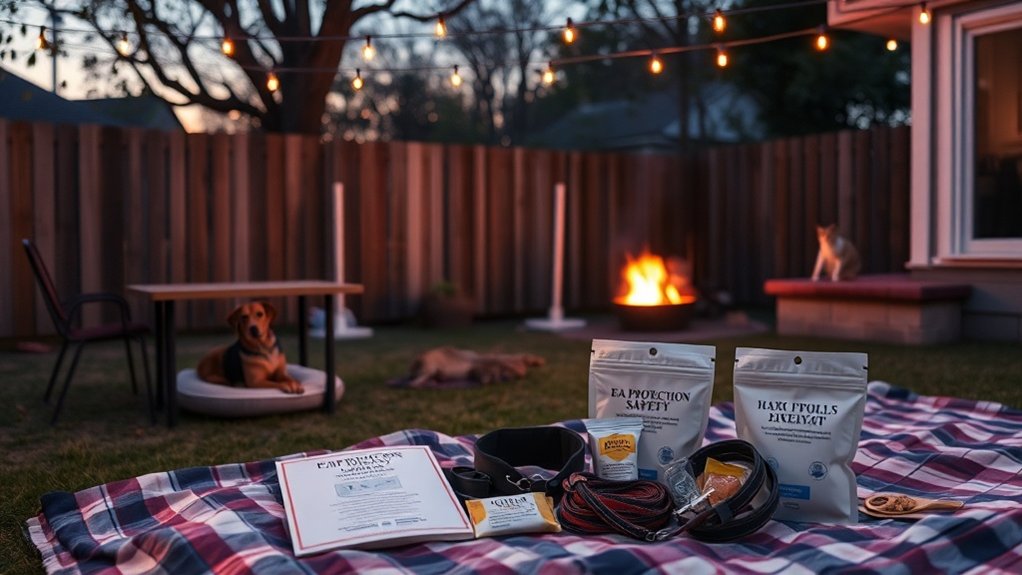
To help your pets stay calm during firework events, proactive planning is key. Schedule firework displays for times when your pets are typically less active, and select locations far from residential areas. Stay in the loop with community calendars to anticipate event timings and inform your neighbours to minimise your pet’s exposure. It’s also beneficial to keep in mind that adult supervision during firework use is crucial to prevent accidents that could disturb pets and cause anxiety.
| Planning Tips | Implementation Ideas |
|---|---|
| Schedule fireworks sensibly | Check local event calendars |
| Create a safe indoor space | Use heavy curtains and familiar items |
| Engage pets in exercise | Tire them out earlier in the day |
| Provide background noise | Use white noise machines or soft music |
| Consider firework alternatives | Look for local events with quieter options |
Common Firework-Related Dangers and Prevention
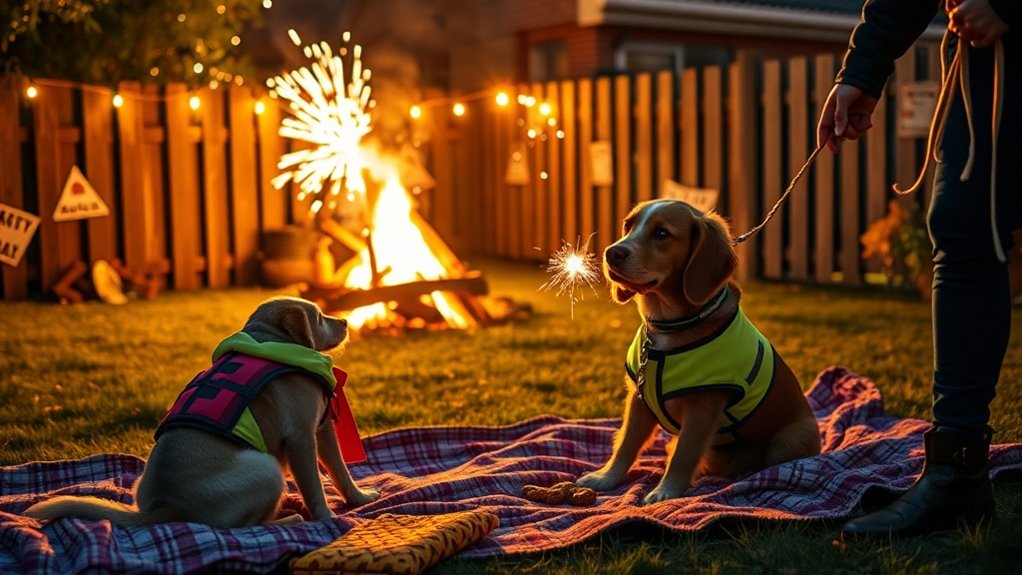
Fireworks can cause significant noise-related anxiety in pets, leading them to panic and potentially escape from your home.
This fear can lead to serious health risks, such as injuries from running into traffic or colliding with obstacles.
It’s crucial to recognise these dangers and take steps to keep your pets safe during firework displays.
For instance, ensuring your pet has a secure, quiet space away from the noise can help alleviate their stress.
Noise-Induced Anxiety
While Bonfire Night can be exciting for us, it often causes significant noise-induced anxiety in pets, especially dogs.
Around 52% of dogs display fear responses to fireworks, which can manifest as panting, trembling, or hiding.
To help your pet cope, try these strategies:
- Keep them indoors: Shut windows and draw curtains to reduce noise and visual distractions.
- Provide distractions: Use their favourite treats or interactive toys to shift their focus away from the noise.
- Use calming sounds: Play soft music or white noise to help drown out the sound of fireworks.
Escape Risks
Many pet owners underestimate the risks of their pets escaping during firework displays, especially if the animals are already anxious due to the noise.
The sounds can trigger panic, causing pets to desperately seek escape routes by breaking through windows or jumping over fences. This frantic behaviour can lead them far from home, increasing the likelihood of them getting lost or injured.
To prevent this, ensure that all doors and gates are securely locked and create a quiet, safe space indoors for your pets.
It’s also wise to consider microchipping your pet for identification in case they do escape.
With increased outdoor activity during celebrations, keep a close eye to prevent unnoticed exits.
Health Hazards
As Bonfire Night draws near, it’s important to be aware of the health risks fireworks pose for our pets.
Fireworks can cause both physical and psychological distress, so taking precautions is essential. Here are three key hazards to consider:
- Loud Noises: Fireworks can reach over 150 decibels, which can cause anxiety in around 67% of dogs and many cats.
- Injuries: In their panic to escape the noise, pets can suffer serious injuries, such as cuts or broken bones.
- Behavioural Changes: The fear triggered by fireworks can lead to destructive behaviours or long-term anxiety, affecting their overall health and happiness.
Be sure to keep your pets safe and calm during the celebrations.
Creating a Safe Space for Your Pet

When preparing for Bonfire Night, it’s essential to create a safe space for your pet to help them feel secure amid the noise and commotion. Select a quiet, windowless room with good ventilation where your pet feels at ease. Consider playing soft music or using a white noise machine to drown out the loud bangs, and close the curtains to reduce bright flashes.
| Tips for Creating a Safe Space | Benefits | Items to Include |
|---|---|---|
| Choose a familiar room | Reduces anxiety | Beloved toys and blankets |
| Use calming scents | Promotes relaxation | Pheromone diffusers |
| Keep water accessible | Prevents dehydration | Water bowls |
| Secure hazardous items | Ensures safety | First aid kit |
The Importance of Proper Identification

While fireworks can add excitement to celebrations, they can also cause distress for pets, making proper identification crucial.
To ensure your pet’s safety during Bonfire Night, keep these points in mind:
- Visible ID Tags: Ensure your pet wears a collar with an up-to-date ID tag that includes their name and your contact details. This helps anyone who finds your pet to contact you quickly.
- Microchipping Advantages: Microchips offer a permanent form of ID that can’t be lost or removed. Just ensure that your information is registered and current.
- Use Both Methods: Combining visible tags with microchipping increases the chances of a swift reunion if your pet goes missing during the celebrations. Proper identification gives you peace of mind and helps keep your furry friend safe.
Monitoring Your Pet’s Behavior

Monitoring your pet’s behaviour during Bonfire Night is crucial, as many animals can become quite stressed by the loud noises and bright lights.
Look out for signs of anxiety such as restlessness, pacing, or trembling. Other indicators include excessive panting, drooling, or attempts to hide. Changes in appetite or sleep patterns can also signal that your pet is feeling stressed.
Additionally, you may notice increased vocalisation, such as whining or barking. Keeping a close eye on your pet allows you to create a safe retreat for them.
If you observe severe anxiety that persists after the event, it may be worth consulting a veterinarian for advice.
Tips for Walking Dogs Before Fireworks
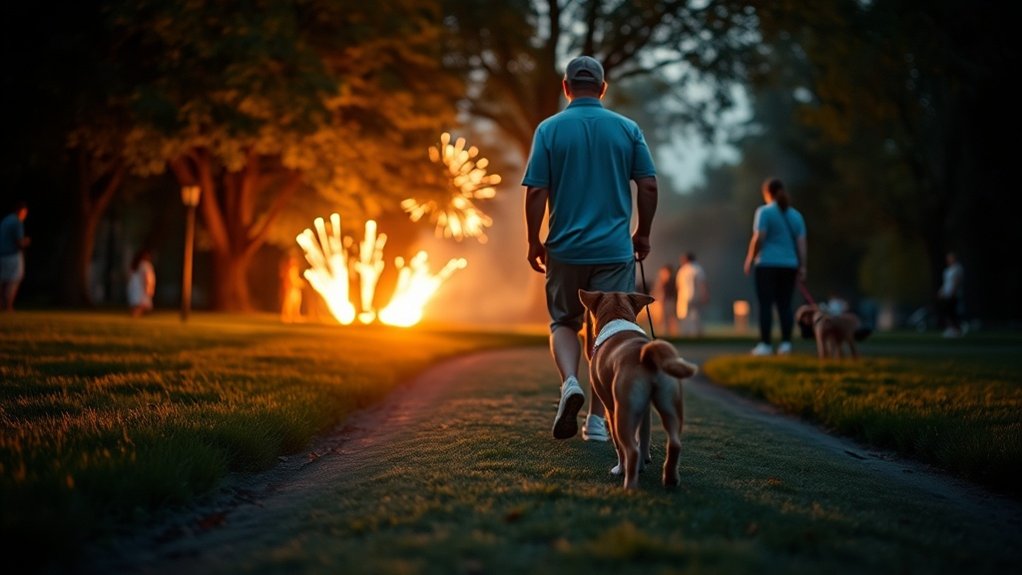
As Bonfire Night approaches, it’s important to plan your dog walks wisely to help ease their anxiety. Here are some key tips for walking your dog during this time:
- Walk Early: Take your dog for a walk earlier in the day. This helps you avoid the noise and flashes from fireworks, plus it gives your dog a chance to burn off some energy.
- Stay Secure: Always keep your dog on a lead and choose familiar, quiet areas that are away from firework displays. For added comfort, consider using an anxiety vest.
- Gradual Adjustments: Begin adjusting your walking routine about a week before Bonfire Night. This will help your dog get used to the earlier walks and minimise stress.
Frequently Asked Questions
How Can I Help My Pet if They Escape During Fireworks?
If your pet runs off during fireworks, stay calm and search the area nearby. Contact local shelters and inform your emergency contacts. Use familiar scents, like their bed or a favourite blanket, to lure them back. Avoid chasing them, as this might scare them further away.
What Are the Signs of Severe Anxiety in Pets During Fireworks?
When fireworks begin, keep an eye out for signs of anxiety in your pet. Common symptoms include excessive barking or meowing, pacing around the house, or seeking out hiding spots. You might also notice changes in their behaviour, such as being more clingy than usual or showing a lack of interest in food. These can all be signs that your pet is feeling overwhelmed by fear.
Can I Use Calming Music Specifically Designed for Pets?
Yes, you can absolutely use calming music designed for pets. It can significantly lower anxiety and create a soothing environment. Incorporating this into your pet’s routine can help them feel more at ease during stressful times, such as fireworks or vet visits.
Are Certain Breeds More Prone to Firework Anxiety?
Certain breeds, such as the Norwegian Buhund, can be particularly sensitive to fireworks, often reacting with extreme anxiety. Knowing these traits can help you prepare and support your dog during noisy celebrations, ensuring they feel safe and comfortable. For example, providing a quiet space or using calming products can make a significant difference.
What Should I Do if My Pet Gets Hurt During Fireworks?
If your pet is injured during fireworks, first assess the injury and apply basic first aid if you can. Contact emergency veterinary services straight away. Keep your pet calm and secure until help arrives to ensure their safety and aid in their recovery.
Conclusion
As bonfire night approaches, it’s crucial to ensure your pets feel safe and secure. The loud bangs and bright flashes of fireworks can be frightening for them. To help your furry friends cope, keep them indoors and create a comfortable space where they can relax. Consider playing soothing music or providing their favourite toys to distract them. By taking these simple steps, you can make sure both you and your pets enjoy the celebrations without unnecessary stress.


