Garden fireworks are not safe for pets because they are particularly sensitive to loud noises and bright lights. These can cause panic, anxiety, and distress, leading pets to behave unpredictably. Many may try to escape, which raises the risk of injuries or them going missing. To keep your pets calm and secure, consider quieter alternatives and methods to help manage their anxiety during fireworks. Look out for helpful tips on pet safety coming up.
Key Takeaways
Garden fireworks can be very distressing for pets due to their heightened sensitivity to loud noises and bright lights. The loud bangs can trigger panic, leading pets to try to escape and potentially injure themselves. Many pets suffer from noise phobia, which makes fireworks particularly anxiety-inducing.
To help your pets feel safe during fireworks displays, keep them indoors in a quiet, secure space. This can significantly reduce their stress levels. You might also consider using pet-friendly alternatives, such as laser shows or LED sparklers, to create a festive atmosphere without the distress of traditional fireworks.
Understanding Pets’ Sensory Perception

Understanding your pet’s sensory perception is crucial, particularly during stressful events like fireworks. Pets can experience sensory overload due to their heightened senses, making sounds and sights, such as fireworks, particularly overwhelming. For example, dogs can hear sounds at frequencies up to four times higher than humans, while cats are even more sensitive. The sudden bursts of fireworks can trigger instinctive reactions, such as hiding or trying to escape. Additionally, the bright flashes and strong smells can be a sensory assault that pets find hard to cope with. This heightened perception often leads to increased anxiety and can result in destructive behaviour. In fact, dogs have superior hearing capabilities, which makes them particularly sensitive to loud noises like fireworks. Because of their heightened sensitivity, supervision is crucial to help manage their stress during these events.
The Distress Caused by Fireworks
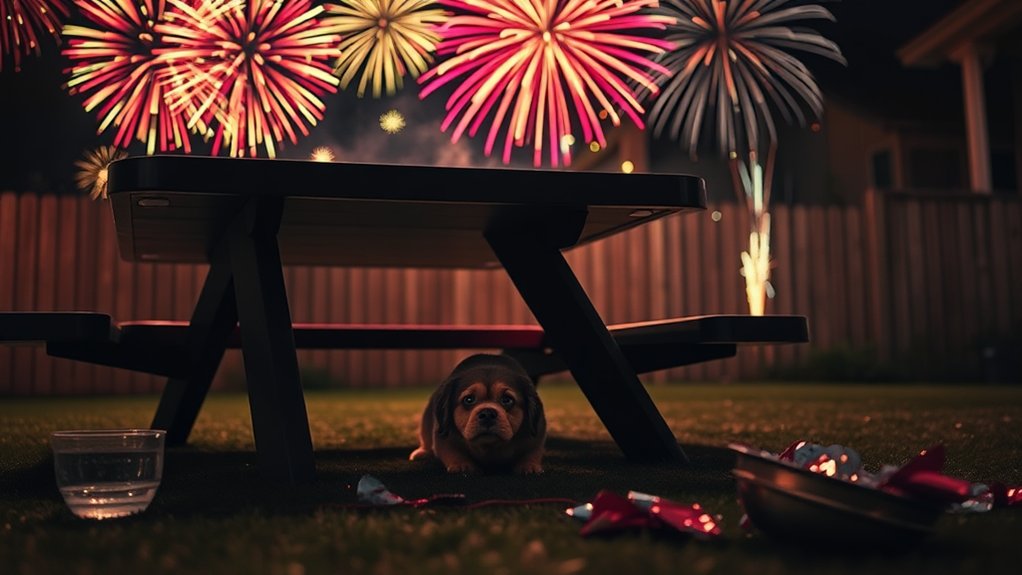
Fireworks can be a source of significant distress for pets. Signs to look for include trembling, excessive panting, and vocalisations like whining. Pets often seek comfort by hiding or staying close to you, clearly reacting to the loud noises. You might also notice behavioural changes such as pacing, destructive behaviour, or inappropriate elimination due to fear. If your pet tucks their tail or flattens their ears, it’s a sign of anxiety. These reactions can escalate, leading to attempts to escape or even injury. Understanding these responses allows you to better support your furry friend, helping them feel safe and secure during the fireworks. Creating a quiet, cozy safe space can greatly alleviate their anxiety during such events.
Physical and Psychological Risks to Pets
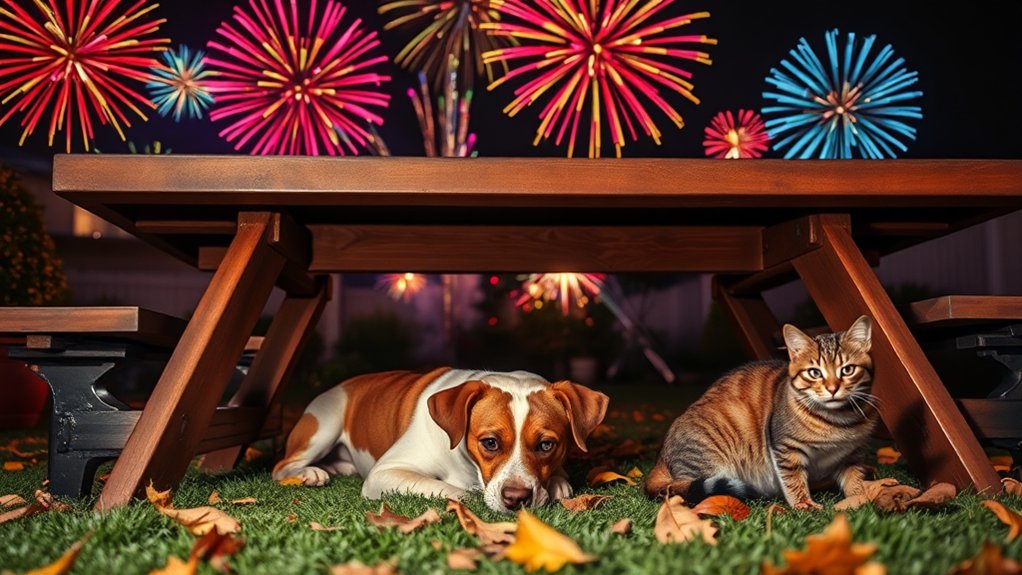
Fireworks can cause heightened reactions in pets, leading to fear and anxiety that may result in dangerous escape attempts. These panic-driven behaviours not only put them at risk of injury but can also lead to ongoing issues, like increased anxiety and noise phobia. It’s important to recognise these risks to keep your pets safe and calm during firework displays. Many pets have more sensitive hearing than humans, making the loud sounds of fireworks even more distressing for them.
Heightened Sensory Reactions
Loud noises from fireworks can be overwhelming for pets, leading to heightened sensory reactions and acute distress. Many pets have increased sensitivity to sound, making the intense noise of fireworks particularly difficult for them to handle. Signs of sensory overload include trembling and panting. The unpredictability of fireworks often triggers an immediate fear response, resulting in anxiety that can linger well after the event. It’s important to note that adult supervision during fireworks can help create a safer atmosphere for pets as well.
| Sensory Reaction | Impact on Pets |
|---|---|
| Acute Hearing | Painful sounds |
| Sensory Overload | Distress and anxiety |
| Fear Response | Immediate panic |
| Long-Term Effects | Increased noise phobia |
It’s essential to recognise these reactions to ensure your pet’s safety and comfort during fireworks displays. Creating a secure environment can help ease their distress.
Escape-Related Injuries
As the loud bangs of fireworks echo, many pets instinctively try to escape, which can lead to serious injuries.
When scared, pets may break through fences or windows, risking cuts and broken bones. About 9% of dogs attempt to flee during fireworks, significantly raising their chances of injury or getting lost.
To prevent this, ensure your home has secure exits and consider using calming techniques for your pets. Remember, noise phobia affects up to 67% of dogs, causing them to panic and behave unpredictably, which emphasizes the importance of adult supervision to create a safe environment during celebrations.
Long-Term Behavioral Issues
When pets panic during fireworks, the impact can extend beyond immediate injuries, leading to long-term behavioural issues. Here are some key risks to consider:
- Increased Anxiety: Loud noises can result in lasting anxiety disorders that affect your pet’s behaviour and temperament.
- Conditioned Fear Responses: The mere anticipation of fireworks can cause anxiety, leading to destructive behaviours at home.
- Chronic Stress: Regular exposure to stressful situations, like fireworks, can disrupt your pet’s routine and reduce their ability to cope, which may lead to aggression or withdrawal.
- Hearing Damage: Continuous exposure to loud sounds can result in hearing loss, leaving your pet less aware of their environment and potentially heightening anxiety.
To protect your pet’s well-being, it’s crucial to implement effective anxiety management techniques and behavioural conditioning strategies.
The Increased Risk of Pets Going Missing
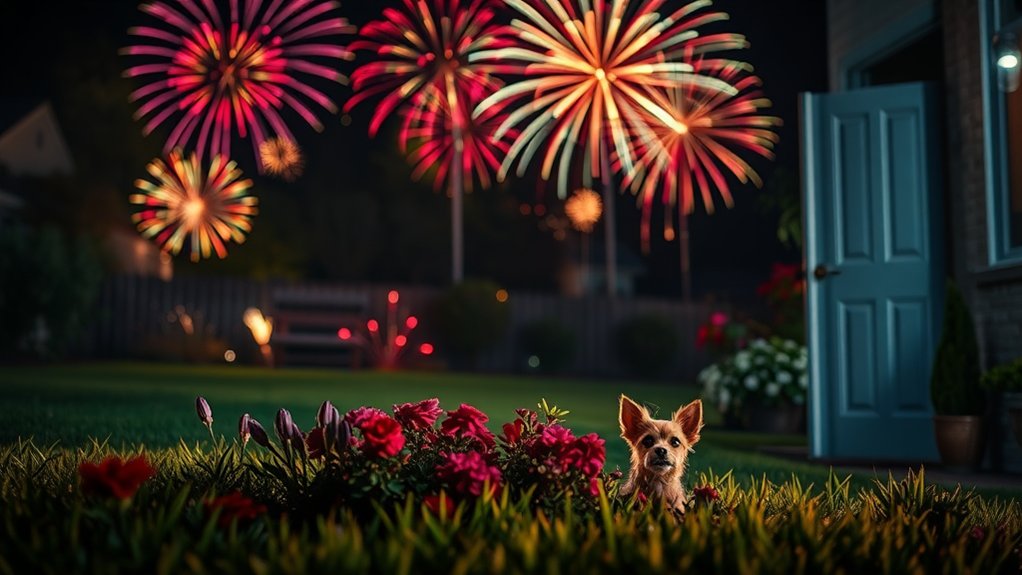
Fireworks can cause panic in pets, leading them to attempt desperate escapes and increasing the likelihood of them going missing.
During celebration periods, animal shelters often report a rise in lost pets, underscoring the need for vigilance.
To keep your furry friends safe during fireworks events, it’s essential to understand these risks and take proactive measures.
For example, ensuring pets are secure indoors or providing a safe, quiet space can help reduce their anxiety.
Fireworks Trigger Panic
Fireworks can bring excitement for many, but they often cause distress for our pets. The loud bangs can trigger intense panic, leading dogs and cats to seek safety.
Research shows that between 40% and 67% of dogs experience noise phobia, while many cats will hide away in fear. Here are some important points to consider:
- The explosive sounds can prompt pets to flee instinctively.
- Pets might escape through open windows or over fences, risking injury.
- Such panic can lead to long-term anxiety about loud noises.
- The likelihood of pets going missing increases significantly during fireworks displays.
It’s crucial to be aware of how fireworks can impact our furry companions.
Increased Shelter Intakes
As the sounds of celebration fill the air, many pets become anxious and frightened, resulting in a notable increase in shelter intakes during and after fireworks events. This surge puts pressure on shelter capacity, creating challenges for urban shelters.
| Time Period | Increase in Pet Intake | Shelter Response |
|---|---|---|
| 4th July | 21% | Waived adoption fees |
| 5th July | Among top 3 intake days | Urgent care for trauma |
| Fireworks Week | 30%-60% increase | Increased staffing needs |
| Annual Trend | Year-on-year growth | Community reunification |
To safeguard your pets, keep them indoors and ensure they have proper identification. Taking these precautions can help minimise the number of lost pets and ease the strain on shelters during this challenging time.
Long-Term Effects of Fireworks on Pets

Many pets experience long-term effects after being exposed to fireworks, resulting in persistent anxiety and fear-based behaviours. This can manifest in several ways, such as:
- Chronic anxiety and noise phobias, making your pet sensitive to other loud sounds.
- Excessive barking, trembling, or seeking hiding spots as they cope with fear.
- An increased likelihood of escaping or injuring themselves during future noise events.
- A potential need for professional help due to ongoing behavioural issues.
If your pet shows signs of distress after fireworks, it’s crucial to address these problems early on.
Untreated trauma can worsen, affecting their quality of life and leading to long-lasting emotional challenges.
Your support and understanding can greatly aid in their recovery.
Preparing Your Home for Fireworks Season

To ensure a safe and enjoyable fireworks season, it’s important to prepare your home properly.
Start by clearing the area of flammable materials, such as dry leaves and branches. If the ground isn’t level, use a flat wooden board as a stable launch platform.
Secure or move outdoor furniture to avoid any hazards. Always comply with local laws and use only legal fireworks.
Keep safety equipment, like fire extinguishers, close at hand. Make sure your pets are indoors in a quiet space to help reduce their anxiety.
Finally, post visible signs to inform neighbours, enhancing overall safety during the celebrations.
Safe Alternatives to Traditional Fireworks

Preparing your home for fireworks season is crucial for your pets’ safety. To further reduce their stress and anxiety, consider these safe alternatives to traditional fireworks:
- Laser shows: These create colourful light patterns without the loud noise, helping to keep your pets calm.
- Drone displays: Choreographed aerial shows provide a visual treat similar to fireworks but without the accompanying sounds.
- Quiet fireworks: These produce significantly less noise, allowing you to celebrate without distressing sensitive pets.
- Glow sticks and LED sparklers: These silent, vibrant alternatives add to the festivities while keeping your pets safe from noise and potential hazards.
Community Awareness and Responsibility

There’s a growing awareness of the impact fireworks have on pets in our communities. As a pet owner, you play an important role in engaging with others and spreading the word.
Many campaigns and local authorities highlight the anxiety fireworks can cause for animals, yet some still underestimate the risks. Stricter regulations on fireworks, which most pet owners support, can help reduce these dangers.
By advocating for quieter fireworks and licensed displays, you can help create a safer environment for our pets. Additionally, sharing information with neighbours about the distress fireworks can cause fosters a caring community.
Together, we can cultivate a sense of responsibility that prioritises the welfare of all animals during celebrations.
Strategies for Managing Pet Anxiety

As communities become more aware of the anxiety fireworks can cause pets, it’s essential to implement effective strategies to manage their stress.
Here are four key approaches:
- Create Safe Spaces: Set up quiet, dim areas with familiar bedding where your pet can retreat undisturbed.
- Desensitise Gradually: Play recorded firework sounds at a low volume, rewarding your pet with treats to help them adjust over time.
- Maintain Routine: Keep feeding, walking, and play schedules consistent to reduce additional stress during firework displays.
- Avoid Punishment: Don’t scold or force interaction, as this can worsen anxiety and negatively affect your pet’s behaviour.
Advocating for Pet-Friendly Celebrations
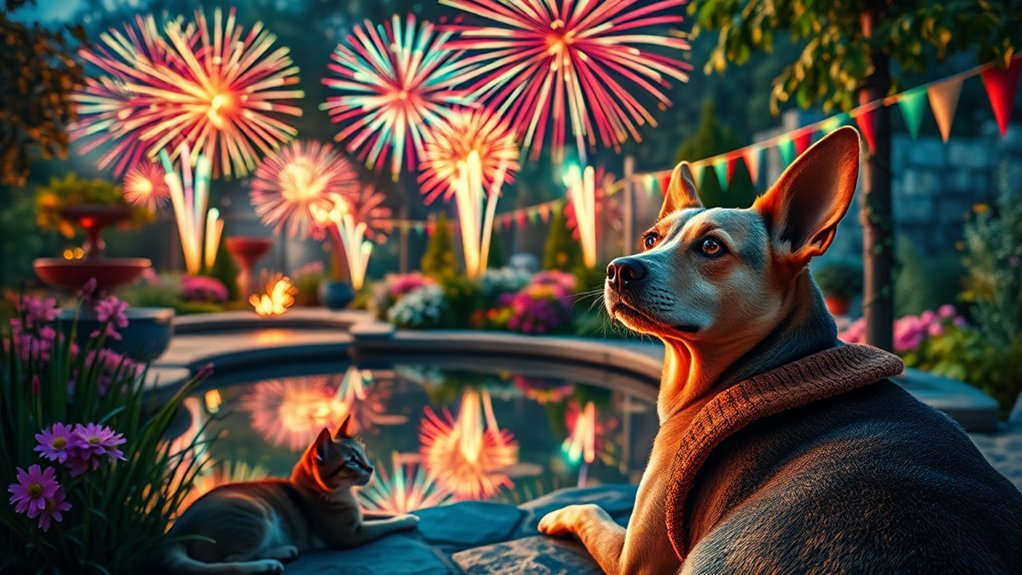
When planning celebrations, consider opting for quieter alternatives to fireworks that won’t distress pets and wildlife.
Educating the community about the effects of loud noises can encourage more considerate festivities, allowing everyone to enjoy the occasion.
Quieter Celebration Alternatives
If you want to celebrate without upsetting your pets, consider quieter alternatives to traditional fireworks.
Here are some excellent options:
- Laser displays – These colourful shows provide stunning visuals without the loud bangs that can scare animals.
- Drone shows – Choreographed aerial performances aren’t only breathtaking but also silent, ensuring your furry friends remain calm.
- Silent fireworks – These reduce noise significantly while still offering a beautiful light display.
- Glow sticks and LED sparklers – These pet-safe options create a festive atmosphere without the noise or smoke.
Choose these alternatives to keep your celebrations enjoyable for everyone, including your pets.
Community Education Initiatives
Creating a pet-friendly celebration environment is vital for the safety and well-being of our furry companions during festive events.
Community workshops are crucial in educating pet owners about keeping their pets safe during fireworks. These sessions can cover how to secure pets indoors, use calming aids, and spot signs of anxiety.
Partnering with local vets can provide personalised advice for managing pet stress effectively. Additionally, distributing safety checklists and using social media can help spread important information quickly.
Frequently Asked Questions
Can Pets Be Trained to Tolerate Fireworks Over Time?
Yes, you can train your pets to tolerate fireworks over time using desensitisation techniques. Gradual exposure to recorded sounds, combined with positive experiences like treats or playtime, helps them adjust and reduces their fear during actual events. For example, start by playing a recording of fireworks at a low volume while giving your pet their favourite snack. Over time, you can gradually increase the volume as they become more comfortable.
Are Certain Dog Breeds More Sensitive to Fireworks Than Others?
Certain dog breeds, such as the Norwegian Buhund and the Irish Soft Coated Wheaten Terrier, have specific traits that can make them more sensitive to the noise of fireworks. Recognising these characteristics can help you better manage your dog’s stress during such events. For example, dogs with a strong attachment to their owners may become anxious when loud noises occur, prompting them to seek comfort. Understanding your dog’s needs is key to keeping them calm during fireworks displays.
How Can I Tell if My Pet Is Injured From Fireworks?
As fireworks illuminate the night sky, keep an eye on your pet for signs of distress. If they tremble, seek refuge, or exhibit sensitivity to noise, they may be feeling frightened or injured. It’s important to remain alert and consider contacting your vet if you notice any concerning behaviour.
What Should I Do if My Pet Runs Away During Fireworks?
If your pet runs away during fireworks, act swiftly. Search the local area and notify nearby shelters. To prevent escapes in the first place, make sure your pet’s identification tags are up to date.
Are Garden Fireworks Less Distressing for Pets Than Larger Displays?
Are garden fireworks less distressing for pets? They usually make less noise than larger displays, but pets can still react unpredictably. It’s important to create a safe space for your furry friends to help them cope with any loud sounds. For instance, providing them with a cosy bed and some familiar toys can make a difference.
Conclusion
Keeping your pets safe during fireworks is vital for their well-being. While the saying goes, “A barking dog seldom bites,” the fear caused by fireworks can lead to unexpected behaviours. To create a more pet-friendly environment, consider safe alternatives and raise awareness in your community. Remember, your furry friends depend on you to help them through these noisy celebrations, so take the necessary steps to ensure their comfort and safety.