Weather has a significant impact on garden fireworks. High temperatures can lead to quicker ignition and less vibrant colours, while cooler weather may delay firing and throw off your display’s timing. Rain and humidity can affect functionality, resulting in misfires or excessive smoke. Wind can alter the trajectory and pose safety risks, so it’s vital to adjust launch angles accordingly and stay aware of changing conditions. By grasping these factors, you can improve your firework experience. Keep reading for tips on how to enjoy your garden fireworks, no matter the weather.
Key Takeaways
- Warmer temperatures can speed up ignition, leading to misfires or disrupted synchronisation in garden firework displays.
- High humidity may cause smoke to linger, reducing visibility and detracting from the overall experience of garden fireworks.
- Light rain can cause fireworks to malfunction, while heavy rain can completely halt the displays.
- Wind can change the path of garden fireworks, creating safety hazards and impacting the visual effect of the show.
- Careful planning and monitoring of the weather are crucial for ensuring both safety and the best performance of garden fireworks.
The Impact of Temperature on Firework Performance

Temperature significantly affects fireworks performance, impacting everything from ignition timing to visual effects. In warmer conditions, ignition can occur more quickly, which may disrupt synchronised displays and lead to premature explosions. On the other hand, colder temperatures can slow down ignition, potentially delaying the entire show. Extreme temperatures also influence how high fireworks can reach. Warmer air can limit altitude, reducing the overall visual impact. This warmth can also dull colours; rapid burning in high heat often results in less vibrant displays. Furthermore, sound quality is affected; hot air can muffle the expected “boom,” making the experience less enjoyable. By understanding these effects, you can optimise your fireworks display for the best results. Additionally, high temperatures can increase fire risk in dry conditions, posing safety concerns for spectators and the surrounding area.
Wind’s Role in Firework Trajectory and Safety

Wind plays a crucial role in the trajectory and safety of firework displays, and it’s important not to underestimate its impact.
Even a slight change in wind can significantly affect where fireworks land, which raises safety concerns for spectators. Here are some key points to consider:
- Strong winds can divert fireworks, changing their explosion point.
- Debris may fall unpredictably, posing risks to viewers.
- Wind can carry embers, potentially igniting nearby buildings or vegetation. Strong gusts can alter fireworks’ trajectory, increasing safety risks. Additionally, establishing safety zones around the launch site is essential to minimize risks associated with wind conditions.
To reduce these risks, professionals adjust the angles of launch based on wind conditions and set safety zones accordingly.
Effects of Rain and Humidity on Firework Displays

Rain and humidity can significantly affect firework displays, impacting both ignition and visual appeal. Heavy rain can dampen igniters, leading to display failures. Even light rain can cause fireworks to malfunction, disappointing the audience when they fail to detonate. Humidity is another key factor; moist air can cause smoke to linger, obscuring subsequent bursts and dulling their colours, which detracts from the overall experience. High humidity may also lead to ignition delays as fuses absorb moisture. To counter these issues, professional pyrotechnicians often use waterproof coverings and store fireworks in controlled environments, ensuring that they can deliver a spectacular show despite the weather. Firework quality plays a vital role in performance, as higher-quality fireworks have better resistance to rain and humidity.
Essential Safety Considerations for Firework Shows

Here are three key safety tips:
- Always set off fireworks outdoors in open spaces, ensuring spectators are at a safe distance.
- Wear safety goggles and have a responsible adult supervise the event to protect both operators and viewers.
- Keep emergency equipment, such as water buckets or hoses, close by to quickly deal with any incidents. Additionally, be mindful of safe viewing distances to prevent injuries and ensure a secure environment for all attendees.
It’s vital to maintain audience awareness; check that no one is within range before lighting.
Planning for Weather-Related Challenges

When planning your garden fireworks display, it’s crucial to monitor weather forecasts to ensure everything goes smoothly. Choose fireworks suited to the expected conditions, and always have contingency plans ready for any sudden changes in the weather. For instance, if rain is forecasted, consider holding your display indoors or rescheduling. Additionally, avoid lighting fireworks in windy conditions, as strong winds can lead to unpredictable trajectories and safety hazards.
Weather Forecast Monitoring
As you prepare for a garden fireworks display, keeping an eye on the weather is crucial for ensuring a safe and enjoyable occasion.
Here are three straightforward steps to follow:
- Check local forecasts regularly, starting at least a week before the event.
- Sign up for weather alerts to keep updated on severe conditions like high winds, rain, or thunderstorms.
- Consult local meteorological services for expert advice on the day of the event.
Firework Selection Criteria
Choosing the right fireworks for your garden display is crucial, especially since weather can greatly affect performance and safety.
Keep an eye on the wind; avoid fireworks that are unpredictable in winds over 20 mph. Opt for those designed for stability in the air to ensure they travel as intended.
In damp conditions, select fireworks with moisture-resistant fuses to guarantee they ignite properly, and go for bright colours that stand out even when it’s humid.
Temperature matters too—warm weather helps fireworks perform better, while cold can dampen their effect. Additionally, be mindful of dry ground; choose fireworks that are less sensitive to minimise fire risks.
Lastly, ensure the duration of your display matches the weather for maximum visual impact. This way, your garden show can dazzle your audience without compromising safety.
Backup Plans Essential
When planning a fireworks display in your garden, it’s vital to consider the weather.
Having a backup plan ensures the event can still be enjoyable, regardless of conditions. Here are some key points to keep in mind:
- Choose a backup venue that offers shelter and safety, like a nearby hall or community centre.
- Keep an eye on weather forecasts to stay updated on any changes that might affect your plans.
- Have clear rescheduling options ready in case the event can’t go ahead as intended.
These steps will help ensure your celebration remains a success, rain or shine.
Strategies for Optimal Firework Visibility

To ensure your fireworks display is seen at its best, choose a clear night, as this boosts the colours and contrast against the dark sky.
Launch your fireworks after dusk when the light is low, making them appear more vibrant.
It’s also wise to select fireworks that perform well in different weather conditions to avoid any disappointments.
Clear Weather Conditions
Clear weather conditions are crucial for optimal visibility during firework displays, significantly improving the experience for viewers.
With clear skies, you can expect:
- Vibrant Colours: Bright skies enhance colour intensity, making each explosion stand out.
- Crisp Visuals: Without cloud cover or haze, you can see every intricate detail of the fireworks clearly.
- Uninterrupted Viewing: Dry conditions prevent smoke from obscuring your sight, ensuring a smooth display.
These elements come together to create a memorable show, allowing you to truly appreciate the artistry of each burst of light.
Clear weather not only improves the visual appeal but also deepens the emotional engagement with the event.
Optimal Launch Timing
Understanding how weather affects garden fireworks is essential for optimising launch timing, which is crucial for enhancing visibility and safety.
Ideally, you should aim to launch your fireworks during nautical dusk, when the sky is dark enough for vibrant displays without being completely black.
Pay attention to wind conditions; a light breeze can improve visibility, whereas strong winds pose safety risks.
Keep an eye on humidity levels as well—lower humidity tends to make colours appear more brilliant.
Avoid launching during heavy rain or storms to prevent misfires and ensure a captivating display.
Firework Type Selection
When selecting fireworks for your display, it’s crucial to consider how the weather affects visibility and safety. Here are some key points to keep in mind:
- Vibrant Colours: Choose bright, high-burst fireworks like peonies and chrysanthemums that pop against dark skies.
- Weather-Resistant Options: Opt for waterproof fireworks to ensure they ignite properly, even in rain or humidity.
- Wind-Resilient Choices: Go for heavier aerial shells that can withstand moderate winds, keeping their trajectories stable.
Position your launch site wisely, taking into account the wind direction to reduce drift and enhance visibility.
Choosing the Right Fireworks for Various Weather Conditions
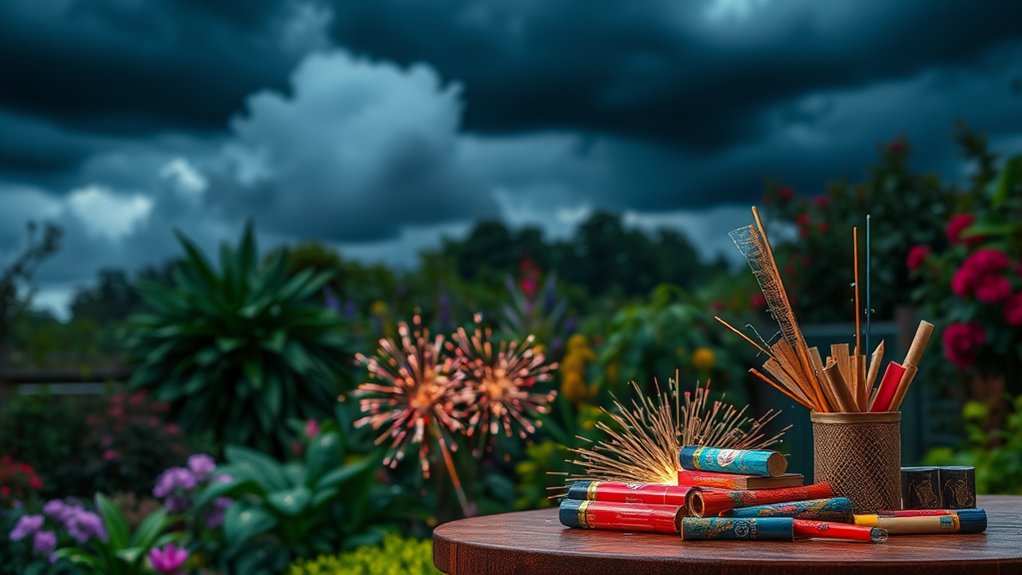
Choosing the right fireworks for different weather conditions can significantly improve your display and ensure safety.
It’s crucial to understand how weather affects fireworks. For example, rain can dampen fuses, making them difficult to ignite. High humidity can cause fireworks to fizzle out prematurely, leading to less brightness and visibility. To counter this, use waterproof coverings to protect your fireworks until you’re ready to launch.
In windy conditions, select fireworks designed to remain stable, as strong gusts can blow sparks towards the audience.
Temperature also matters; cooler air tends to enhance colours, while high temperatures can increase the risk of fire. In dry conditions, opt for low-spark fireworks to minimise risk.
Always prioritise safety to create a memorable and secure fireworks display.
Frequently Asked Questions
Can Fireworks Be Stored Outdoors in Different Weather Conditions?
You can store fireworks outdoors, but take care. High humidity can lead to moisture damage, while extreme heat or cold can compromise their safety. Always use waterproof containers and ensure they are securely stored to avoid any issues. For example, a sturdy plastic box with a tight lid can help protect them from the elements.
What Are the Best Types of Fireworks for Humid Weather?
In humid weather, opt for fireworks with moisture-resistant fuses and longer burn times. Types like sparklers and smoke grenades perform well in damp conditions, ensuring bright displays even when the weather is less than ideal.
How Does Altitude Affect Firework Performance in Different Weather?
Altitude significantly influences firework performance, particularly in terms of visibility and dispersal. At higher altitudes, spectators can see the fireworks from greater distances. However, weather conditions, such as humidity and wind, can affect brightness and alter the trajectory of the fireworks. For instance, in damp conditions, the fireworks may appear less vibrant, impacting their overall effectiveness and safety during displays.
Are There Specific Fireworks That Work Well in Windy Conditions?
Did you know that more than 70% of fireworks accidents happen in windy conditions? For safer displays, opt for wind-resistant fireworks such as fountains or multi-shot cakes. These types remain stable and help reduce risks from sudden gusts.
What Precautions Should Be Taken if Unexpected Weather Changes Occur?
If unexpected weather changes occur, take immediate safety precautions. Activate emergency plans, evacuate spectators if necessary, check all equipment, and ensure clear communication to protect everyone’s safety and minimise risks during the event. For example, if a sudden storm hits, move attendees to sheltered areas and monitor updates closely.
Conclusion
In conclusion, understanding how weather affects garden fireworks is crucial for a successful display. Did you know that nearly 30% of firework shows are cancelled due to poor weather? This statistic underscores the need for proper planning. By taking into account temperature, wind, and humidity, you can ensure your fireworks shine rather than fail. Keep an eye on the forecast and choose your fireworks wisely—you’ll create memorable experiences while prioritising safety.