

If you suffer from a firework-related burn, act swiftly. Rinse the burn under cool running water for at least 20 minutes—avoid using ice, as it can aggravate the injury. Gently clean the area with mild soap and cover it with a sterile bandage. Over-the-counter pain relief can help ease discomfort. Keep an eye out for signs of infection, such as increased redness or discharge. Knowing how to treat different degrees of burns will also help you manage these injuries effectively.
Key Takeaways
- Rinse the burn with cool running water for at least 20 minutes to ease pain and prevent further damage.
- Avoid ice; it can aggravate the injury and lead to frostbite.
- For first-degree burns, apply petroleum jelly and cover with a sterile dressing.
- Second-degree burns should be gently cleaned, treated with antibiotic cream, and kept elevated.
- Seek immediate medical help for third-degree burns or those affecting the face, hands, or genitals.
Understanding Firework-Related Burns

Understanding firework-related burns is crucial, as they’re the most common injuries from fireworks. In the UK, around 42% to 58% of firework injuries treated in hospitals involve burns, with approximately 9,700 cases reported each year. Approximately 11,500 emergency room visits due to fireworks injuries last year highlight the importance of being aware of these hazards. Sparklers, which burn at around 1,100 degrees Celsius, are particularly dangerous for children and can lead to severe injuries.
Children and teenagers, particularly those aged 15-19 and 5-9, are especially at risk. To prevent burns, it’s essential to recognise the dangers of handling fireworks, such as sparklers and firecrackers, which contribute to many injuries. Most burns affect the hands and fingers, underscoring the need for protective measures. Always supervise younger users to help reduce risks.
It’s also important to understand that even burns that appear minor can cause deeper tissue damage.
Types of Burns Caused by Fireworks

Fireworks can lead to different types of burns, each with unique characteristics and levels of severity. It’s important to understand these classifications to recognise symptoms effectively.
First-degree burns affect only the outer layer of the skin, causing redness and mild pain, much like a sunburn.
Second-degree burns go deeper, leading to blisters, swelling, and more severe pain.
Third-degree burns damage all skin layers and can affect nerves, resulting in white or charred skin and numbness. Over 1 million burn injuries occur annually in the U.S., highlighting the importance of understanding firework-related burns.
Fireworks often cause thermal burns from direct contact with hot components.
Chemical burns may occur due to harsh substances in the fireworks’ composition.
Mechanical burns can result from shrapnel, while mixed burns involve various types of damage.
Knowing these types can help you respond correctly to firework-related injuries and seek appropriate medical assistance.
Immediate Cooling Techniques for Burns

To treat a firework burn, start by rinsing the affected area with cool running water for at least 20 minutes. Avoid ice, as it can aggravate the injury; instead, aim for comfortably cool water to prevent hypothermia. Gently clean the burn with mild soap and water to keep it hygienic without causing further harm. Remember that major burns may require emergency medical assistance, especially if they are larger than 3 inches.
Cool Water Application
Applying cool water to a burn is crucial for effective first aid. This method provides several benefits, such as reducing pain and swelling. Ideally, you should apply cool water for at least 20 minutes to enhance healing, particularly within three hours of the injury.
| Cooling Duration | Benefits |
|---|---|
| 3-5 minutes | Reduces pain and swelling |
| 20 minutes | Decreases burn depth |
| Within 3 hours | Maximises healing effects |
| Immediate cooling | Lowers the risk of scarring |
Use cold running water, gently rinsing the area without applying pressure, and avoid creams or ointments afterwards. Remember, proper cooling is key for a swift recovery and minimising long-term issues.
Avoid Ice Usage
When treating burns, it’s crucial to avoid using ice. Many people think ice can soothe burns, but this is a dangerous myth. Ice restricts blood flow, which is essential for healing, and can even cause frostbite, worsening the damage.
Instead, use cool running water for 10 to 20 minutes to lower the burn’s temperature effectively. If running water isn’t available, a cool, wet cloth can be applied to the area. Avoid materials that might stick to the burn and don’t apply pressure.
Proper immediate cooling is vital for recovery, and using ice can hinder the healing process. Always choose safe methods over harmful ones.
Gentle Cleaning Methods
After cooling a burn, it’s important to clean it gently to ensure proper care. Use soft materials to avoid further irritation.
Here are some straightforward tips for effective cleaning:
- Clean the burned area with cool tap water or a mild soap.
- Cover the burn with a clean, wet, non-adherent dressing, such as sterile gauze.
- Steer clear of fluffy cotton dressings, as they can stick to the wound.
- If blisters develop, don’t burst them; they help prevent infection.
Keep the area loosely bandaged to allow air circulation and reduce pressure.
Pain Management Strategies for Burn Relief

To effectively manage pain from firework burns, start by cooling the affected area under running water for at least 20 minutes. This helps lower the skin temperature, slows nerve activity, and reduces inflammation, which can enhance your pain tolerance.
Avoid using ice or very cold water, as these can cause further tissue damage.
After cooling, over-the-counter pain relief such as ibuprofen or paracetamol can provide additional comfort. Combining medication with cooling can significantly improve your overall relief.
You might also consider topical anaesthetics or soothing gels, but it’s best to consult a healthcare professional before use.
If the burn is on a limb, elevating it can help reduce swelling and discomfort.
Dressing and Protecting Burn Areas

Promptly dressing and protecting burn areas is crucial for preventing infection and aiding healing. Here’s how to care for burns effectively:
- Cool the burn under cold running water for 15-20 minutes before applying a dressing.
- Use a sterile, non-adherent dressing to keep the wound moisturised and shielded.
- Change the dressing daily or whenever it becomes wet or dirty, ensuring you use clean hands or gloves.
- Avoid ointments or creams before a medical professional assesses the burn, as they can trap heat.
Always secure the dressing gently to avoid cutting off circulation.
Keep an eye on the burn for signs of infection, such as increased redness or swelling.
Keeping the burn covered until you can get medical help will reduce exposure to contaminants and alleviate pain.
When to Seek Emergency Medical Attention
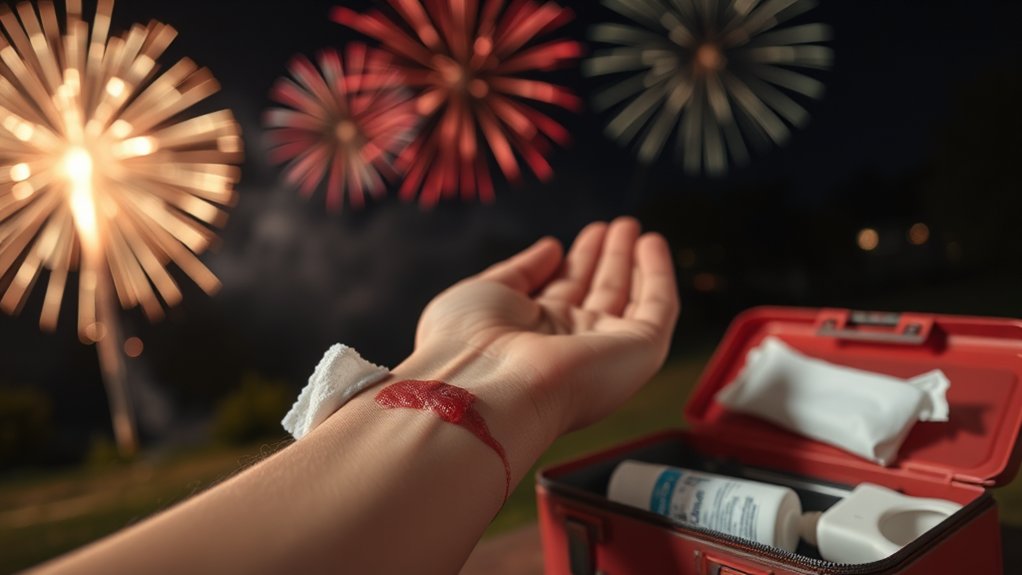
Knowing when to seek emergency medical help for firework burns can greatly impact recovery. Here are the key signs that require urgent attention:
| Signs of Urgency | Symptoms to Watch For | Situations Needing 999 |
|---|---|---|
| Deep, large, or third-degree burns | Severe swelling or persistent pain | Burns covering large areas of the body |
| Burns on the face, hands, or genitals | Spreading skin colour changes | Difficulty breathing or severe discomfort |
| Signs of infection | Blisters affecting movement | Unconsciousness or significant bleeding |
| Any eye injury from fireworks | Foul-smelling discharge | Burns that expose muscle or fat |
If you observe any of these symptoms, don’t hesitate to call for help. Your safety is paramount.
First-Degree Burn Care Instructions

When you sustain a first-degree burn, prompt care is crucial for effective healing. Start by cooling the burn under cool running water for 5 to 10 minutes. Avoid using ice, as it can harm the skin further.
After cooling, follow these straightforward steps for proper care:
- Gently clean the burn with mild soap and water.
- Apply a thin layer of petroleum jelly or antibiotic ointment for skin protection.
- Cover the area loosely with a sterile, non-stick bandage.
- Manage any pain with over-the-counter pain relief as needed.
Keep an eye on the burn site for signs of infection, and stay hydrated to support healing.
It’s also important to avoid sun exposure and scratching to ensure the best recovery.
Second-Degree Burn Care Instructions

Second-degree burns need more careful treatment than first-degree burns due to damage to deeper layers of skin.
Start by rinsing the burn under cool running water for 10 to 30 minutes to ease pain and cool the area. Gently clean it with mild soap and pat it dry.
Apply a thin layer of antibiotic cream and cover it with sterile gauze. Change the dressing daily, soaking off the old one gently.
For pain relief, you can take over-the-counter medications like paracetamol or ibuprofen, and keep the affected limb elevated to minimise swelling.
Keep an eye out for any signs of infection and stay hydrated to aid healing. Always follow your healthcare provider’s advice for the best results.
Preventing Infection in Burned Areas
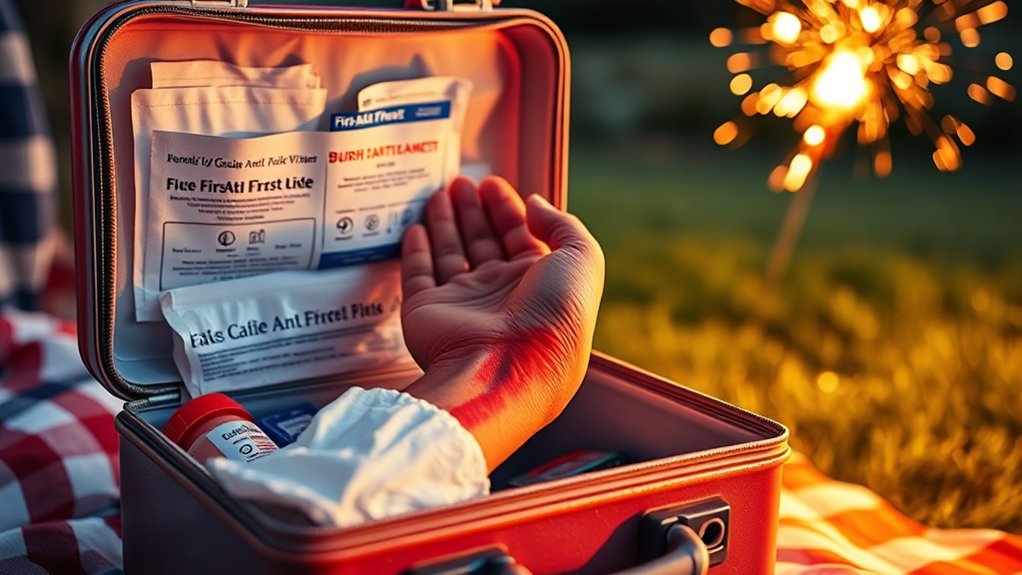
To prevent infection in burned areas, start by gently cleaning the wound with mild soap and lukewarm water.
Cover it with a sterile dressing to keep out dirt and germs.
Watch for signs of infection, such as increased redness or discharge.
Regularly changing the dressing and keeping the area clean can help ensure a smoother healing process.
Proper Wound Cleaning Techniques
Proper wound cleaning techniques are crucial for preventing infection in burned areas. Begin by cooling the burn under cool running water for 10-20 minutes.
Then, follow these steps for effective burn care:
- Gently clean the area with mild soap and lukewarm water to remove dirt and germs.
- Avoid scrubbing or using harsh chemicals, as they can irritate the tissue.
- Carefully remove any visible debris without breaking blisters to reduce the risk of infection.
- Pat the area dry with a clean towel and cover it with a sterile, non-stick dressing.
Always wash your hands before and after treating the burn to avoid introducing bacteria.
Regularly check for signs of infection to ensure proper wound care and support safe healing.
Sterile Dressing Application
Applying a sterile dressing is crucial for preventing infection in burned areas.
Begin by assessing the wound to gauge the severity of the burn. Use sterile gauze pads or non-adherent dressings to cover the burn, ensuring they’re damp and at room temperature for a cooling effect.
Apply the dressing loosely to avoid putting pressure on damaged tissue and secure it with medical tape for flexibility. Change the dressings daily or as advised by a healthcare professional, keeping an eye out for any signs of contamination.
Always maintain proper hand hygiene during dressing changes to reduce the risk of infection. Effective dressing techniques create a protective barrier against bacteria, aiding healing and minimising complications.
Signs of Infection
Recognising the signs of infection in burned areas is crucial for effective treatment and recovery. Staying alert can help prevent infections through proper wound monitoring.
Here are the key signs to look out for:
- Drainage or pus from the burn site
- Increasing pain that goes beyond the initial discomfort
- Spreading redness or red streaks around the wound
- A foul-smelling odour coming from the burn
If you notice any of these symptoms, seek medical attention promptly.
Also, keep an eye out for systemic signs such as fever or general malaise, which may indicate a more serious infection.
Remember, early intervention can significantly improve healing outcomes and reduce complications.
Take care of your burn, and don’t hesitate to consult a healthcare professional if you have any concerns.
Recognizing Signs of Severe Burns

When dealing with a burn, recognising the signs of severity is crucial for proper treatment.
Start by assessing the injury: first-degree burns are red and painful but typically heal without scarring.
Second-degree burns are pink, blistered, and very painful, often needing careful monitoring for complications.
If the skin has a leathery texture or shows white, black, or brown patches, it’s likely a third-degree burn, which is serious and requires immediate medical attention.
Always seek help if the burn affects critical areas like the face or groin, or if it measures more than 5-7.5 cm (2-3 inches).
Uncontrolled pain, signs of infection, or worsening symptoms after 24 hours are also indicators of a more severe burn that needs urgent care.
First Aid Equipment for Burn Treatment

When treating burns from fireworks, having the right first aid equipment is crucial.
Ensure your burn treatment kit contains essential items such as sterile burn dressings, cooling gels, and cleansing wipes.
These supplies are key for effectively managing the injury and minimising the risk of complications.
Essential Burn Supplies
Essential Burn Supplies
Having the right supplies ready is crucial for effectively treating firework burns. Ensure you have the following items on hand for a swift response:
- Gel-Soaked Burn Dressings: These are infused with cooling gel to provide immediate relief from heat and pain.
- Burn Gels and Ointments: These products contain antimicrobial agents that help reduce the risk of infection and soothe inflammation.
- Sterile Gauze and Conforming Gauze Rolls: These protect and secure burn dressings while allowing airflow to aid healing.
- Protective Gloves and Shears: These help maintain sterility and allow for safe removal of clothing around the burn.
With these essential burn supplies, you can apply gel and provide immediate care, improving the outcome while waiting for professional medical assistance.
First Aid Kit Items
A well-equipped first aid kit is crucial for effectively treating firework burns. Your burn kit should contain hydrogel burn dressings and gels for instant cooling and pain relief.
Opt for dressings sized 10cm x 10cm and 10cm x 40cm to cover different burn areas. Rolled gauze bandages and self-adhesive wraps are ideal for securing dressings without impeding circulation.
Don’t forget cloth adhesive tape for fastening, and waterproof options for extra protection. Include pain relief creams and burn sprays to help reduce inflammation.
Keep nitrile gloves and bandage scissors on hand for hygienic treatment. With these essentials, you’ll be well-prepared to manage burns quickly and effectively using your first aid supplies.
Safety Precautions to Prevent Firework Injuries

To prevent firework injuries, it’s crucial to follow specific safety precautions before and during use.
Firework safety is particularly important for high-risk groups like teenagers and children.
- Always buy legal fireworks from reputable shops.
- Steer clear of homemade or illegal fireworks, as they can be extremely hazardous.
- Use fireworks outdoors in open areas, well away from flammable materials.
- Ensure children and pets are kept at a safe distance from where fireworks are being ignited.
- Always prioritize adult supervision to minimize the risk of accidents and promote safe practices during firework use.
Frequently Asked Questions
Can I Use Ice on a Firework-Related Burn?
You shouldn’t use ice for treating a burn. Applying ice can harm the skin and make the injury worse. Instead, it’s safer and more effective to use cool running water for managing burns caused by fireworks.
How Long Should I Cool a Burn?
Cooling a burn is similar to easing a sunburn—start by running cold water over the affected area for at least 20 minutes, adjusting the time based on how severe the burn is. Use appropriate cooling methods to help alleviate pain and reduce swelling effectively. Always seek medical assistance afterwards.
What Is the Best Way to Clean a Burn?
To clean a burn, use gentle techniques. Rinse the area with cool water, steering clear of harsh soaps. Choose sterile and non-irritating burn care products to reduce the risk of infection.
Are Home Remedies Safe for Treating Burns?
You might think that herbal treatments and burn ointments are safe options, but not all home remedies are reliable. While some can help soothe minor burns, it’s crucial to assess the severity first. For instance, a small kitchen burn might respond well to aloe vera, but more serious burns require professional medical attention. Always prioritise safety when treating burns at home.
What Signs Indicate a Burn Is Healing Properly?
You can tell a burn is healing properly if you see the redness fading, swelling reducing, blisters staying intact, and new skin forming. Pain should also decrease, which is a good sign. Look out for any signs of infection or complications, as these can indicate issues with the healing process.
Conclusion
In summary, knowing how to treat firework-related burns is crucial for a swift recovery. Each year, there are over 12,000 firework-related injuries in the UK, many involving burns. By following proper first aid steps, you can effectively manage these injuries and reduce the risk of complications. Always prioritise safety and take precautions to avoid accidents, ensuring a fun and injury-free celebration. Stay informed and prepared, and you’ll be ready to respond in an emergency.


