

During firework events, it’s crucial to follow specific emergency procedures to ensure everyone’s safety. This includes securing the necessary permits, setting up reliable communication systems, and training staff on emergency protocols. It’s important to monitor crowd numbers and have medical teams on standby for quick access. After the display, conduct thorough searches for any unexploded devices and maintain safety barriers. Staying prepared and informed is key to reducing risks. There’s always more to learn about improving safety during these events.
Key Takeaways
- Work with local emergency services to set up a coordinated command structure for effective incident management during the event.
- Ensure clear communication among all staff for immediate updates and alerts about safety and emergencies.
- Position medical teams and ambulances in advance for quick access in case of firework-related injuries or incidents.
- Conduct thorough searches for unexploded devices after the display, marking their locations and restricting access to trained personnel only.
- Run training drills on emergency protocols, safe handling, and crowd management to improve readiness for potential incidents.
Regulatory and Pre-Event Safety Procedures

When organising a fireworks display, securing the necessary regulatory approvals and permits is crucial for safety and compliance. Begin by obtaining the required licences, such as those from the Health and Safety Executive (HSE) and local council permissions. If your event is near an airport, it’s essential to inform the Civil Aviation Authority (CAA) and issue relevant NOTAMs (Notices to Airmen). You’ll need to submit detailed applications to local authorities, outlining operator qualifications, firing procedures, and emergency plans. Ensure that all personnel possess valid pyrotechnics licences and have completed appropriate training. Additionally, ensure compliance with safety standards that govern the handling and storage of fireworks. Document all safety measures and maintain a clear record of competency verification. Finally, design your site layout according to the relevant safety standards, coordinate any necessary road closures, and communicate with local fire authorities to ensure all safety documentation is comprehensive and up to date. Employer responsibilities should also be clearly communicated to all staff involved in the event planning and execution.
On-Site Setup and Operational Safety

To ensure a safe and successful fireworks display, it’s essential to prioritise on-site setup and operational safety.
Focus on these key aspects:
- Maintain the required separation distances between launch areas and spectator zones to prevent accidents.
- Ensure all personnel receive comprehensive training in safe handling and emergency procedures, so they know what to do in case of an incident. This includes understanding fireworks packaging instructions to prevent mishaps, along with emergency access routes to facilitate quick responses.
- Use secure mortar boxes and avoid placing any part of your body over the tubes when loading to prevent injuries.
- Establish reliable communication systems among operators and safety personnel to coordinate effectively during the display.
Emergency Medical Response Considerations

When dealing with firework-related injuries, be mindful of common issues such as burns and the necessity for fluid resuscitation. Coordinating effectively with various emergency services is crucial to manage the disorder at busy events. Understanding these aspects can significantly improve your ability to deliver prompt and effective medical care. Additionally, recognizing injury patterns aids in supply lists and triage priorities during these chaotic situations. It is also important to have adult supervision present to help manage injuries and ensure safety during firework events.
Common Fireworks Injuries
While fireworks can create stunning displays, they also carry significant risks that can lead to common injuries requiring emergency medical attention. Recognising these injuries is vital for preventing firework-related accidents and ensuring children’s safety.
Common injuries include:
- Burns: Ranging from minor to severe, these often require urgent treatment.
- Hand and Finger Injuries: Cuts and fractures are common, particularly among adults handling fireworks.
- Eye Injuries: Blows and cuts can result in lasting vision impairment.
- Facial Injuries: These typically involve soft tissue damage and fractures, which can complicate breathing.
Staying informed and cautious can help reduce the risk of these injuries during firework displays.
Burns and Fluid Resuscitation
Managing burns effectively is crucial, particularly during firework events where injuries often occur. Begin by cooling the burn: rinse the affected area with cool water for 10-15 minutes. Remove any tight clothing or accessories and cover the burn with a sterile dressing. If the burns are more than 10% of the total body surface area (TBSA), adhere to the following fluid resuscitation guidelines:
| Criteria | Action |
|---|---|
| TBSA > 10% | Start fluid resuscitation |
| Use Parkland formula | 4 mL/kg × %TBSA burned |
| First 8 hours | Administer half of the total volume |
| Preferred solution | Warmed lactated Ringer’s |
| Monitor output | Adjust fluids based on urine output |
For severe burns, especially those with blisters or charred skin, seek advanced medical care promptly. Early intervention is essential for a better recovery.
Emergency Response Coordination
Effective emergency response coordination is crucial for managing injuries during firework events, as prompt triage and treatment can significantly reduce complications.
To ensure this, it’s essential to establish a clear incident command structure and ensure efficient resource allocation.
Here are some key strategies:
- Plan year-round and conduct tabletop exercises to refine response procedures.
- Use mapping tools for quick reference and effective staging of emergency units.
- Work collaboratively with fire, ambulance services, and police to align efforts and improve communication.
- Keep an on-site ambulance presence to provide immediate care and reduce pressure on hospitals.
Crowd and Site Management During Events
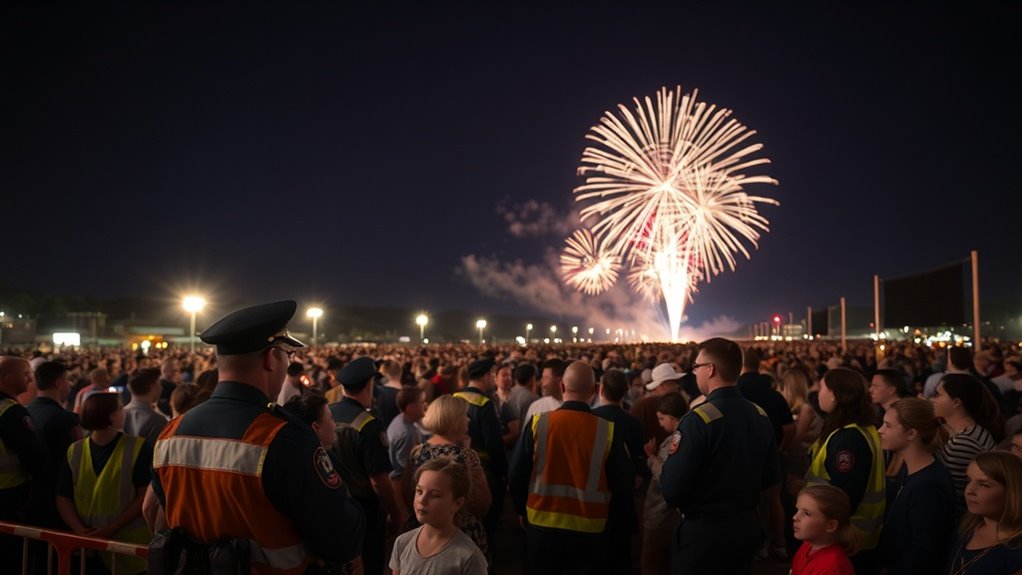
When managing crowds during firework events, safety and efficiency are paramount to ensure a positive experience for all.
Begin by using crowd capacity calculators to establish safe limits based on the size of your venue. Position safety barriers effectively to direct movement and prevent overcrowding. Create distinct entry and exit points to avoid bottlenecks and allow for smooth dispersal.
Keep a close eye on crowd density to avert potentially dangerous situations. Understand crowd psychology; panic can lead to surges or stampedes, so it’s essential to remain proactive.
Use clear signage and public announcements to convey safety rules clearly. Train staff to spot early signs of distress and to intervene when necessary.
Collaborating with local authorities further enhances safety, ensuring a secure environment for everyone involved.
Post-Display Emergency and Safety Protocols

After the excitement of a firework display, ensuring safety is paramount.
Address post-display hazards promptly by following these protocols during cleanup:
- Conduct a thorough search for any unexploded devices and clearly mark their locations.
- Ensure all personnel wear suitable safety gear, including flame-resistant clothing and protective equipment.
- Maintain a secure perimeter, restricting access to trained staff only.
- Keep fire-fighting equipment and medical resources on standby for any emergencies.
Emergency Preparedness and Communication Plans
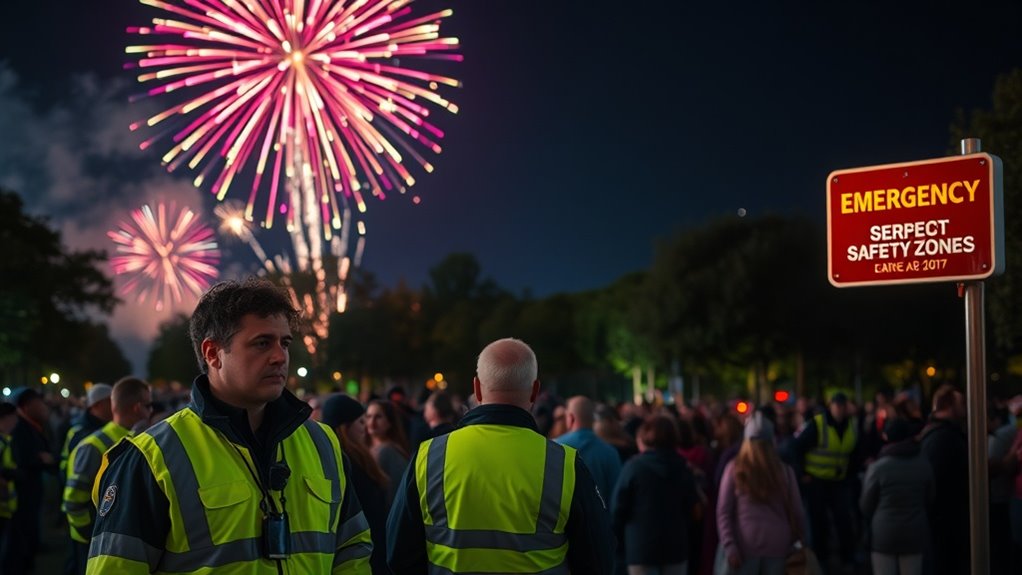
To ensure a safe and successful firework event, it’s crucial to have a comprehensive emergency preparedness and communication plan in place.
Begin by inspecting the launch area for any obstacles and ensuring all necessary permits are secured. Create a detailed emergency response plan that outlines roles and includes communication strategies and emergency notifications. Ensure safety equipment like fire extinguishers and first aid kits are readily accessible during the event.
Establish clear communication methods among crew members and emergency services, utilising non-flammable lighting and hand signals for clarity.
Keep a close eye on crowd behaviour and weather conditions, allowing for quick adaptations to any emerging risks. By focusing on these steps, you can effectively reduce risks and create a safer environment for both staff and attendees during the firework display.
Coordination With Emergency Services
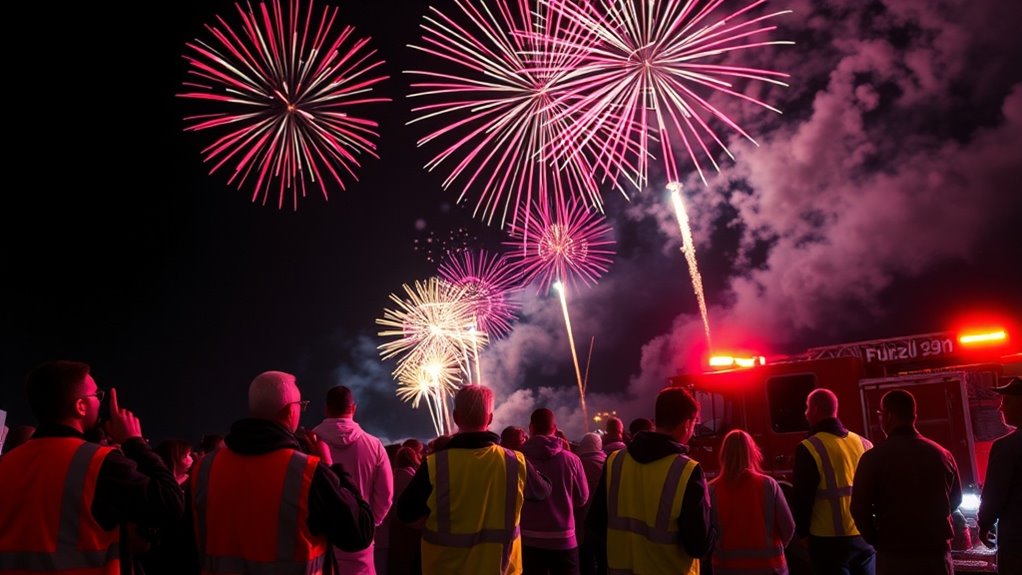
Effective coordination with emergency services is crucial for safety during firework events, allowing for a swift response to any incidents.
Here are some key strategies to implement:
- Set up a unified command structure with defined leadership roles to ensure efficient incident management.
- Hold pre-event meetings to discuss communication strategies with local authorities.
- Position resources like ambulances and medical teams in advance for quick access during emergencies.
- Keep communication channels open, so all teams receive instant updates and alerts.
Training and Drills for Event Personnel

To ensure a safe environment during firework events, it’s crucial to understand emergency protocols.
Engaging in simulation drills and exercises will equip you for real-life situations, enabling you to respond effectively.
These training sessions are vital for boosting confidence and improving safety for everyone involved.
Emergency Protocol Familiarization
When organising firework events, it’s crucial to ensure all personnel are familiar with emergency protocols for safety and preparedness.
Establishing a strong safety culture begins with comprehensive training that covers key areas:
- Safe handling, storage, and disposal of fireworks
- Emergency response procedures for firework-related incidents
- Site layout, safe distances, and crowd management
- Use and upkeep of personal protective equipment (PPE)
Training should be accessible, offering multilingual options where necessary, to ensure everyone understands the protocols.
Regular assessments help confirm staff comprehension, while certifications demonstrate their capability.
It’s also beneficial to involve emergency services in the training to facilitate effective communication during incidents.
Encouraging staff to report hazards and suggest improvements fosters a proactive safety culture, ultimately strengthening your emergency protocols.
Simulation Drills and Exercises
Simulation drills and exercises are crucial for preparing event staff for emergencies during firework displays. To ensure effective training, these simulations must closely mimic real-life firework-related incidents.
You’ll encounter various scenarios, such as ignition failures and crowd fires, which will enhance your ability to respond to different situations. Incorporating elements like live smoke and props increases realism, while virtual reality allows for precise adjustments in scenarios.
Regular drills, including tabletop discussions and full-scale exercises, foster ongoing skill development. After-action reports evaluate performance and inform improvements in emergency protocols.
Frequently Asked Questions
What Should Spectators Do During a Firework Emergency?
During a firework emergency, your safety comes first. Move away from the danger area, follow any evacuation instructions, and do not attempt to handle any unexploded fireworks. If you notice any hazards, report them to the authorities immediately. Stay calm and aware of your surroundings.
How Can We Report a Safety Concern at the Event?
To report a safety concern at the event, please use the safety hotline or contact emergency services directly. Be sure to provide specific details about the issue to ensure a quick response from the authorities. For example, if you notice a spill that could cause someone to slip, mention the exact location and nature of the hazard. Your prompt action can help keep everyone safe.
Are Pets Allowed at Firework Displays, and How Should They Be Managed?
Pets are generally not permitted at firework displays due to safety risks and their sensitivity to loud noises. It’s best to keep your pet at home in a quiet environment to minimise stress. For instance, you might consider closing windows and playing soft music to help drown out the sound of fireworks. This way, your furry friend can feel safe and secure away from the chaos outside.
What Are the Signs of Fireworks-Related Injuries to Watch For?
A sparkler can quickly turn dangerous, leading to burns, swelling, and blisters on the hands. Be on the lookout for sharp pain in the eyes, blurry vision, or redness. These symptoms suggest serious injuries that require immediate medical attention. Stay safe and vigilant.
Can We Bring Our Own Fireworks to the Event?
You can’t bring your own fireworks to the event because of strict regulations. Local laws usually ban their use in public areas, so it’s best to check the event’s rules to avoid any fines or having your fireworks taken away.
Conclusion
During firework events, your safety is paramount. By following solid emergency procedures, you’re not only protecting yourself but also ensuring the event runs smoothly for everyone. Preparation is key; it’s your safeguard against any unforeseen issues. With clear communication and coordinated efforts, you can enjoy the stunning display while being aware of the necessary precautions. Stay alert and prioritise safety!


