
A professional firework display is a well-organised event designed for large crowds, featuring high-quality pyrotechnics. It must comply with strict safety regulations and obtain the necessary licences from local authorities. Operators need to hold a pyrotechnics licence and have completed thorough training in safety measures and emergency protocols. These displays incorporate a range of devices to create stunning visual and auditory effects while prioritising safety. There’s plenty to learn about the technical details and regulations that ensure these events run smoothly.
Key Takeaways
Professional firework displays are expertly organised events that showcase a range of fireworks, typically for large community celebrations. They require licensed operators who have documented experience and comprehensive training in safety protocols and emergency procedures.
These displays utilise specialised equipment such as aerial shells, cakes, and candles, ensuring impressive visual and auditory effects. Adhering to safety regulations and guidelines from local authorities, including conducting risk assessments and implementing site safety measures, is crucial.
Unlike public use fireworks, professional displays prioritise safety, creativity, and technical skill in their execution.
Definition of Professional Firework Displays
Professional firework displays are expertly organised events that feature a range of fireworks designed to create stunning visual and sound effects. These displays use specific devices like aerial shells, cakes, and candles, all regulated under standards such as the APA Standard 87-1B. Unlike consumer fireworks, professional pyrotechnics are handled by licensed pyrotechnicians, ensuring strict adherence to safety guidelines and operational standards. Each firework undergoes thorough approval processes to confirm it meets safety regulations and performance requirements. These fireworks aren’t intended for public use; they’re meant for large community events, highlighting the need for skilled operators to manage and execute the displays safely and professionally. This is crucial because the use of illegal fireworks remains widespread, posing significant safety risks during such events.
Regulatory Framework and Legal Requirements

When organising a professional firework display, it’s crucial to understand the regulatory framework and legal requirements to ensure safety and compliance.
You’ll need to obtain the appropriate licences from local authorities, such as the local council or fire service, which regulate pyrotechnic operators and public displays. This often involves passing safety assessments and demonstrating relevant experience. Additionally, you must secure permits for the event location to ensure safe handling and transportation of fireworks.
In the UK, it’s also necessary to adhere to guidelines set by the Health and Safety Executive (HSE) and follow any specific local regulations. Understanding firework safety is essential to mitigate risks associated with fireworks during the event.
Before the event, make sure all safety protocols are in place, and that you have adequate insurance coverage. Getting these details right is vital to a successful and safe display.
Operator Qualifications and Training
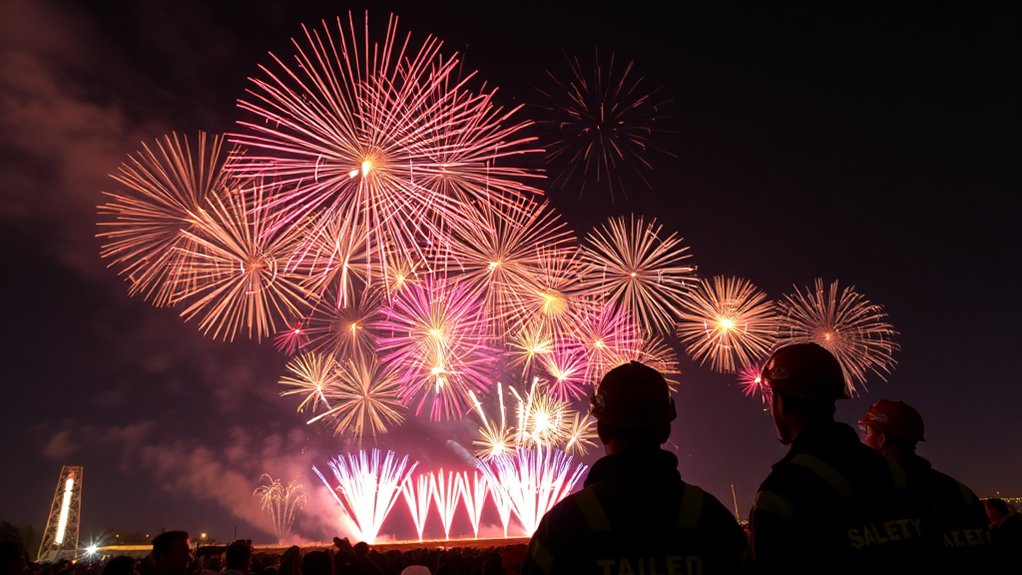
Operating a professional firework display in the UK requires specific qualifications and training to ensure safety and compliance with regulations. Gaining operator experience often begins with at least two years of volunteering.
Formal training programmes are crucial for mastering necessary skills. Here are the key components you need to consider:
- Licensing: In the UK, you typically need a pyrotechnics licence, which requires documented experience and passing an exam.
- Safety Protocols: Training programmes cover essential safety measures, preparing you for both successful displays and potential emergencies. Fireworks technicians must combine creativity and analytical thinking to create visually appealing shows while ensuring viewer safety.
- Continuous Education: Ongoing qualifications keep you updated on changing standards and technology, demonstrating your commitment to excellence.
Safety Standards for Firework Displays

Ensuring safety standards for firework displays is crucial for the protection of both participants and spectators. Start by obtaining the necessary permits from relevant authorities, such as the Health and Safety Executive (HSE).
Conduct a thorough risk assessment to identify potential hazards and establish emergency procedures for any misfires or accidents. Secure the site with appropriate measures and ensure all fireworks are safeguarded against adverse weather conditions.
During setup and firing, adhere to safe handling practices, and have emergency services on-site ready to respond. It’s also important to meet insurance requirements to cover any potential liabilities.
Following national guidelines, such as those set by the British Standards Institution (BSI), will help ensure a successful and safe firework display.
Technical Characteristics of Display Fireworks

Understanding the chemical formulations and effects of display fireworks is crucial for creating stunning visuals.
You’ll also find that variations in device design can affect their performance in the sky.
Moreover, mastering firing sequence techniques ensures a synchronised and captivating display that leaves audiences impressed.
Chemical Formulations and Effects
Chemical formulations in display fireworks are crucial for achieving the desired visual and auditory effects. By understanding how oxidisers, fuels, and colourants work together, you can create stunning displays.
Here are three key components that evoke emotion during a performance:
- Colour Effects: Strontium produces red, barium creates green, and copper delivers blue, turning the night sky into a vibrant spectacle.
- Chemical Innovations: New metal alloys enhance brightness and create impressive colour shifts, captivating your audience.
- Sound Effects: Carefully blended mixtures, such as potassium benzoate, generate exciting whistles that resonate and enhance the overall experience.
Device Design Variations
Variations in device design for display fireworks are crucial for creating specific visual and auditory effects during performances. Different devices, such as aerial shells and mines, offer unique aesthetics and effects.
Aerial shells, which are usually cylindrical or spherical, use mortar tubes for launch, while emission-type mines produce effects that originate from ground level.
Key structural components, like lift charges and burst charges, determine the height and spread of the effects. Additionally, larger Roman candles and comet designs contribute to the variety, delivering high-level bursts that enhance the overall display.
Understanding these design aspects ensures a captivating and safe experience for spectators while maximising the impact of the show.
Firing Sequence Techniques
Firing sequence techniques are crucial for successful firework displays, ensuring that each effect is executed safely and smoothly.
Here are key areas to focus on:
- Timing Precision: Use precise firing sheets and carefully planned intervals to keep the show flowing without interruptions.
- Spatial Sequencing: Position fireworks for easy manual ignition while maintaining safe distances to avoid accidents.
- Electrical Systems: Implement computerised firing systems to synchronise effects with music and choreography, making the display more engaging for the audience.
Manufacturing and Testing Procedures
When it comes to manufacturing and testing fireworks in the UK, it’s crucial to adhere to strict regulatory compliance standards.
Effective quality control processes are essential to ensure each firework meets safety and performance requirements. For instance, regular inspections and testing can prevent malfunctions during displays.
Furthermore, comprehensive safety testing protocols are necessary to ensure that every firework show is both impressive and safe for spectators.
Regulatory Compliance Standards
To ensure a safe and compliant fireworks display, it’s crucial to understand the regulatory compliance standards for manufacturing and testing procedures.
These standards ensure that every firework meets safety and performance criteria, giving peace of mind to both operators and spectators.
- Safety First: Compliance with Health and Safety Executive (HSE) and other relevant regulations protects everyone involved.
- Quality Assurance: Manufacturers must follow strict chemical and material standards to prevent hazards, ensuring that the fireworks function as intended.
- Environmental Responsibility: Regulations limit harmful emissions and residues, promoting a cleaner environment for celebrations.
Quality Control Processes
Ensuring a high-quality firework display hinges on rigorous quality control processes that cover every aspect of manufacturing and testing to guarantee safety and performance.
From the preparation of raw materials to final product testing, you can see quality assurance at work. Regular checks for chemical purity help to prevent defects, while physical inspections ensure that stars and shells conform to size and packing standards.
During production, non-sparking equipment is employed to reduce risks, and small sample batches are ignited to test performance before larger quantities are approved.
Functional testing confirms proper ignition and aerial sequencing, while environmental stress tests assess durability. These thorough processes emphasise defect prevention, ensuring that every firework meets the highest standards for an impressive display.
Safety Testing Protocols
Ensuring safety during the manufacturing and testing of fireworks is crucial and requires adherence to stringent protocols and regulations.
Here are three key safety measures to consider:
- Pre-Loading Safety: Ensure that fireworks fit properly in mortars to prevent accidents.
- Site Preparation: Maintain a 60-metre perimeter free from flammable materials.
- Personal Protective Equipment: Always wear suitable gear, including flame-resistant clothing and hearing protection.
Following these guidelines helps protect everyone involved in the process.
Common Types of Professional Fireworks
When organising a professional firework display, it’s crucial to know the common types of fireworks to create a memorable experience.
Aerial shells light up the sky with dazzling patterns, while multi-shot cakes produce a series of visual effects from a single ignition.
For ground displays, gerbs emit sparkling showers, adding excitement. Mines deliver powerful bursts, introducing surprise elements to the show.
Other popular choices include brocade shells for elegant trails, comets for bright single stars, and Roman candles for sequential effects.
Strobes and salutes add dramatic flashes and loud bangs, enhancing the overall spectacle.
Frequently Asked Questions
How Long Do Professional Firework Displays Typically Last?
Professional firework displays usually last between 10 to 25 minutes, depending on the occasion. For major events, aim for a duration of 15 to 25 minutes, while private gatherings typically prefer shorter displays of 3 to 15 minutes.
Can Anyone Operate a Professional Firework Display?
No, you cannot operate a professional fireworks display without meeting licensing requirements and safety regulations. Only qualified, licensed pyrotechnic operators can manage these events, ensuring they adhere to all relevant laws for public safety. For instance, large public displays, like those on Bonfire Night, require meticulous planning and expertise to avoid accidents and ensure the safety of the audience.
What Types of Events Commonly Feature Professional Firework Displays?
Did you know that over 14,000 firework displays light up UK skies each year? You’ll commonly see professional fireworks at holiday celebrations, public festivals, sporting events, concerts, and private gatherings, making for memorable experiences for all.
Are There Age Restrictions for Attending Firework Displays?
There are no universal age restrictions for attending firework displays in the UK, but local safety guidelines may set certain limits. It’s important to check the details of each event, as some organisers may recommend adult supervision for younger attendees to ensure their safety. For example, family-friendly events often encourage parents to keep an eye on their children during the display.
How Are Firework Displays Choreographed to Music?
Firework displays are choreographed by synchronising them with music for a captivating experience. You start by choosing suitable tracks, then time the fireworks to match the rhythm and beats. For instance, a dramatic crescendo in the music might be paired with a burst of colourful explosions. Additionally, using pauses and maintaining a consistent theme can heighten the emotional impact for the audience. This thoughtful planning makes the display not just a visual spectacle, but a memorable event.
Conclusion
In summary, professional firework displays are not just visually stunning; they are carefully designed events that adhere to strict regulations and safety standards. The expertise of the operators ensures that each burst of colour and sound provides a memorable experience for the audience. From the exciting crackle of the first firework to the grand finale that illuminates the sky, these displays turn ordinary occasions into extraordinary memories. Don’t merely watch a firework show—immerse yourself in the experience!