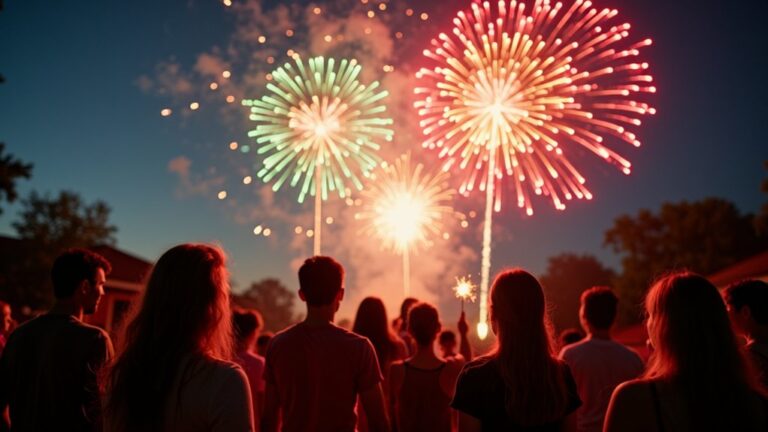
Quiet fireworks are legally required in certain situations to reduce noise pollution, especially near schools, hospitals, and residential areas. These rules help protect community wellbeing while still allowing for celebrations. Local councils may impose stricter regulations, so it’s important to comply with safety standards. You’ll need to apply for a permit in advance, providing details about your event and ensuring qualified personnel are in place. Familiarising yourself with these regulations will make it easier to navigate the use of fireworks.
Key Takeaways
Quiet fireworks may be required by law in areas with strict local regulations, especially near schools and hospitals to protect vulnerable individuals. Local councils can set stricter rules than national legislation, so it’s essential to check specific guidelines regarding firework noise levels.
In areas at risk of fires, safety regulations might require the use of quiet fireworks to ensure public safety during celebrations. Permits for firework displays often include conditions on noise levels, promoting quieter alternatives to reduce disturbance in the community. Local authorities enforce compliance with these noise restrictions, underscoring the importance of quieter fireworks in sensitive locations.
Overview of Fireworks Regulations

Fireworks can bring excitement to celebrations, but it’s crucial to understand the regulations surrounding their use to ensure safety and compliance. In the UK, there are strict rules governing fireworks, including age restrictions and designated times for use, typically around Bonfire Night and New Year’s Eve. Certain areas, like near hospitals or historic sites, may have additional restrictions to minimise noise and safety risks. Fireworks use is restricted to specific days and times, with designated holidays including January 1 and July 4. Local councils often set their own rules, so it’s important to check the regulations in your area. Additionally, local authorities and fire services enforce fireworks regulations to maintain public safety.
Definitions of Quiet Fireworks

When discussing quiet fireworks, it’s important to note that complete silence is impossible; the noise from the lifting charge alone can reach about 95 decibels.
While some options are designed to reduce noise, they still create sound, just at lower levels. This often leads to confusion, as the term “silent fireworks” can mislead people about their actual noise output.
- Celebrations shouldn’t come at the expense of peace.
- Communities deserve a balance between festivities and quiet.
- Families with pets or noise-sensitive individuals value reduced sound. Low-noise fireworks use sound engineering techniques to minimize loud noises, enhancing their appeal.
- Increased awareness can encourage the development of better alternatives.
Understanding these points helps clarify what quiet fireworks can offer and the current limitations in achieving true silence. Additionally, many claims of entirely silent fireworks lack scientific backing, which further emphasizes the need for realistic expectations.
Local Ordinances and Quiet Fireworks

Local ordinances play a crucial role in regulating quiet fireworks, often establishing stricter guidelines than national laws to address local concerns.
As communities change, so do their attitudes towards safety and noise pollution. Many local authorities engage with residents, as their feedback can influence the adoption of quiet fireworks regulations. For example, areas near hospitals or schools may enforce stricter noise limits to protect vulnerable individuals. Additionally, local noise ordinances often specify low-decibel fireworks to reduce disturbances. This not only enhances public safety but also reflects a growing awareness of environmental and health impacts, fostering a more harmonious community atmosphere during celebrations. In states like Massachusetts, where all fireworks are illegal, the emphasis on safety plays a crucial role in shaping local regulations.
Permitting Requirements for Fireworks Use

Obtaining the necessary permits for fireworks use is crucial for ensuring safety and compliance with regulations. You must submit a permit application through your local council for public displays.
Be aware that permits can be refused due to safety breaches or inaccurate information. All displays must be overseen by licensed pyrotechnic operators to ensure safety standards are met. Additionally, compliance with local regulations is essential for legal operation.
- Protect your community from potential dangers.
- Ensure a safe and enjoyable experience for all.
- Avoid legal issues and fines.
- Encourage responsible fireworks use in your area.
Always buy fireworks from licensed suppliers and prioritise safety in your planning.
If you need to modify an existing permit, submit a formal request to your local council and stay organised in your efforts.
Fireworks Restrictions in Urban Areas

While fireworks are often associated with celebration, many urban areas in the UK impose strict restrictions to reduce safety risks and protect communities.
Cities such as London and Manchester ban all types of fireworks, including those deemed “safe,” to enhance safety and minimise fire hazards in densely populated areas. These bans typically cover both possession and use within city boundaries, reflecting a strict stance against illegal fireworks, which include aerial and explosive types.
The noise from fireworks can also cause significant public disturbance, leading local councils to enforce these regulations firmly.
The connection between fireworks and urban fires is a key concern, with fire services frequently reporting spikes in emergency incidents during festive periods.
Therefore, adhering to these restrictions is crucial for community safety.
Safety Considerations for Quiet Fireworks

As communities aim to celebrate responsibly, quiet fireworks offer a practical solution to reduce noise and fire risks. These fireworks comply with strict safety regulations, particularly in areas prone to fires. By lowering noise levels, they enhance public safety while still providing excitement for events.
- They lessen disturbances to local wildlife.
- They help those with sensitivities avoid anxiety.
- They reduce the likelihood of fire incidents in busy areas.
- They ensure a more enjoyable experience for everyone involved.
Quiet fireworks come with stringent handling and storage guidelines, ensuring adherence to safety standards. Local authorities oversee these protocols to keep events safe and promote noise reduction, creating a more inclusive atmosphere for all.
Impact of Noise on Vulnerable Populations

Firework noise can significantly affect vulnerable groups, triggering PTSD symptoms in those with traumatic experiences and causing anxiety in sensitive pets.
Many people may not realise that this noise can overwhelm individuals with sensory sensitivities, resulting in increased stress and distress.
It’s important to recognise these effects to advocate for quieter alternatives that safeguard the well-being of both humans and animals.
Noise and PTSD Effects
Loud noises during celebrations can be distressing for individuals with PTSD, as they often trigger memories of past traumas. Fireworks, in particular, can lead to significant anxiety, flashbacks, and emotional distress.
- Over 60% of those with PTSD report that fireworks worsen their symptoms.
- Sudden loud sounds can mimic explosions, triggering a fight-or-flight response.
- Many veterans may avoid public events to escape potential triggers.
- Fireworks can make it difficult for individuals to distinguish between safe and threatening sounds.
It’s important for communities to recognise these effects and consider quieter fireworks to create a more inclusive environment for those affected by trauma.
Impact on Pets
The impact of loud noises from fireworks goes beyond just humans; it significantly affects our pets. Up to 49% of dogs experience noise phobia, leading to stress that can persist for days or even months. This stress can cause injuries as pets often flee in panic, particularly during holidays like Bonfire Night.
It’s crucial to recognise which animals are affected and how they react. For example, while around 40-45% of dogs are distressed, cats tend to be even more sensitive. Horses are also highly susceptible, and wildlife experiences considerable stress as well.
To help our pets cope during firework events, we can implement safety measures such as relocating them to quieter areas or using calming aids. These steps can greatly improve their wellbeing and quality of life during such noisy occasions.
Sensory Sensitivity Considerations
While many enjoy the excitement of fireworks, those with sensory sensitivities often face significant challenges. The loud and unpredictable sounds can lead to sensory overload, causing anxiety and distress, particularly for vulnerable groups such as children with autism or PTSD.
- Increased blood pressure and stress
- Disruption of learning and behaviour
- Heightened anxiety and difficulty concentrating
- Worsening of existing mental health issues
The noise from fireworks can severely affect individuals with noise sensitivity, turning what’s a joyous occasion for some into a traumatic experience for others.
It’s important to acknowledge these impacts and advocate for quieter alternatives, ensuring that everyone can enjoy celebrations without fear or discomfort.
Compliance and Enforcement of Fireworks Laws

Understanding local fireworks regulations is crucial for public safety and reducing disturbances.
The application process for quieter fireworks can differ across regions, with specific requirements tailored to sensitive areas. Familiarising yourself with these rules can encourage responsible use of fireworks that respects community standards.
For example, some areas may prohibit fireworks near hospitals or wildlife reserves. By following the guidelines, we can all enjoy celebrations while keeping our neighbours safe and sound.
Local Ordinance Compliance
Local ordinances are vital in regulating fireworks use, as local councils can enforce existing restrictions while prohibiting new ones that limit fireworks on specific holidays.
While you might enjoy fireworks on New Year’s Eve, Bonfire Night, and similar celebrations, local regulations can still impose noise restrictions.
- Excessive noise could result in fines or penalties.
- Neighbours may lodge complaints, which can disrupt community relations.
- Safety is a significant concern, with inherent risks from fireworks.
- Educational campaigns highlight the importance of compliance and safety.
Understanding these local regulations is crucial for celebrating responsibly and following the laws related to fireworks in your area.
Permitting Process Overview
Understanding the permitting process for fireworks displays is crucial for complying with local laws and safety regulations in the UK.
To begin, submit a written application to your local council that outlines the event details and the sponsor. This should include the names and certificate numbers of certified pyrotechnicians, along with specifics like the date, time, location, and type of fireworks intended for use.
Ensure you submit this application at least 21 days before the event and include any required fees.
The display must be managed by qualified personnel who adhere to the safety standards set out in the relevant fire codes. Additionally, you’ll need to provide a certificate of liability insurance.
Keep in mind that any failure to follow the permit conditions can result in fines or cancellation of your display. Therefore, thorough preparation is essential.
Frequently Asked Questions
Are There Specific States That Mandate Quiet Fireworks Use?
No UK states mandate the use of quiet fireworks. Regulations primarily centre on safety, typically permitting traditional fireworks without noise restrictions. Local councils may have different rules, but opting for quiet fireworks is a personal choice rather than a legal requirement.
What Types of Events Typically Require Quiet Fireworks?
Quiet fireworks are often used for community events and outdoor concerts where noise sensitivity is important. These celebrations aim to provide enjoyment without disturbing local residents or wildlife. For instance, local fairs, school events, and New Year’s celebrations in residential areas may opt for quiet fireworks to ensure a more peaceful atmosphere while still delivering a festive experience.
How Do I Report Illegal Fireworks Use in My Area?
To report illegal fireworks use in your area, contact your local police via non-emergency numbers or their website. Make sure to provide clear details about the incident, such as the location and time, to help them take appropriate action. For example, if you hear fireworks late at night in a residential area, it’s important to report it so the authorities can address the issue promptly.
Can Quiet Fireworks Be Used for Personal Celebrations?
Quiet fireworks can be used for personal celebrations in areas where they are allowed, bringing joy without the loud noise. Always prioritise safety and check local regulations, as availability can differ from one community to another. For example, they are great for birthday parties, weddings, or family gatherings where noise could disturb neighbours.
What Penalties Exist for Violating Quiet Fireworks Laws?
Violating quiet fireworks laws can result in serious penalties, such as fines, confiscation of the fireworks, and even criminal charges. The legal consequences differ depending on the area, with repeat offenders facing tougher penalties and possible misdemeanor charges. For instance, if someone is caught using noisy fireworks during a designated quiet period, they could be fined a substantial amount, especially if it’s not their first offence.
Conclusion
In summary, knowing when quiet fireworks are legally required is essential for compliance and community well-being. It’s estimated that around 20% of people in the UK are sensitive to noise, including veterans and individuals with autism. This highlights the need for quiet fireworks, particularly in urban areas where noise regulations are more stringent. By following local laws and considering the needs of vulnerable groups, you can enjoy your celebrations while being mindful of others.