

Cone fireworks create focused bursts shaped like cones at their tips, while mines produce wide, rapid aerial explosions that soar to impressive heights. Fountains, conversely, deliver a steady stream of sparkles at ground level. Each type offers distinct visual effects, suitable for various occasions—from the subtle elegance of cones to the bold spectacle of mines. Knowing their differences can enhance your event. Learn how to choose the right fireworks for your celebration!
Key Takeaways
- Cones are conical fireworks that produce concentrated bursts of sparks, making them perfect for indoor or smaller events.
- Mines generate impressive aerial bursts that can reach heights of up to 12 metres, making them ideal for grand finales.
- Fountains emit steady streams of sparks at ground level, providing beautiful displays that last between 20 and 60 seconds but are less explosive in nature.
- Performance varies: cones ignite quickly, mines create dramatic bursts, while fountains offer continuous spark sprays.
- Safety is paramount for all firework types; always follow local regulations and handle them properly to avoid accidents.
Definitions and General Characteristics
Understanding the differences between cones, mines, and fountains is essential for appreciating fireworks displays. Cone fireworks have a conical shape and emit colourful sparks and crackling effects from their top. Fountains, typically cylindrical, produce a steady stream of sparks at ground level, showcasing a variety of spark colours. In contrast, mines launch bursts of stars into the air without a shell, creating quick aerial effects. The ignition methods also differ: cones and fountains burn gradually, while mines provide sudden upward blasts. For safety, always ensure these ground-based and aerial effects are used correctly and from a safe distance during displays. Knowing these definitions will enhance your enjoyment of each firework’s role in a spectacular show, especially considering that ground items like fountains and jumping jacks are designed to be safely enjoyed from the ground. Additionally, Category 1 fireworks are particularly suited for small gardens, ensuring a captivating display without the need for excessive space.
Visual Effects and Performance
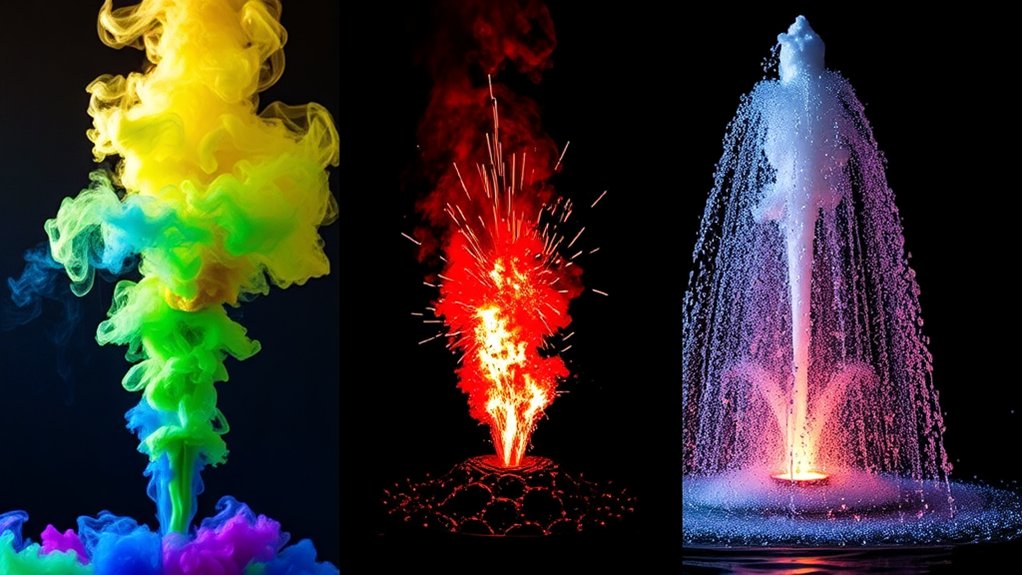
When you watch fireworks, the intensity of the flames and the coverage in the sky can greatly influence your enjoyment. Cones send up a concentrated beam of sparks, while mines burst open with a wide spread that fills the night. Fountains produce a beautiful cascade of light, but they lack the explosive excitement of the others. Among these, giant versions of each type tend to offer a more impressive visual impact, enhancing the overall experience. Additionally, multi-shot garden fountains provide stunning displays with minimal setup space, making them ideal for small gatherings.
Flame Intensity Comparison
While cones are crucial for measuring temperature during firing, they don’t produce flames—unlike mines and fountains, which create impressive visual displays through their intense flames. Mines deliver quick bursts of flame at ignition, marked by high temperatures and short flame durations, enhancing dramatic aerial effects. In contrast, fountains provide sustained flame jets, offering a stable and captivating experience at ground level, with consistent ignition that results in bright, shimmering flames and effects like crackling. Soaking time is essential for achieving the desired heat work, which impacts the overall firing quality. Additionally, both mines and fountains can be enjoyed while adhering to safety considerations to ensure a safe environment for all attendees.
Cones, however, focus solely on indicating temperature, lacking any flame effects to boost visual performance.
Aerial Coverage Dynamics
Understanding aerial coverage dynamics is crucial for maximising the visual impact of firework displays. Each firework type produces distinct patterns that influence their effectiveness in filling the sky.
For instance, cones create focused, conical bursts that generate concentrated effects primarily along their axis. In contrast, mines explode in a spherical manner, providing impressive horizontal coverage across large areas. Fountains, although limited in radius, deliver visually striking effects close to the ground with a fan-shaped profile.
The height each type reaches also affects audience engagement; mines soar the highest, capturing distant views, while cones and fountains offer more controlled displays.
Construction and Design Differences

When examining the construction of cones, mines, and fountains, you’ll see clear differences in shape, structure, and ejection mechanisms.
Each design is crafted to produce specific visual effects, such as the pointed shape of cone fireworks or the dramatic bursts from mines.
Shape and Structure
The distinct shapes and structures of cone, mine, and fountain fireworks significantly affect their performance and visual effects.
Cone fireworks, with their tapered design, produce a steady stream of sparks that rise gracefully, captivating the audience.
Mines, in contrast, have a cylindrical shape that unleashes an explosive burst of stars straight up, creating an immediate visual impact.
Fountain fireworks, which can be either conical or cylindrical, offer a continuous spray of colours and crackles, often outlasting cones. Their design ensures stability and safety while delivering a captivating display.
Each shape serves a specific purpose, enhancing audience engagement through varying intensities and durations of spectacle.
Ejection Mechanism
Different types of fireworks offer unique visual effects, and their ejection mechanisms are crucial to achieving these displays.
Cones use a black powder charge to propel stars from the top, creating a stunning fountain-like spray.
Mines employ a two-stage ejection method: they lift the shell before bursting it open at its peak, scattering stars in the process.
Fountains, in contrast, burn pyrotechnic compounds steadily, producing a continuous flow of sparks without launching into the air.
Each firework relies on distinct launch systems with varying pressure levels and gas release controls, ensuring consistent launch heights and timings.
Understanding these ejection techniques can deepen your appreciation of their artistry.
Material Composition
Understanding how cones, mines, and fountains eject their contents helps us delve into their material compositions. Each type has distinct variations designed to create specific visual effects.
Cones utilise metal salts, oxidisers, and aluminium powder within a cardboard casing, allowing for a controlled release of vibrant sparks.
Mines, which are contained in robust mortar tubes, mix metal salts with black powder for propulsion, resulting in a powerful upward explosion.
Fountains combine oxidisers and metal salts in tightly packed internal tubes, often featuring multiple tubes for sequential displays.
The sourcing of ingredients is crucial, as the quality and stability of materials significantly affect performance and safety, which are vital for crafting stunning pyrotechnic displays.
Usage and Safety Considerations
To ensure a safe and enjoyable fireworks experience, it’s vital to follow essential safety guidelines.
First, check local firework regulations and maintain a minimum spectator distance of 10 metres for fountains and 45 metres for aerial devices.
Create a clear area free from flammable materials and have a bucket of water or a hose ready for emergencies.
Always light one firework at a time using a long-handled lighter, and never hold fireworks in your hand.
If a firework fails to ignite, wait 20 minutes before soaking it in water.
Avoid using fireworks on days with a high fire risk, and keep pets indoors to minimise their stress.
Typical Applications and Audience Appeal

Fireworks have become a key feature in celebrations across the globe, captivating audiences with their dazzling displays and distinctive effects. Cones, mines, and fountains cater to various event themes, boosting audience engagement at different occasions.
| Firework Type | Typical Applications | Audience Appeal |
|---|---|---|
| Cones | Weddings, indoor events | Visual delight, lasting effects |
| Mines | Grand finales, concerts | Impactful, dramatic moments |
| Fountains | Product launches, festivals | Ongoing, low-level spectacle |
| Custom Displays | Corporate branding, themes | Unique narratives, tailored shows |
| Interactive | Tech-enhanced events | Immersive, engaging experiences |
Comparative Performance Metrics
When selecting fireworks for your event, it’s important to consider the performance metrics of cones, mines, and fountains.
Cones provide quick bursts, igniting in under 10 seconds and reaching about 3 metres high.
Mines create stunning visuals, launching up to 12 metres with effects lasting 10-20 seconds.
Fountains offer longer displays, lasting 20-60 seconds, with a continuous spray of sparks at lower heights.
In terms of effect, mines produce brighter bursts, while fountains focus on spark density.
Understanding these metrics will help you choose the right fireworks to match your event’s atmosphere and desired impact.
Choosing the Right Firework for Your Event

When planning your event, choosing the right type of firework can significantly enhance the atmosphere.
Think about your theme: for a steady, beautiful display, conical or cylindrical fountains are ideal, providing vibrant colours and effects that last around two minutes. If you want a dramatic touch, mines deliver intense bursts that elevate your show with impressive upward effects.
If you’re working with a budget, cones are affordable and easy to set up, making them perfect for smaller gatherings. You can mix cones and fountains for a layered visual effect or use mines to add height.
Ultimately, consider the duration, intensity, and cost of each firework type to create a memorable display that fits your event’s vision.
Tips for Safe Firework Usage

Choosing the right firework can enhance your celebration, but safety is paramount. Every year, injuries related to fireworks are concerningly high.
Always light fireworks outside, well away from people, buildings, and anything flammable. Keep a bucket of water or a fire extinguisher close by in case of emergencies. Light one firework at a time and step back immediately.
Never attempt to relight a firework that hasn’t worked properly; dispose of it safely instead. Supervision is crucial for children and teenagers, as they’re more susceptible to accidents.
Make sure everyone understands how to handle fireworks correctly and follow local regulations. By following these safety tips, you can enjoy a spectacular display while keeping everyone safe.
Frequently Asked Questions
Are Cones, Mines, and Fountains Safe for Children to Watch?
While it might be tempting to allow children to watch cones, mines, and fountains, it’s crucial to prioritise safety during fireworks displays. Always supervise them closely to prevent accidents, as even seemingly harmless fireworks can pose risks to curious little ones.
How Do I Store Leftover Fireworks Safely?
Storing leftover fireworks is important for safety. Keep them in a cool, dry location, away from any heat sources or moisture. Always label the containers clearly to avoid confusion later. Proper storage can prevent accidents and ensure your fireworks are ready for the next celebration.
Can I Combine Cones, Mines, and Fountains in One Display?
Yes, you can combine cones, mines, and fountains in one display. Just ensure you prioritise safety by managing fuse timing and spacing. This way, you can create impressive firework combinations while minimising the risk of hazards or interference.
What Should I Do if a Firework Doesn’T Ignite?
If a firework fizzles out like a wet sparkler, stay calm. First, ensure safety: wait for 20 minutes, keep people at a distance, and check for any problems. Troubleshooting your fireworks could prevent accidents and ensure a safer experience.
Are There Environmental Impacts From Using Fireworks?
Yes, firework pollution significantly impacts the environment. It leads to contaminated water, degraded soil, and poor air quality. Wildlife experiences stress and disorientation, and leftover debris contributes to litter and increases fire risks in natural areas.
Conclusion
Now that you understand the differences between cones, mines, and fountains, you’re ready to choose the right firework for your next celebration. Imagine the excitement as a fountain erupts in vibrant colours, perfectly timed with your favourite tune. Or picture the amazement when a mine shoots high into the sky, illuminating the night. By prioritising safety, you can ensure an unforgettable experience for everyone. So go ahead, light up the night safely and spectacularly!


