

Yes, you can install fountains on decking or wooden surfaces, but it’s essential to check the structural support and environmental conditions first. Ensure that your deck can bear the weight of the fountain, including the water, as this can add a considerable load. It’s advisable to use water-resistant coatings and barriers to protect the wood from moisture damage. For smaller decks, consider choosing lightweight or space-saving fountain designs. Next, let’s look at different types of fountains and some key installation tips to enhance your outdoor space.
Key Takeaways
- Ensure the deck can support the weight of the fountain, including the water, which weighs approximately 3.78 kg per litre.
- Opt for fountains made from durable materials like stone or concrete to endure outdoor conditions and minimise risk of damage.
- Apply water-resistant coatings and sealants to shield the decking from moisture and rot.
- Consult a structural engineer to evaluate the deck’s load-bearing capacity before installation.
- Use waterproof mats and barriers for extra protection against moisture and slip hazards.
Suitability of Fountains for Decks and Wood Surfaces

When installing fountains on decks and wooden surfaces, it’s vital to assess their suitability in terms of structural support and environmental considerations. Start by checking the weight of the fountain; heavier materials like stone or concrete require strong reinforcement. It’s wise to consult a structural engineer to ensure your deck can handle the additional load without sagging. Early discussions with contractors can help you implement necessary supports, such as brackets, for larger installations. A strong base raises the fountain can improve airflow and reduce moisture accumulation, which helps protect the wood. Always apply a water-resistant coating to the decking to prevent damage, as untreated wood can warp from constant moisture exposure.
Types of Fountains Ideal for Outdoor Decks

Choosing the right fountain for your outdoor deck can significantly enhance its look and feel. Corner fountains are excellent for small spaces, fitting snugly into corners without eating up valuable room. They often feature elegant designs with soothing water cascades, perfect for creating a relaxing atmosphere. Additionally, many corner fountains are designed to be space-saving options, making them ideal for decks where space is at a premium. Tabletop fountains are another great option; they’re portable and require little setup, making them ideal for limited deck space or patio tables. Many come with integrated LED lighting, adding a lovely glow to your evenings. Both types are lightweight, minimising the risk of damage to your wooden deck while providing beautiful focal points. Consider these options to turn your outdoor area into a tranquil retreat.
Material and Durability Considerations for Fountains

Choosing the right fountain for your outdoor deck involves more than just looks; it’s crucial to consider the materials that will withstand the weather.
Durability is key, as options vary from stone and concrete to fiberglass and metal. Stone materials, such as granite and marble, are highly resistant to the elements and can last for years. Concrete also offers durability and allows for various designs. Fiberglass and resin fountains are lightweight and more affordable but may not hold up well in extreme temperatures. Metal choices, like stainless steel, provide a sleek look and decent weather resistance, though they do require regular maintenance. Selecting materials that align with the type of material used ensures that your fountain can withstand the test of time.
In the end, it’s important to balance the weight of the fountain with its durability to ensure it remains a beautiful feature on your deck for many years.
Installation and Maintenance Tips for Deck Fountains
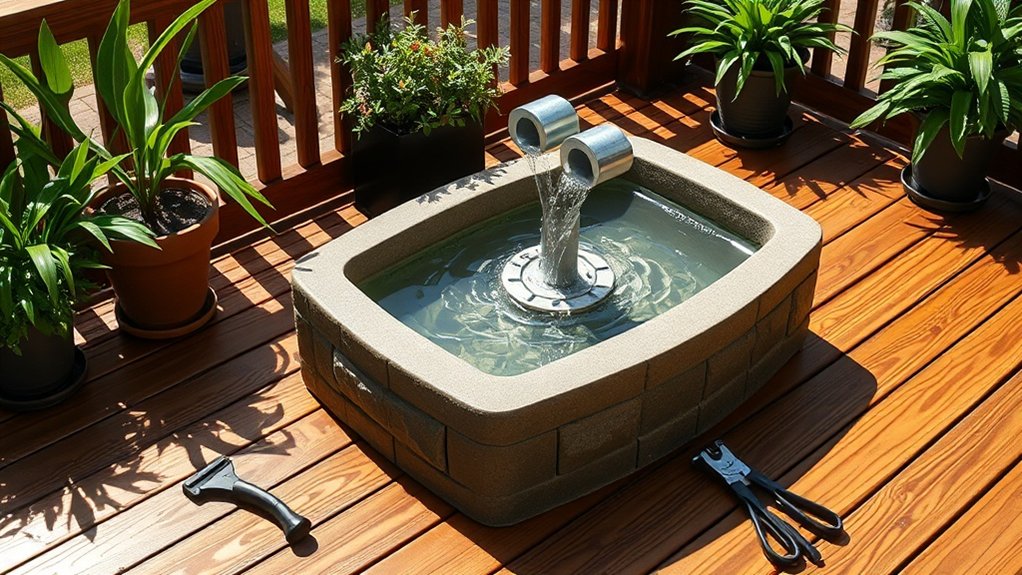
To ensure your deck fountain flourishes in its outdoor setting, focus on proper installation and regular maintenance. Here are some key tips:
- Use waterproofing methods: Apply a high-quality sealant around the fountain and place a water-resistant barrier beneath it to protect the decking from moisture damage.
- Ensure pump accessibility: Design the fountain with removable covers. This makes it easier to access the pump, helping to prevent burnout and keeping maintenance to a minimum.
- Conduct regular inspections: Check the condition of waterproof barriers and sealants periodically, making any necessary repairs to prevent water damage.
Aesthetic Integration of Fountains With Deck Design

Incorporating a fountain into your deck design can greatly enhance the overall look, turning your outdoor area into a peaceful retreat.
To ensure visual harmony, choose a fountain style that matches your deck’s architecture, whether it’s tiered, modern, rustic, or classical. Custom finishes and materials should align with your deck’s wood tone or composite texture.
Consider the size of the fountain; a smaller option saves space, while a medium-sized piece can act as a striking centrepoint.
Place the fountain thoughtfully to improve the flow and interaction with seating areas. Surround it with natural elements like rocks and plants for a seamless integration.
With careful planning, your fountain can become a beautiful focal point that enriches your deck’s design and atmosphere.
Safety and Practical Considerations for Using Fountains on Decks
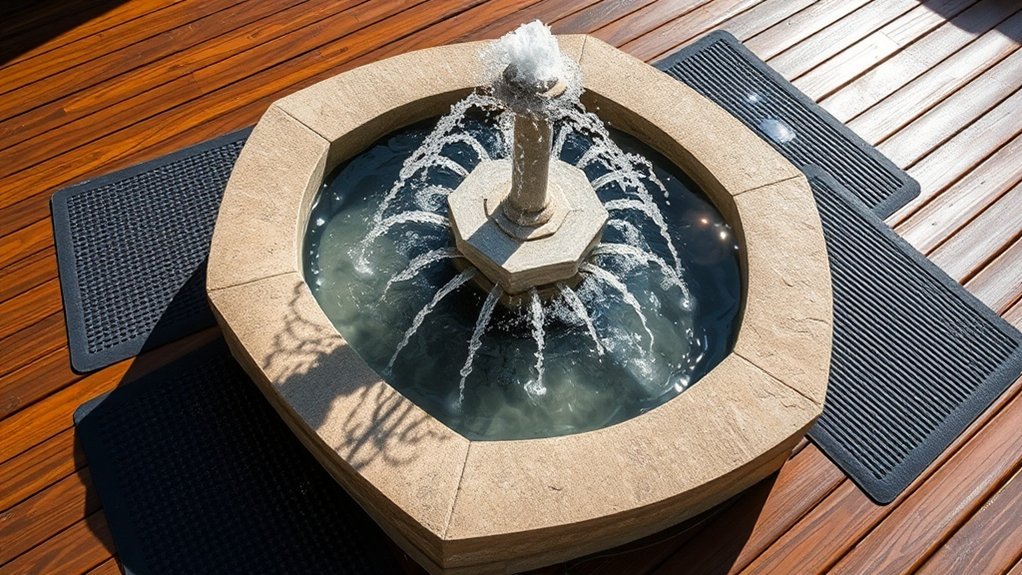
Incorporating a fountain into your deck design can enhance its appeal, but it’s essential to prioritise safety and practicality. Here are some key considerations:
- Ensure your deck can support the weight of the fountain, including the water it holds—remember, water weighs around 8.34 lbs per gallon.
- Apply water-resistant sealants to your wooden deck to prevent rot and warping. Additionally, consider using waterproof mats for extra protection.
- Position the fountain away from busy areas to minimise slip hazards, and make sure all electrical components are properly grounded.
Frequently Asked Questions
How Do I Choose the Right Fountain Size for My Deck?
To select the right fountain size for your deck, consider both the dimensions and water capacity of the fountain. Ensure it complements your space and maintains a balanced look. For instance, a small, delicate fountain may be lost on a large deck, while an oversized one could overwhelm a compact area. Also, check that it fits within your deck’s structural limits for optimal functionality.
Can I DIY Install a Fountain on My Wooden Deck?
Yes, you can install a fountain on your wooden deck yourself. To ensure safety, check the weight limits of your deck, use waterproof materials, and ensure secure electrical access to avoid hazards and water damage.
What Are the Best Locations for Fountains on My Deck?
For the best fountain aesthetics and deck safety, position your fountain on a level surface, out of direct sunlight and strong winds. Ensure it’s close to power sources and easy to maintain, as this will reduce hazards and enhance your outdoor space. For instance, placing it near a seating area can create a tranquil atmosphere while keeping it accessible for upkeep.
How Do I Winterize My Fountain for Deck Use?
Consider your fountain like a delicate flower. To winterise it, drain the water, clean all surfaces, and store the pump indoors. Ensure you insulate any pipes and cover the fountain securely to shield it from harsh winter weather.
Are There Any Eco-Friendly Fountain Options Available for Decks?
Yes, you can opt for solar-powered fountains made from recycled materials. These eco-friendly options lower energy costs, need minimal upkeep, and enhance your deck’s appearance while supporting sustainability. They also have a minimal impact on the environment, making them a great choice for eco-conscious homeowners.
Conclusion
In summary, choosing the right fountains for your decking can elevate your outdoor area into a peaceful retreat. Consider the durability of materials, maintenance requirements, and how well they match your existing decor to ensure a cohesive look. It’s also essential to prioritise safety and stability for a secure installation. With the right fountain, your wooden deck can become an inviting spot, providing the soothing sounds and sights of flowing water, enhancing your outdoor enjoyment.


