

In the UK, you can legally set off fireworks for Diwali from 6pm until 1am. Make sure to follow the regulations, which include using only legal fireworks and checking if you need any permissions. Local council rules may also vary, so it’s wise to be aware of those. Prioritise safety to ensure a fun celebration. For more information on firework regulations and safety tips, have a look at the official guidelines.
Key Takeaways
- Fireworks for Diwali can be set off from 6pm to 1am in the UK.
- Check with your local council as they may have specific restrictions in place.
- In Scotland, fireworks are permitted only from 6pm to 11pm on Diwali.
- You might need a permit to use fireworks, particularly in urban areas.
- Always use fireworks on private property and ensure you have the landowner’s permission.
Overview of Firework Usage in the UK

Fireworks are a lively part of celebrations in the UK, particularly on occasions like New Year’s Eve and Bonfire Night. With a history spanning centuries, they embody joy and community spirit.
Fireworks are often featured at music festivals and public events, showcasing their cultural importance across England, Wales, Scotland, and Northern Ireland. In 2022, millions flocked to music events where fireworks helped draw in crowds and support local economies. This surge in attendance has contributed to the rising demand for eco-friendly options in the fireworks market. Moreover, fireworks are traditionally used to drive away evil spirits and symbolize good fortune during celebrations, highlighting their deep-rooted significance.
Despite a recent downturn in the market, consumer interest remains high, with around 10 million people buying fireworks each year.
However, increasing concerns about safety and environmental impact have sparked a demand for eco-friendly alternatives, signalling a shift towards responsible firework use while maintaining our cherished traditions.
Standard Firework Curfew Regulations

In the UK, firework regulations are strict. Fireworks are generally banned between 11pm and 7am unless you have a permit. On Bonfire Night, this curfew is extended to midnight. In Scotland, local councils may impose further restrictions via Firework Control Zones. It’s important to know these rules, especially during celebrations like Diwali, to avoid fines or penalties. Always check local guidelines before setting off fireworks. Understanding firework categories is essential to ensure compliance with safety regulations. Additionally, residents should be aware that local authorities enforce these regulations to promote responsible firework use.
General Firework Timing Rules
The use of fireworks in the UK is tightly controlled to ensure public safety and minimise disturbances. Fireworks can be set off from 7am to 11pm on most days. This timing helps manage noise levels while keeping safety in check. Outside these hours, using fireworks is illegal and can lead to fines or imprisonment. Local councils may have their own restrictions, so it’s important to check your area’s rules. While it’s encouraged to use fireworks responsibly on private property, always consider your neighbours and the community’s standards. Additionally, remember that fireworks can be used on specific occasions such as Diwali until 1am the following day. Prioritise safety and stick to the designated times to avoid any legal issues. By following these guidelines, you can enjoy fireworks without disrupting others. It’s also advisable to source fireworks from licensed sellers to ensure compliance with safety standards.
Special Event Exceptions
Understanding the special event exceptions to firework curfews is important for celebrating cultural occasions responsibly.
In the UK, you can set off fireworks until 1am on Diwali night, recognising its cultural significance. Similar rules apply for Bonfire Night and New Year’s Eve, while Chinese New Year also allows fireworks until 1am.
These exceptions help communities celebrate traditional events together.
However, be aware that local councils may impose extra restrictions, and safety regulations must still be followed.
You must be at least 18 to buy or use fireworks, and setting them off in public areas is prohibited.
Stay informed and celebrate responsibly to enjoy these occasions without falling foul of the law.
Scotland’s Unique Regulations
Scotland has its own specific firework regulations that differ from other parts of the UK. Fireworks are only permitted between 6pm and 11pm, with even stricter guidelines in Firework Control Zones, especially in urban areas.
On significant occasions such as Diwali, you can use fireworks until 11pm, which is the usual curfew. Outside of these hours, using fireworks is illegal unless you have obtained special permission.
A licensing system is in place to ensure firework safety, requiring both individuals and businesses to secure licenses.
It’s important to note that supplying fireworks to minors or using them without a licence can result in serious penalties, highlighting the need to adhere to Scotland’s regulations.
Specific Timings for Diwali Fireworks
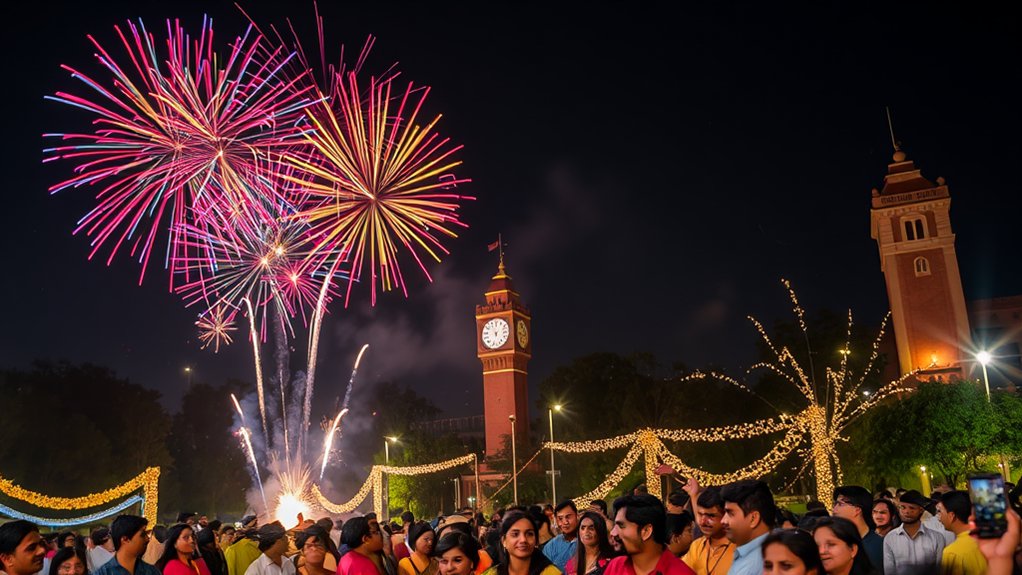
As Diwali approaches, it’s important to know that fireworks can legally be set off from 6pm until 1am on the night of the festival.
This timeframe allows for vibrant displays that enhance the celebrations. Remember that the date of Diwali changes each year, so be sure to check when it falls.
Fireworks should only be set off on private property or land where you have permission. Local councils may have additional rules, but sticking to the 6pm to 1am window helps keep the peace in your neighbourhood.
Enjoy your celebrations responsibly and adhere to these legal timings for a festive Diwali experience.
Differences in Scottish Firework Regulations
When celebrating Diwali in Scotland, be mindful of the specific curfew times that differ from the rest of the UK.
Fireworks are subject to additional restrictions on private land, so it’s essential to check your local regulations before setting any off.
Familiarising yourself with these rules ensures a safe and compliant celebration.
Curfew Time Differences
In Scotland, the legal curfew for fireworks is stricter than in the rest of the UK. Fireworks can only be used between 6pm and 11pm on certain designated days, such as Diwali, Guy Fawkes Night, and Hogmanay, to ensure safety and acknowledge cultural traditions.
In England and Wales, fireworks can be used from 7am to 11pm throughout the year, with some exceptions for specific celebrations.
Here’s a quick overview:
| Region | Curfew Time | Permitted Usage Days |
|---|---|---|
| Scotland | 6pm – 11pm | Diwali, Guy Fawkes Night, Hogmanay, etc. |
| England & Wales | 7am – 11pm | All year with certain exceptions |
| Local Control | Yes (FCZs apply) | Varies by local authority |
| Licensing | Required for F2/F3 | Not required |
Make sure to check local regulations, as they can vary significantly.
Private Land Restrictions
Fireworks can make celebrations more exciting, but in Scotland, there are stricter rules on private land compared to the rest of the UK. You must have the landowner’s permission to use fireworks on private property.
Only individuals aged 18 and over can buy or set off adult fireworks. It’s illegal to use fireworks in public spaces without consent, and the police can enforce these laws.
Local councils can also establish Firework Control Zones, where using fireworks—even on private land—can lead to fines or imprisonment.
Always prioritise safety by informing your neighbours before celebrating to reduce disturbances and maintain good community relations.
Firework Purchase Age Restrictions

Understanding firework purchase age restrictions in the UK is crucial for safety and legal compliance. Here’s a straightforward breakdown:
- You must be at least 16 to buy Category 1 fireworks and sparklers.
- For Category 2 and 3 fireworks, which are intended for outdoor use, the minimum age is 18.
- Category 4 fireworks aren’t available for public sale, so they’re off-limits to everyone.
Enforcement is strict; selling to underage individuals can result in hefty fines or even a prison sentence.
These regulations are in place to promote safety and protect the community from potential hazards.
Stay informed and follow these age restrictions to ensure a safe celebration.
Licensed Traders and Sale Regulations
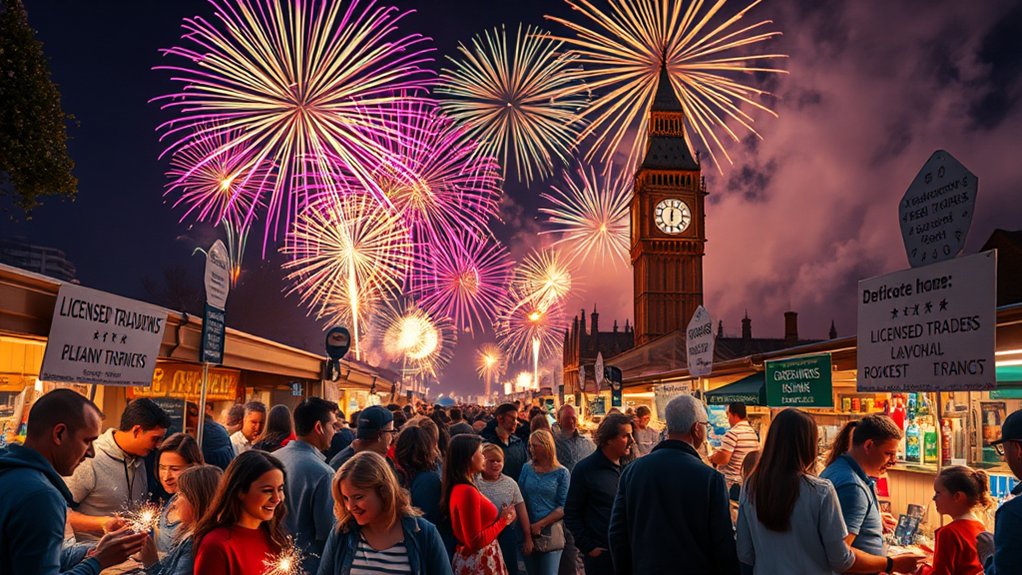
Licensed traders are vital for the safe sale of fireworks in the UK, ensuring adherence to safety regulations and legal standards. Since January 2005, only licensed traders can sell fireworks to the public, which requires obtaining a firework licence from your local Trading Standards.
As a trader, you must ensure your premises are registered and comply with strict storage regulations, particularly if you hold over 5kg of explosives.
You also need to follow seasonal sale restrictions; selling fireworks outside designated periods requires a special licence. Importantly, selling to anyone under 18 is illegal and can lead to serious penalties.
Legal Locations for Firework Use

Fireworks can only be legally used in designated areas to ensure safety and compliance with the law. Here’s what you need to know:
1. Private Property: You can set off fireworks on your own property or with the landowner’s consent.
Make sure there’s enough space to ensure safety.
2. Public Spaces: It’s illegal to use fireworks in streets, parks, or any public areas.
This rule is in place to protect the public and reduce risks.
3. Event Venues: Certain private venues may permit fireworks during organised events, though these usually require professional supervision.
Always check with your local council for any extra restrictions or permits needed in your area.
Following these regulations ensures a safe and enjoyable celebration.
Safety Standards for Fireworks

When it comes to fireworks safety, compliance is crucial for public safety and enjoyment. In the UK, all fireworks must meet the Pyrotechnic Articles (Safety) Regulations 2015. This means they must undergo strict testing and display the necessary CE or UKCA marks to prove they meet safety standards.
Manufacturers, importers, and distributors must follow these rules and keep technical documentation for ten years.
Fireworks are classified into four categories, with each requiring specific safety distances. For instance, Category 2 fireworks need a safe viewing distance of at least 5 metres.
Enforcement of Firework Regulations

While many people enjoy fireworks during celebrations, it’s essential to understand the enforcement of firework regulations for safety and legality. Here are some key points to consider:
- Local authorities, police, and animal welfare officers collaborate to ensure compliance with firework laws.
- Legal penalties for using fireworks illegally can include fines of up to £5,000 or even imprisonment for serious violations.
- Public reporting systems allow residents to notify authorities about excessive noise and unauthorised sales.
Misuse of fireworks can have a significant impact on communities, leading to increased fire risks, noise disturbances, and distress for vulnerable individuals and pets.
To promote safety, ongoing educational campaigns encourage the legal and responsible use of fireworks during events like Diwali.
Local Council Variations and Restrictions

Local councils in the UK often enforce curfews and specific permit requirements that can influence when and where you can set off fireworks for Diwali.
It’s crucial to check your local regulations, as some areas may restrict firework use in certain locations, even on private property.
For example, some councils may only allow fireworks to be used on designated days or in specific areas.
Ignoring these rules can result in fines, so ensure you’re well-informed before celebrating.
Additional Local Curfews
As councils across the UK implement firework regulations, local curfews can significantly impact your celebrations.
These variations are designed to reduce disturbances, especially in residential areas. Here are the key points to keep in mind:
- Fireworks are typically banned after 11pm, though exceptions exist for special occasions like Diwali.
- In Scotland, the use of fireworks is restricted before 6pm, adding another layer of regulation.
- Some councils may limit fireworks on weekdays or in densely populated areas to further minimise noise complaints.
It’s essential to check your local regulations to ensure a safe and enjoyable Diwali celebration without facing penalties or fines.
Permit Requirements Overview
Understanding firework permit requirements is crucial for compliance with local laws in the UK.
Firework licensing differs by region. If you’re selling or storing more than 2,000kg of net explosives, you must obtain a licence from your local fire service or council. For smaller amounts, various councils may have different rules, so it’s important to check with your local authority.
You can only sell fireworks without a licence during specific seasonal events, such as Diwali. Note that these licences can’t be applied for online; you need to contact your local council directly.
Always consult your council for any additional requirements or restrictions to ensure community safety.
Specific Location Restrictions
When managing firework regulations in the UK, it’s important to note that specific location restrictions can differ significantly between councils, affecting firework safety and community well-being.
Here are three key points to consider:
- Firework Control Zones: Councils like Glasgow have set up areas where fireworks are completely banned to enhance public safety.
- Curfews: An 11pm curfew is standard across most councils, though some allow extensions until 1am during cultural events.
- Organised Displays: Councils such as Newham promote attending organised firework displays rather than private ones, aiming to reduce noise and improve community relations.
Keep these local regulations in mind for a safe and enjoyable Diwali celebration!
Penalties for Non-Compliance

Failing to follow firework regulations in the UK can result in hefty penalties. For instance, if you’re caught using fireworks or sparklers in public—regardless of whether they’re low hazard—you could face an instant fine of £90.
More serious breaches can lead to prosecution, with fines reaching up to £5,000 and a potential prison sentence of up to six months. Enforcement is strict, particularly against those supplying fireworks to minors or using them outside permitted times.
The Explosives Act 1875 and the Fireworks Regulations 2004 are in place to ensure compliance and safeguard public safety. Disregarding these laws can lead to significant consequences, making it crucial to follow firework regulations during events like Diwali.
Safety Campaigns and Public Awareness

As Diwali approaches, safety campaigns and public awareness initiatives are vital for ensuring everyone enjoys the festivities responsibly.
Here are some key points to keep in mind:
- Legal Timings: Fireworks can only be set off until 1 am during Diwali, while the curfew for other occasions is 11 pm.
- Firework Safety: Purchase fireworks from registered sellers and check for a CE mark. Always follow safe handling and storage guidelines.
- Public Awareness: Get involved in local safety events and listen to fire services for advice on safe firework use and restrictions in public areas.
Stay engaged with these campaigns to promote firework safety and ensure a joyful celebration for everyone.
Frequently Asked Questions
Can I Use Fireworks on Public Land During Diwali?
You cannot use fireworks on public land during Diwali. Regulations prohibit discharging them in these areas to ensure public safety. Always celebrate responsibly by following local laws and using private property for fireworks. For example, consider celebrating in your garden or at a friend’s house rather than in a park.
What Should I Do if My Neighbor Uses Fireworks After Curfew?
If your neighbour sets off fireworks after curfew, don’t confront them directly. Instead, report the noise to the local police. This helps maintain peace in your area and prevents unnecessary conflicts.
Are There Any Specific Noise Regulations for Diwali Fireworks?
Yes, there are noise regulations for Diwali fireworks in the UK. To ensure safety and minimise noise complaints, keep your fireworks below 120 decibels. It’s important to check your local council’s rules, as they may have additional restrictions in place.
How Can I Report Illegal Firework Usage in My Area?
To report illegal firework usage, get in touch with your local police by filling out their online form, calling 101, or visiting them in person. For example, if you hear fireworks late at night or see them being used in a public park, it’s important to let the authorities know. Your report helps keep the community safe and ensures that those breaking the law are held accountable.
Are There Alternatives to Fireworks for Celebrating Diwali?
Why depend on fireworks when you can celebrate Diwali in an eco-friendly way? Join community gatherings, share traditional sweets, create stunning rangoli designs, and light diyas to keep the Diwali spirit alive without the noise and pollution.
Conclusion
In summary, it’s important to be aware of the legal firework timings for Diwali in the UK to ensure both enjoyment and compliance. While these rules may seem restrictive, they are in place to protect everyone’s safety and well-being. By adhering to these regulations, you can celebrate responsibly and enjoy the vibrant traditions of Diwali. So, stay informed and let your festivities shine brightly, all while staying within the legal limits.


